Tag Archives: sponsors

It goes without saying that our Hope In Action Fund, which allows Children Incorporated to provide for sponsored children and their families in emergency and special circumstances, comes to the rescue quite often. Whether funds go to purchasing cleaning supplies after families have been affected by flooding, or to replacing a pair of eyeglasses when a child falls and breaks them on the playground, Hope In Action is such an important part of how Children Incorporated helps beyond sponsorship.

When Renée Kube, our Director of U.S. Programs, was first informed about a particular situation that involved Robert, one of our sponsored children in Eastern Kentucky, she immediately felt touched and called to act.

When Renée Kube, our Director of U.S. Programs, was first informed about a particular situation that involved Robert, one of our sponsored children in Eastern Kentucky, she immediately felt touched and called to act. Robert had lost four teeth in an accident in elementary school, and years later – now a high school freshman in a new school – he was still without those teeth.

Hearing Robert’s Story

Robert met his new Children Incorporated Volunteer Coordinator, Rhonda, for the first time as an incoming freshman student last fall. Rhonda was just getting to know the children who had moved up from the elementary school – it’s a big adjustment to receive all the information about the new sponsored children at the school, and it’s a big responsibility to help them adjust their new academic environment.

Luckily, thanks to our partnering organization in Kentucky, the Family Resource and Youth Services Centers, coordinators just like Rhonda are used to the heavy workload, and they recognize just how important it is to pay attention to each and every child’s special needs – which is exactly what Rhonda did with Robert.

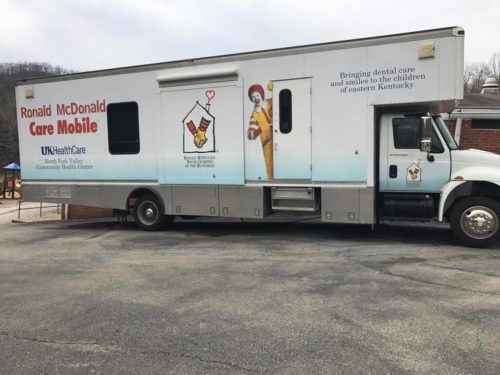
Dental Care_UK Ronald McDonald Care Mobile 2

The Ronald McDonald Dental Care Van of Kentucky

Robert’s elementary school coordinator had been especially close to him, and when she spoke with Rhonda at the beginning of the school year, she expressed that she had a special place in her heart for him. She shared some information about his life at home – and most importantly, about the degree of need that he experiences.

Robert lives with his single father; they had been renting a trailer, but could no longer afford it, and had to move to a very small apartment. Robert’s father is disabled, and his limited disability benefits hardly pay the rent. The father has no transportation, and sometimes struggles to provide food. Furthermore, it wasn’t just the details of his home life that she wanted to share with Rhonda; she also felt it was important to mention that Robert was really self-conscious about his appearance.

She explained that, at some point during elementary school, Robert’s four front teeth had been knocked out, and he was desperately in need of a dental partial plate. At the time of the injury, a dentist had been able to help him recover from losing his teeth. Later, the dentist made an impression for a bridge, which was covered by Robert’s medical insurance – but the insurance does not cover partials or dentures.

When Robert’s father was told the cost of the partial plate, he told the dentist he couldn’t afford it. Years later, when Robert reached high school, he was still without some of his teeth – and he was unwilling to smile or talk to teachers or other students directly, because he was so embarrassed.

“I have heard stories from coordinators about their worries for kids with poor oral health, and about their efforts to bring help – and to encourage available services to be used,” she said.

And it wasn’t just a matter of self-esteem that concerned his elementary school – and now high school – coordinators; his missing teeth were also a health concern. Not restoring missing teeth can lead to several issues down the road. Chewing is obviously affected, but bone loss is especially a worry; when teeth are present and functioning, bone is maintained; so missing teeth can eventually lead to bone loss.

Dental Issues in Eastern Kentucky

Robert’s story was not a first for Kube, who has been working with Children Incorporated for over 32 years now. “I have heard stories from coordinators about their worries for kids with poor oral health, and about their efforts to bring help – and to encourage available services to be used,” she said.

“And it is not just specific to Eastern Kentucky; I would say poor oral health is spread across our country wherever poverty exists. I’ve seen it with urban kids, as well as rural – the combination of cheap soda and a lack of knowledge about brushing, and no access to regular, new toothbrushes and toothpaste play a part,” she continued.

Over the years, there have been a few opportunities for Children Incorporated to help with the occasional specific dental need, such as removing an abscessed tooth. But as Kube says, generally, the coordinators have reached out within their own communities to bring free dental vans sponsored by universities.

 A few months after hearing about Robert’s special situation, Kube spoke with Rhonda to see what Robert might like for Christmas. Rhonda told Kube that when she asked him about gifts for the holiday, his response was, “I’ve not had a Christmas at my house in so long, I try not to think of it anymore.”

A SPECIAL CHRISTMAS FOR ROBERT

But thanks to Robert’s wonderful sponsor, for Christmas, he did receive needed items and gifts from the monthly subsidy funds; and Rhonda also included him in another holiday donation from a local church. He had a wonderful Christmas, thanks to these special gifts – but his coordinator still felt that it was important to address his self-consciousness over his appearance, and she really thought that he would have more confidence if he could get his partial plate, and start using it right away.

harley c.2

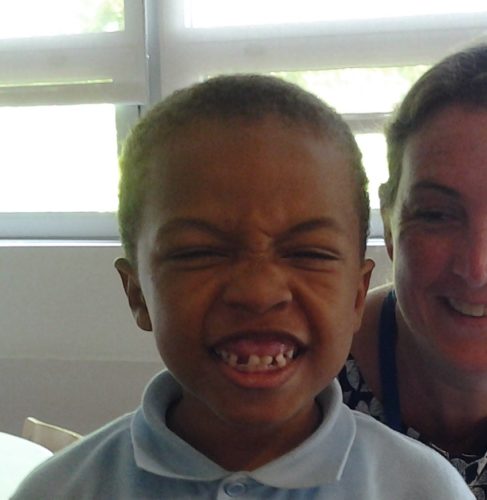
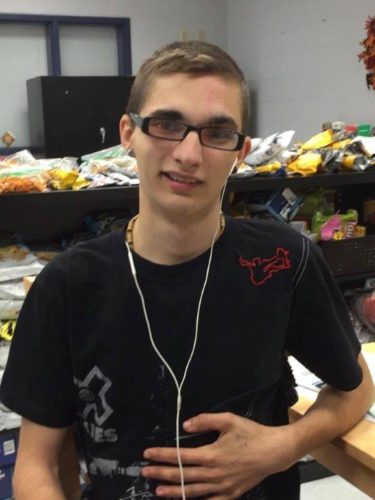
Robert with his new teeth.

Shortly after winter break was over and the children were back in school, Rhonda reached out to Kube, and asked if Robert could be considered for assistance from the Hope In Action Fund to replace his missing teeth.

Looking Like a Brand New Kid

Kube didn’t waste any time working on the request. By February, just one month after the request had been made, Rhonda received the funds needed to purchase Robert’s dental plate, and she ordered it for him immediately.

Once his plate was ready, Rhonda took pictures of Robert with his new teeth to share with Kube and the Children Incorporated staff, and to also share with his sponsor. Robert showed off his new teeth for the camera with a new plate taking the place of the gaping hole that he had spent so many years trying to hide. Thanks to the Hope In Action Fund, Robert finally has something to smile about.

***

HOW DO I SPONSOR A CHILD IN Kentucky?

You can sponsor a child in Kentucky by calling our office and speaking with one of our sponsorship specialists at 1-800-538-5381 or emailing us at sponsorship@childrenincorporated.org.

At Children Incorporated, we’re used to positive people who want to make a difference. That’s one of the best things about our jobs here — meeting other people who share our passions. But every so often, someone surprises us with a creative way to give back, and inspires us to look at the world in a new and different light.

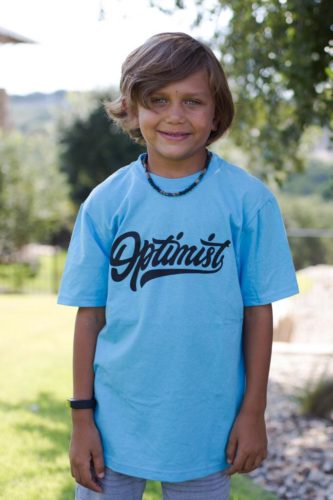
16112522_180727562404279_6790265946360831951_oWe recently spoke with Micah Greer, the founder of Operation Optimist, a new web-based clothing company in Austin, Texas. Micah has been a sponsor through Children Incorporated for more than a year, but he has taken his involvement to new heights by making the generous offer to donate ten percent of all of his merchandise sales to our organization.
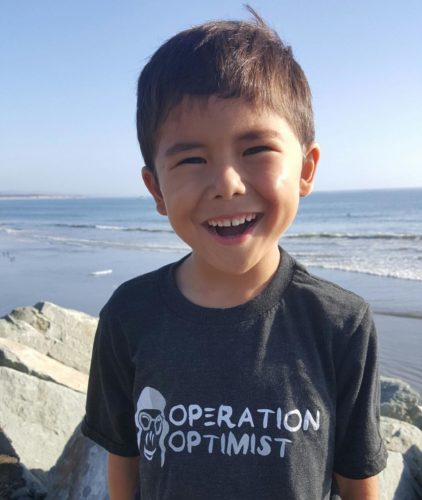
Operation Optimist’s mission – to “spread a message of hope, love, and positivity by way of the brand, while also contributing to those in need through charitable acts” — will, Micah hopes, help the brand come to serve as an instantly-recognizable symbol of positivity, love, and kindness. An energetic, warm, and encouraging presence, Micah’s excitement about his new venture is nothing short of contagious.

His company’s apparel reflects his good nature, and gives like-minded folks an opportunity to come together, even across the world.

I felt that Children Incorporated was the best fit for me, and I ended up sponsoring an adorable little girl in Kentucky.

It was an honor and a pleasure to chat with Micah, and to learn more about his goals for Operation Optimist.

Micah, you’ve been a sponsor with Children Incorporated for about a year and a half; do you recall what led you to our organization?

I started doing some research on child sponsorship, and came across Children Incorporated through the Charity Watch website. After looking into various charitable organizations, I felt that Children Incorporated was the best fit for me, and I ended up sponsoring an adorable little girl in Kentucky.

You work as a personal trainer. How did you find that calling?

I’ve been personal training and sports performance coaching for more than ten years. How the human body operates and healthy living are both great passions of mine. A few things that I love most about training is educating people, empowering them to achieve their goals, and developing relationships.

16797804_203452333465135_1237606462223894283_oAnd now you are launching Operation Optimist. Can you tell us what led you to do so, as well as what you hope to accomplish?
It’s already been a very positive and enlightening experience for me. Starting a business is definitely out of my area of expertise, but certainly within my comfort zone. The main reason for starting this company was to help spread more positivity and optimism to others by way of the brand. I felt it was the perfect message to marry with the cause of helping kids in need, and that gave rise to the “giving” side of the company.

What type of products will you sell through Operation Optimist?

Upon launching, our brand is initially apparel (men’s, women’s, and kids’ shirts and hats). However, we have ideas for the future to keep our brand ever-expanding and evolving, and to not be limited to apparel only.

If you could say anything to our readers about Operation Optimist, to encourage them to support your new business, what would it be?

We feel that our brand serves as a reminder that we should choose to live our lives more optimistically, lovingly, and in a more caring way towards all people. Whether the reader makes a purchase with us or not, we would like as many people as possible to join us on our journey to make the world a better place by radiating more positivity, love, and kindness.

For more information on Operation Optimist, and to browse or purchase some of their affirming products, please visit http://operation-optimist.com. Ten percent of all merchandise sales will be donated to Children Incorporated to assist us in providing impoverished children with food, clothing, educational assistance, and other individualized needs, as they arise.


Operation Optimist Logo Left


Nobody’s better at wearing a brave face than a kid — whether they know it or not. If you drive around Eastern Kentucky, you’ll see children at school playing outside and laughing. At first glance, it’s not likely that you’ll truly understand the impact that increasing poverty is having on their families.

For a long time now, coal has put clothes on the backs and shoes on the feet of generations of Kentucky residents.

It’s coal country here, with mining dominating Kentucky’s industries since 1820. The Western Coal Fields, part of the Illinois basin, and the Eastern Coal Fields here in Appalachia, have been the historical centers of what was once an almost guaranteed career for able-bodied Kentuckians. For a long time now, coal has put clothes on the backs and shoes on the feet of generations of Kentucky residents.

Coal mining in Kentucky reached its peak in 1949. Since then, jobs have become more automated and mechanized; and with environmental regulations encouraging the use of cleaner fuels, the industry has been in decline. As a result, mines close. And when big coal companies pull out of a town, it’s nothing short of devastating for families.

Children Incorporated Volunteer Coordinator Terrie Simpkins, who works at Sheldon Clark High School in Martin County, Kentucky, says that the impact on the community has been shattering.

“Families lost their cars and then their homes. Our families have deep ties here, and they waited as long as they could before many gave up, and left for work in other states,” said Terrie.

As in any struggling economic system, less take-home pay means less to spend at gas stations, grocery stores, restaurants, and other local businesses. Those stores close up shop, more jobs are lost, and daily life becomes a struggle. The Appalachian population is in decline, as former miners of Kentucky coal move elsewhere to seek better lives near the cleaner, low sulfur coal mines of Wyoming, the gas fields of North Dakota, or the auto assembly plants of Louisville, Kentucky or Marysville, Ohio.

Some of those who stay do so to care for aging parents; some feel they don’t have the education or training to compete for jobs in other areas of the country; some can’t afford to move; and some simply feel a strong connection to the land they have always known.

Future Generations of Kentuckians Struggle to Stay Afloat

With one or both parents unemployed, one in four children in Kentucky lives in poverty. The last time children in the state faced such dire straits was during the Great Depression.

Many parents find creative ways to bring in a little income with in-home hair salons, doing odd jobs, collecting cans, or chopping wood. But the money that can be earned from these efforts doesn’t put much of a dent in the growing chasm between cost of living and take-home pay. As a result, deep poverty in Kentucky brings its usual sidekicks — addiction, depression, anxiety, and crime. And these ripple effects are lodging themselves deeply within the children of these families, who often lack the basic necessities they need to succeed.

Says Volunteer Coordinator Shana Smith of the children she sees at Hindman Elementary School in Knott County, “Some are being raised by grandparents, aunts, uncles, cousins or even unrelated people. There has been a jump in the number of babies born with addictions, which will hurt their development. I have seen a fifth grade child who could scarcely write her first name, and her struggles can be laid at the feet of her mother’s prenatal addiction.”

With one or both parents unemployed, one in four children in Kentucky lives in poverty. The last time children in the state faced such dire straits was during the Great Depression.

“For many of the kids in our program,” says Renée Kube, Director of U.S. Programs for Children Incorporated, “going to school is as big as their world gets.”

Well over 1,000 kids are currently enrolled in Children Incorporated’s Kentucky programs. Volunteer coordinators regularly report that children with warm coats in the winter and shoes that fit are more likely to show up for school. Sponsorship does far more than give children the tangible items they need: the sense that someone, somewhere takes an interest in both their todays and their tomorrows is a confidence boost that can’t be matched.

“It may surprise people to know that sponsorship in Kentucky is not just financial, but also emotional and social,” Kube explains. “The children love hearing from their sponsors – and no matter how short their reply, their correspondence is truly from the heart.”

A Challenging Future for Eastern Kentucky Children

Unfortunately, unemployment isn’t the only fallout from coal’s decline. This year, the state of Kentucky made an announcement that shocked its residents: the amount of money counties expected to receive via tax assessments for unmined coal was dramatically slashed.

Knott County, which took the hardest hit, will have to make do with a $1.5 million shortfall, two-thirds of which had been slated for public schools. Budgets were instantly revised, with school administrators taking deep cuts in personnel, supplies, equipment, and maintenance.

The repercussions of these cuts will be felt for years to come. With more children sponsored in more schools comes the development of future adults on good footing, having had the education and support they need to succeed.

As Eastern Kentucky struggles to find new ways to build a healthy economy, sponsorship ensures these children won’t get lost in the meantime.

***

HOW DO I SPONSOR A CHILD IN KENTUCKY?

You can sponsor a child in Kentucky by calling our office and speaking with one of our sponsorship specialists at 1-800-538-5381 or by emailing us at sponsorship@childrenincorporated.org.

SPONSOR A CHILD

When Ann and Bob Underwood first signed on as sponsors through Children Incorporated in 2006, they were looking for an opportunity to help poor children in the U.S.

Ten years and 27 sponsored kids later, they remain steadfast in their commitment to helping give underprivileged children a chance at the American Dream.

As a sponsor, we know how our funds are being used to assist those less fortunate. We feel that by helping children in the U.S., we are helping our country’s future.

To date, eleven of the children sponsored by the Underwoods have successfully graduated from high school.

We contacted the Tennessee couple to find out more about why they wanted to sponsor U.S. children, and what they’ve learned from their experiences along the way.

CI: How did you get involved with Children Incorporated?

AU: We wanted to help those who are less fortunate and live in a depressed area. We previously sponsored children in the Dominican Republic through Compassion International, but we knew that there are also American children in great need.
We did a lot of research online and found Children Incorporated. That was in 2006 – we just received a ten-year anniversary card!

CI: When you signed up, did you specify your preferences?

AU:  Yes. We wanted a child from Appalachia. My husband, Bob, was born and raised in southeastern Kentucky, so he is well aware of the poverty there. Unemployment is high. Most coal mining jobs have all but disappeared.

One of the Underwood’s sponsored children from Kentucky

Later on, inspired by articles we read in Children Incorporated’s newsletters, we also requested children in their junior and senior years of high school in Kentucky, Detroit, and New Mexico.

CI:  Do you communicate with your sponsored children directly?

AU: Most of the children write. It may not be often and is usually brief. A lot of times, it’s just a thank-you note for what they received through our sponsorship. Some of the older children write about their activities, goals, boy/girlfriends, pets, sports teams. We enjoy hearing from them immensely.

CI: Do you write to your sponsored children? What do you say?

AU: We always send an introductory letter when we get a new child. We also send birthday and holiday cards. If a child writes to us, we reply. If not, we just send the cards to let them know we’re thinking about them. We usually respond to whatever they have written about, and also share some of our activities.

CI: Do you send them packages or gifts?

AU: In the beginning, we sent gifts of school supplies, clothing, and toys about three times a year. We were able to get sizes from the volunteer coordinator. Children Incorporated later changed the program so that the kids can get what they need most through the volunteer coordinator. We feel that works out better for the kids.

We also send money for back to school supplies and clothing, Christmas, birthdays, and graduation. We send some extra funds for a new child if we sign up later in the school year.

We have enjoyed watching our sponsored kids grow up through the pictures that we get. We hope that the children who have graduated from high school are realizing their goals and dreams.

CI: What advice would you have for someone considering sponsorship?

AU: As a sponsor, we know how our funds are being used to assist those less fortunate. We feel that by helping children in the U.S., we are helping our country’s future. If, by sponsoring these children, we can help in a very small way to ensure that they graduate from high school, we have done the right thing. As one of our children wrote in her progress report, sponsorship meant a lot to her because it showed that someone cared about her. What could be more important?

CI: Overall, how would you characterize your ten years with Children Incorporated?

AU: Our experience with Children Incorporated has been rewarding. We are made to feel like we are the only sponsors when we communicate with the organization. We’re also impressed by all the work the volunteer coordinators do at the participating schools.

We have enjoyed watching our sponsored kids grow up through the pictures that we get. We hope that the children who have graduated from high school are realizing their goals and dreams.

***

HOW DO I SPONSOR A CHILD IN KENTUCKY?

You can sponsor a child in Kentucky by calling our office and speaking with one of our sponsorship specialists at 1-800-538-5381 or by emailing us at sponsorship@childrenincorporated.org.

SPONSOR A CHILD

Aimee learned a lot of things too early in life as she watched her father nearly succumb to leukemia, his resulting painkiller addiction, and the financial and psychological quicksand her family struggled in as a result.

Growing up in a small town in Eastern Kentucky, Aimee was surprised to find herself and her family staying with neighbors while her dad suffered in a nearby hospital. It seemed so sudden, the onset of his illness, and she remembers an earlier childhood of warmth and togetherness.

Alesha_senior

Aimee’s senior photo

That wouldn’t be Aimee’s lot in life for several more years, unfortunately. She was in the sixth grade when her father was diagnosed, and her memories of his painful experience with a bone marrow transplant are still very acute. It was a troubling time for both Aimee and her younger sister, and she had a lot on her mind when the volunteer coordinator at her school told her she now had a Children Incorporated sponsor.

“I didn’t think much about it at the time,” she remembers. “Except that it was nice to get money at Christmastime, and it was nice having someone to write thank-you notes to. It wasn’t until I was in high school that I really recognized the importance of giving, and the importance of helping others in need.”

With her dad’s recovery came OxyContin, a newer drug that Aimee’s family didn’t know much about. They certainly didn’t expect it to take over their lives with addiction. Money got even tighter, and relationships were even more strained. Aimee’s gifts from her sponsor became some of the only things she looked forward to, and one of the only constants she had in her life.

“I have been through more than most people would want to go through in a lifetime,” states Aimee, matter-of-factly. “Having people who showed me that they believed in me when my family seemed to be crumbling apart… It encouraged me to do better and to strive to be more and do more for the world around me.”

“It wasn’t until I was in high school that I really recognized the importance of giving, and the importance of helping others in need.”

Buoyed by Support, With Eyes Still on the Prize

As she grew, the young woman with so much on her mind dedicated herself quietly to her studies, keeping a low profile in high school and making straight As. It wasn’t difficult for her to decide that her next step was college.

Alesha graduated from Morehead State University in 2011 with a major in Education and a growing desire to give back.

Thinking back on the calmer years before the turbulence began in her teens, she describes a certain scene. Aimee and her friend, both three years old, sit under a tree. Her friend, who is deaf, has been learning sign language, and she’s teaching Alesha words, while Aimee, in turn, helps her articulate those same words.

This scene stayed with Aimee as she tried to decide how to combine her educational know-how and her considerable service-oriented energy. The feeling of sharing in her friend’s triumphs was so powerful — she realized that to her, communication is the key to really helping children improve their lives.

Aimee with her family

The memories hit home in a different way many years later, when Alesha had begun her career in education. A little boy with autism struggled to tell Aimee what he wanted. The frustration he felt was so palpable, and his tears were so real, that Aimee had to step outside of the classroom and cry herself.

Now, she’s realigned her professional ambitions and is currently studying speech and language pathology. “I’m finding that the kids I most connect with are the ones psychologists shy away from because of their communication problems,” she explains. It’s a difficult job, but it satisfies a need in Aimee that began under that tree.

Opening Doors for Future Generations

At 28, Aimee is now the mother of two children and the partner of a man who shares her desire to lift other people up. She never met her Children Incorporated sponsor, who passed away before she graduated high school, and left her the money she needed to get through college. But she thinks about him and his family often.

“I know they are going to overcome and be strong individuals – but sometimes, in the grand scheme of things, people forget the importance of kindness to all.”

Their contributions to her life helped her put many of the important things in life into focus: I matter, and people care about me. As is often the case, life hasn’t always been easy for Aimee, but a memory of that support has helped her steer her personal life toward those who are similarly-minded, and her professional life toward helping as many children as she can.

For her own kids, Aimee wants them to know the drive she feels each day to make someone else’s life better. “Whatever life hands to them,” she says, “I know they are going to overcome and be strong individuals – but sometimes, in the grand scheme of things, people forget the importance of kindness to all.”

***

HOW DO I SPONSOR A CHILD IN KENTUCKY?

You can sponsor a child in Kentucky by calling our office and speaking with one of our sponsorship specialists at 1-800-538-5381 or by emailing us at sponsorship@childrenincorporated.org.

SPONSOR A CHILD

Shonto Preparatory School isn’t like other public schools. Located in northern Arizona, the school is in the heart of the Navajo Nation, and serves children who are economically poor, but rich in culture and history.

Most Shonto families don’t have running water or electricity, but they take daily classes to learn a language that was first written down only a generation ago. They have little money for clothes and school supplies, but they supplement their income by making and selling the art that represents their tribal history.

“Children Incorporated helps them be able to get clothes and school supplies and food.”

Marlita has worked as the media resource officer for Shonto Preparatory School since 1996, and she works as a volunteer coordinator for Children Incorporated, helping to connect sponsors to students who need financial support.

“Children Incorporated helps them be able to get clothes and school supplies and food,” she said. “Most of the families use [sponsorship funds] for clothes and shoes, but I have one family who uses the money totally for food – so I know they’re really hurting for food.”

An Employment Desert

Shonto is an elementary, middle, and high school with just over 600 students altogether. Virtually all of them are Native American, and more than ninety percent of them qualify for free or reduced lunches.

Marlita (right) with other volunteer coordinators in Arizona

Much of the reason for this poverty is that jobs are scarce, Marlita said. There are eight or ten jobs at each of the three trading posts in the area, along with a health clinic, and the two schools — but that’s about it. Even those few employment opportunities are hard to get; the clinic employees are mostly highly-skilled healthcare workers, and the schools require a college degree of anyone working directly with children.

There’s a Walmart, a coal mine, and a power plant about an hour away, but the coal mine and power plant are both slated to close. Most families supplement what little income they have by making and selling traditional Navajo art and crafts.

Cottage Crafts

“The Navajo are extremely talented with art – any kind of art,” Marlita said. “They do painting, beadwork, jewelry, metalworking, rug weaving – and, of course, pottery.”

A few local artists earn enough to make a living at it, and a couple of them have become internationally known; but for most, arts and crafts just help to make ends meet.

Home gardens help, too, and corn is the primary backyard crop. The local species requires very little water, which is fortunate, because most residents depend on the rain, not irrigation or hoses. The local corn isn’t eaten by itself, though – it’s too tough. Instead, it’s ground up and cooked with other ingredients.

Some residents also sell food on the streets to make money. For instance, a few people sell burritos outside the school every morning.

But most have very little money, so Children Incorporated sponsors help the children receive the needed items their parents struggle to provide.

Shopping Trips

Marlita manages the shopping for those with sponsors. When the children’s funding comes in, she meets the families at Walmart, where they’re told how much they have to spend, and what it can be used for.

Each family then makes their own decisions about what they need most – shoes or backpacks, shampoo or bread – and then they meet her at the checkout line.

“I review their purchases to be sure everything is appropriate,” she said. “Sometimes I have to tell the students, ‘No, I’m sorry, that’s not acceptable.’ But for the most part, they are buying clothes and shoes and school supplies.”

But most have very little money, so Children Incorporated sponsors help the children receive the needed items their parents struggle to provide.

Marlita takes a look at their food choices, too, counseling them on nutrition as she decides what may be purchased with Children Incorporated funds.

“I tell them that pop is not okay, but juice or even Kool-Aid, I’ll accept,” she said. “Sometimes it’s hard, because sometimes the families don’t understand – it’s what they’ve been used to getting.”

Once everything has been rung up, Marlita pays for it with the family’s gift card, which was purchased with the child’s sponsorship funds.

One of the benefits to waiting in the checkout area is that she sees everyone who comes through the store, and she’s always greeted by former students.

“They’re always excited to see me,” she said. “I get to keep up with a lot of them that way.”

Of course, since Walmart is more than sixty miles from Shonto, some families can’t get there. Some send their shopping lists to Haviland, and she buys their items for them. And a few older students are allowed to do their family shopping online from the school, with Haviland’s assistance.

The children and Haviland are used to managing without direct parental involvement. Many students live with grandparents or other relatives, either because parents have had to take jobs far away, or because they’re not in the picture at all.

Cultural identity

Some families still live in the eight-sided hogans that the Navajo have traditionally built, but nowadays, most live in one-room homes made of wood or concrete blocks – though they’re little more than sheds.

An exterior picture of the Shonto school campus

“It used to be that very few kids had running water and electricity, but they’re becoming more and more common,” Haviland said. “In a survey a year ago, more of them said they have water and electricity – but not necessarily at their house; it’s often at another relative’s house they go to.”

One of the challenges faced by educators and aid workers is how to improve the children’s quality of life without erasing their cultural identity. To help maintain the children’s heritage, the school now mandates that everyone take a Navajo class every day.

Traditionally, the language is oral, and was never written down until the 1930s (which is why it was used by U.S. code talkers in World War II; since it wasn’t written, it couldn’t easily be learned by non-native speakers). When Haviland first came to Shonto, most children spoke Navajo, but not English. Over the years, however, the Navajo language has been dying out. Now, few children speak it, and few older people can read or write it.

Respecting families’ language, food, arts, and culture while also ensuring children have shoes that fit and healthy meals to eat is an ongoing challenge; but financial support from Children Incorporated makes it possible, Haviland said.

A Helping Hand

In her trips to Walmart, she watches her students learn to make good spending decisions, and get to pick out their own clothes and school supplies. And she gets to see these life lessons pay off in the form of former students who greet her as successful adults.

And she doesn’t always have to make the sixty-mile trip to Walmart to see it.

“We have former Children Incorporated students who work at the school,” she said. “One is a teacher. I didn’t know until he said, ‘Yeah, when I was a kid, I was in the Children Incorporated program.’”

“Shonto is a wonderful community,” she added. “The people are very friendly and sociable – they just need a hand.”

***

HOW DO I SPONSOR A CHILD IN Arizona?

You can sponsor a child in Arizona by calling our office and speaking with one of our sponsorship specialists at 1-800-538-5381 or by emailing us at sponsorship@childrenincorporated.org.

written by Shelley Callahan

Shelley is the Director of Development for Children Incorporated. She is also the lead social correspondent, regularly contributing insights through the Stories of Hope blog series. Sign up for Stories of Hope to receive weekly email updates about how your donations are changing the lives of children in need.

» more of Shelley's stories