Tag Archives: education

Spanning over 2,000 miles of South America’s western coastline, with deserts in the north, rainforests in the south, and the snowcapped peaks of the Andes Mountains ranging throughout, Chile is a stunning country.
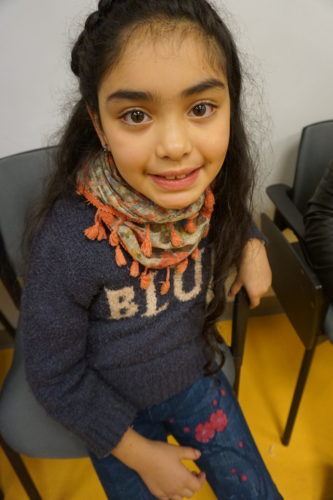
Children with disabilities receive support thanks to the Handicapped Children’s Center.

Yet despite its natural beauty and reputation as politically progressive when it comes to human rights, Chile suffers from excessive inflation and an ever-increasing unemployment rate. Due to these economic realities, millions of Chileans are desperately poor.

A big telethon in Chile

The anguish typically associated with poverty becomes even starker when impoverished families are caring for a disabled child, such as the families with children at our affiliated project, the Handicapped Children’s Center in Santiago.

Thankfully, children with various disabilities receive treatment and support in an educational environment and help from their sponsors at the Handicapped Children’s Center. Without the much-needed aid the Center provides, disabled children and their families would have nowhere to turn to receive services and resources they so desperately need.

Beyond support from our sponsorship program, the Handicapped Children’s Center receives funding year-round thanks to Teleton, Chile. Teleton is a charity event held in various locations around the country in the first week of December. During the event, Chilean television networks hold a 27-hour telethon to raise money to help children with developmental disabilities. Since its inception in 1978, over $286 million has been raised, and 13 rehabilitation centers have been built all around Chile. Currently, Teleton is the world’s most-watched telethon.

Because the Handicapped Children’s Center is a well-funded organization, it provides children and young adults up to age twenty years old with medical care and therapy for free.

Free care for kids in need

Because the Handicapped Children’s Center is a well-funded organization, it provides children and young adults up to age twenty years old with medical care and therapy for free. The Center is equipped to provide care and support to children suffering from the effects of polio, congenital disabilities, Downs Syndrome, and other mental and physical handicaps.

The Handicapped Children’s Center is located in the rehabilitation wing of a local hospital in Santiago. The hospital itself is a large, modern building, comprising of examination rooms, physical therapy, a swimming pool, and a center for making prosthetic aids, which are provided to children free of charge. Transportation to and from the facility, when needed, is also offered at no cost to families.
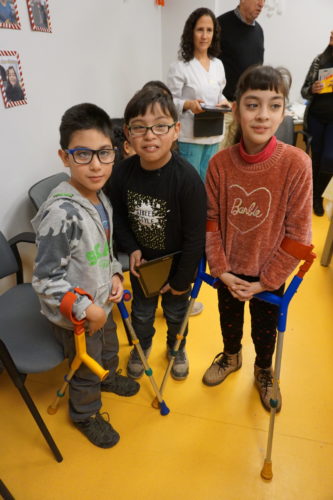
New surgery techniques are helping disabled children in Chile to walk normally again.

The staff of the Handicapped Children’s Center includes physical therapists, orthopedists, podiatrists, neurosurgeons, urologists, dentists, occupational therapists, teachers, psychologists, social workers, nurses, audiologists, and a full prosthetic staff.

The Center emphasizes self-care and independence in its therapy, and families are encouraged to play an active role in the children’s rehabilitation. The goal is to prepare the Center’s participants to become entirely independent at school, at home, in the workforce, and society. Children who are able to attend local public schools to learn independence, and those who are not able to due to their disabilities are educated at the Center.

Helping children to walk

The support children receive at the Handicapped Children’s Center is individualized, involving physical and recuperative therapy as well as psychiatric care. Children also enjoy arts programs as a part of their participatory therapy. Doctors, nurses and technicians are available with access to robotics technology, providing the best possible support for maximum recovery.

Additionally, special new surgery techniques have been performed on children with physical limitations so they may walk normally. Recently, three children that are enrolled in the Children Incorporated program have benefited from the surgery with staggering results.

Along with the care they receive at the Handicapped Children’s Center, sponsored children receive school supplies, food, clothing, and transportation allowances so they can participate in regular therapy sessions. Over the years, children and their parents have expressed gratitude to Children Incorporated staff members for the support they received from sponsors, as it lowered the family burden on treatment expenses.

***

How do I sponsor a child in Chile?

You can sponsor a child in Chile in one of three ways: call our office at 1-800-538-5381 and speak with one of our staff members; email us at sponsorship@children-inc.org; or go online to our sponsorship portal, create an account, and search for a child in Chile that is available for sponsorship.
SPONSOR A CHILD

In the town of Santa Tecla, located six miles west of El Salvador’s capital, San Salvador, our affiliated project, the Marillac School, is providing children with the opportunity to receive an education — and a quality one at that.

Communities and schools around the world face barriers in providing children with a quality education.

Founded in 1940 by the Sisters of the Order of St. Vincent de Paul, the school serves as not only an escape from the harsh realities local students face growing up in poverty but an escape from poor public education or no education at all.

Considered a semi-private institution, the administrators of the Marillac School — with sponsorship support from the Children Incorporated program — work hard to ensure that kids are receiving basic needs and the best education that they can provide. This gives our sponsored and unsponsored children the opportunity to succeed.

What constitutes poor education?

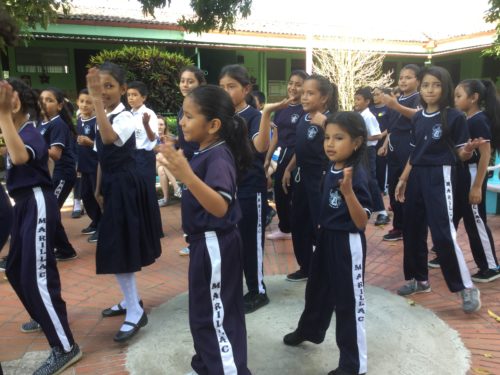
Children at the Marillac School during recreation time

Communities and schools around the world face barriers to providing children with a quality education. Lack of adequate funding to educational institutions can lead to overcrowded classrooms with little or no resources for students. Untrained teachers, lack of proper food and improper classroom facilities can also significantly affect children’s ability to learn.

The consequences of an inadequate education

What are the consequences of inadequate education? Poor education can lead to illiteracy. It also inhibits children from qualifying for higher education or being prepared to join the workforce later in life. Children who aren’t properly educated tend to be less healthy than those who do and are susceptible to turning towards crime and remaining in poverty in adulthood.

A better chance at a future

For impoverished children around the world, like those at the Marallic School, the benefits of quality education are tremendous.

Higher quality of education is associated with positive outcomes such as better health and well-being and a greater interest in politics and social issues. Students who attend quality schools gain a competitive advantage at getting jobs upon graduation, which can lead to a higher income and the chance for a family to break the cycle of poverty. Quality education also can discourage crime because when educated, children feel a sense of hope and opportunity for a brighter future for themselves and their loved ones.

***

How do I sponsor a child in El Salvador?

You can sponsor a child in El Salvador in one of three ways: call our office at 1-800-538-5381 and speak with one of our staff members; email us at sponsorship@children-inc.org; or go online to our sponsorship portal, create an account, and search for a child in El Salvador that is available for sponsorship.

SPONSOR A CHILD


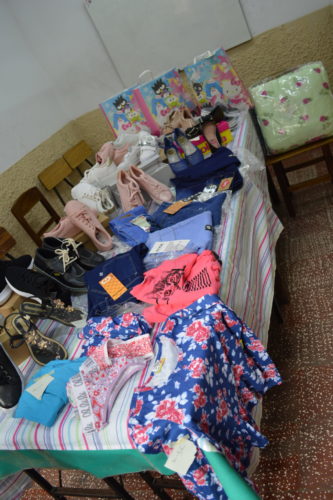
For many children living in poverty, having a sponsor is their only means of receiving basic necessities such as food, clothing and educational assistance. Some may never receive brand new items such as blankets and shoes without the support of a caring sponsor.

Thanks to you, children, such as the girls from Hogar Medalla Milagrosa in Paraguay, and others around the world, are being provided for in ways in which their parents are cannot. We are incredibly grateful for your support to make sure children experience joy and receive items that are new and just for them.  

Your sponsorship support provides much-needed support to children in Paraguay.

Thank you for everything you do! 

Read more about Hogar Medalla Milagrosa

Nestled in the heart of South America, Paraguay comprises an area roughly the size of California, and is characterized by semiarid grasslands, forested highlands, marshlands and rivers. Paraguay boasts a well-preserved indigenous identity and heritage, but a wide range of ethnicities call this small, landlocked nation home, including immigrants from Australia, Germany, Russia, Italy, France and Spain. Paraguay’s rich cultural diversity and wealth of natural resources, however, belie the abject poverty in which the majority of its residents live. Many areas of the country remain underdeveloped, with inhabitants relying on subsistence farming for their livelihood.

Thanks to you, children, such as the girls from Hogar Medalla Milagrosa in Paraguay, and others around the world, are being provided for in ways in which their parents are cannot.

Today, one of South America’s poorest nations, Paraguay is plagued by a history of bloody wars with neighboring countries as well as internal political instability, corruption, deficient infrastructure and poverty. Even the sprawling Paraguayan capital, Asunción, is no exception to these maladies. The Hogar Medalla Milagrosa serves as a beacon of hope to the impoverished children of Asunción, most of whom come from the streets or from broken homes where even affording food is a daily struggle.

Founded in 1895 and run by the nuns of the Order of St. Vincent de Paúl, Hogar Medalla Milagrosa serves as a primary school and a boarding home for orphaned or abandoned children. It not only strives to provide for these deserving children’s immediate, basic needs, but also instills moral guidance while equipping each child with a sound education — the key to breaking the cycle of poverty and rising above the difficult socio-economic circumstances from which they come.

***

HOW DO I SPONSOR A CHILD IN Paraguay?

You can sponsor a child in Paraguay one of three ways – call our office at 1-800-538-5381 and speak with one of our staff members; e-mail us at sponsorship@children-inc.org; or go online to our donation portal, create an account, and search for a child in Paraguay that is available for sponsorship.

SPONSOR A CHILD


Nestled in northern Central America, Honduras was once home to several Mesoamerican peoples — most notably, the Maya. This ecologically diverse land — with its rainforests, cloud forests, savannas, mountain ranges and a barrier reef system off the northern coast — teems with life.  Its wealth of natural resources is equally impressive, including a variety of minable minerals as well as agricultural exports such as coffee, tropical fruit, sugar cane and lumber.

In Honduras, schools are often overcrowded which causes children’s’ education to suffer.

Moreover, Honduras’ growing textile industry serves an international market. The nation’s wealth of natural beauty and resources, however, belies the dire poverty in which its people live — Honduras holds the unfortunate distinction of being one of the poorest nations in Latin America.

This is due, in part, to its longstanding political instability, social strife and economic issues such as fluctuating export prices, rising inflation and unemployment. Other factors contributing to the nation’s high poverty rate include frequent natural disasters, disease and inadequate education, resulting in a high rate of illiteracy.

The town of Sigueatepeuque

In the quaint, rural town of Siguatepeque — where our affiliated project the Siguatepeque Primary School is located — unskilled workers like the parents of our sponsored children receive a wage of only a few dollars a day. The poorest residents subsist on a daily diet of beans and corn, which only propagates the widespread malnutrition among children.

In 1970, a local church group recognized the dire need for education among the town’s most impoverished children and established the Siguatepeque Primary School. Today, the school is run by the Lutheran Church and — along with our sponsorship program — provides for children’s most basic, immediate needs while offering a comfortable place in which to receive an education without concerns about overcrowded classrooms.

The issue of overcrowding

Children need and deserve room to grow and learn within their school setting, but parents who can’t afford school fees or tuition have no choice about what school their children attend.

Overcrowded classrooms are a problem in many public schools across the world. Overcrowding negatively affects students and teachers.

Teachers’ morale is low when their classrooms are overcrowded. They find their work environment to be stressful and have a hard time focusing on appropriate lesson planning and teaching techniques. Also, crowded rooms often mean that students can’t concentrate because of their proximity to classmates, meaning they miss valuable lessons because they are distracted by chatter.

Often, cramped classrooms lead to a drop in grades for students because they don’t receive one-on-one attention from instructors or have access to proper school supplies, textbooks or technologies that help with learning.

Sponsorship to the rescue

Children need and deserve room to grow and learn within their school setting, but parents who can’t afford school fees or tuition have no choice about what school their children attend.

Thanks to Children Incorporated sponsors, families do have a choice. Instead of sending their children to overcrowded public schools in Siguatepeque, they can send them to the Siguatepeque school where teachers can give special attention to students who already face plenty of challenges getting ahead in life.

With a lower attendance, a quality education can be guaranteed for some of the most underprivileged children in Honduras, giving them the opportunity they deserve to succeed.

***

How do I sponsor a child in Honduras?

You can sponsor a child in Honduras in one of three ways: call our office at 1-800-538-5381 and speak with one of our staff members; email us at sponsorship@children-inc.org; or go online to our sponsorship portal, create an account, and search for a child in Honduras that is available for sponsorship.

SPONSOR A CHILD


I will never forget the first time I visited the offices of Children Incorporated. It was on a Monday in February of 2003, a day that became one of the most significant in my life. That was the day that I was hired as Assistant Director to the U.S. Programs Division of Children Incorporated.

I clearly recall the sense of deep gratitude I experienced upon being hired to work at Children Incorporated, and through the years as I have moved from one position to another, my thankfulness has only grown.

I had worked for another, much larger child sponsorship organization for nearly twelve years, and I was happy there. I had hoped to stay with that company for the remainder of my career, doing work that was beneficial to children and families around the world. Yet in August of 2002, without warning, my position and those of several of my co-workers were eliminated. I was stunned to lose a job I loved, and for several months, I sought without success to find another place to work and to serve.

An extraordinary moment

Then, on a Sunday evening that February 2003, as I was attending church, something quite extraordinary happened. I asked the church to pray for me in my efforts to find a job. After the service ended, a man who seemed familiar walked up to me and began a conversation. He explained that he had at one time also worked for my former employer, and he recalled meeting me there. Then, he said, “You should call Children Incorporated, the place where I work now. They may have something for you,” and he gave me the number of then-President and Chief Executive Officer, Marian Cummins.

I called Mrs. Cummins the next morning, and she couldn’t have been nicer. She invited me to come in for an interview that same day. I went and was greeted by not only Mrs. Cummins, but also by Jeanne Clarke Wood, the founder of Children Incorporated and two other staffers, Odell Dunavent and Helen Strathy. I was hired on the spot, and I started my position at Children Incorporated just a couple of days later.

A place to feel at home

I knew from my very first day at Children Incorporated that it was a special organization. I closely observed how the small but dedicated staff interacted with one another, and just how much work they seemed to get done. I listened as the division directors spoke with project coordinators in the field, and I was amazed to hear them referring to sponsored children by their names and not just by numbers as had been the norm at my previous place of employment.

From day one, I knew I had found my work home. The transition from a large, formal, often sterile environment to one of caring, personal connections and heartfelt dedication was a welcome change for me. I clearly recall the sense of deep gratitude I experienced upon being hired to work at Children Incorporated, and through the years as I have moved from one position to another, my thankfulness has only grown. I tell people all the time how blessed I am to work for an organization like Children Incorporated where I know that I am making a difference each and every day.

We are but the vessel through which children are fed and clothed and cared for in many diverse ways. You make all of our work possible, and I am thankful for you.

Thanks to you this Thanksgiving

You also make much more of a difference in the lives of children than you may even begin to realize. The programs Children Incorporated has established to provide assistance to youngsters functions only as a direct result of your giving. We take the dollars you provide — and with the able assistance of our network of volunteer coordinators — offer children education, hope and opportunity for their futures.

We are but the vessel through which children are fed and clothed and cared for in many diverse ways. You make all of our work possible, and I am thankful for you.

***

I first met Reverend Eardley L. Mendis in the winter of 2019 in Chicago, Illinois at a  Children Incorporated meet-and-greet hosted by our CEO and President, Ron Carter, and myself.

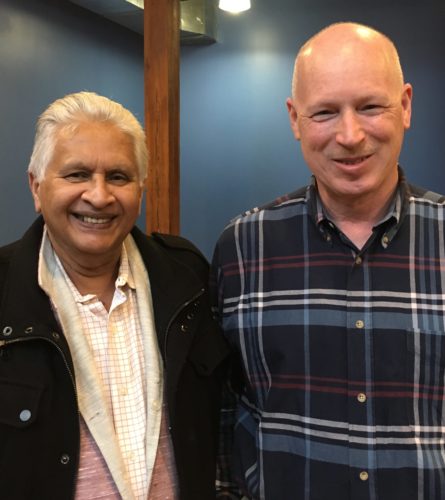
Reverend Mendis with Children Incorporated President and CEO, Ronald H. Carter

A long-time donor, Rev. Mendis arrived at the gathering — despite the freezing temperatures and snow-covered streets — holding a small photo album containing pictures of the Senehasa Children’s Home in Sri Lanka that he ran along with his wife in the 1970s and 80s.

As I flipped through his pictures, Rev. Mendis told me about meeting our founder, Mrs. Jeanne Clarke Wood, at the home, and how much her support — and that of the Children Incorporated sponsorship program — meant to the children in the community.

After our meeting, I had the pleasure of interviewing Reverend Mendis to find out more about Senehasa, which means ‘affection’ in Sinhalese, and the impact it had on children living in poverty in Sri Lanka.

SC: How did you get involved with the Senehasa Home?

In 1979, my wife and I started to serve children in the neighborhood where we lived twelve miles south of the city of Galle in a town called Gonapinuwala. At the time, I was serving as a parish pastor in the Anglican Church in Galle.

“Thanks to the support from Children Incorporated sponsors, we were able to provide more food to children, employ additional staff and improve the buildings.”

Our work began when church members would tell me about malnourished children who lived nearby who they knew were not going to school. We thought that offering them a place to stay — and food — was a good way to help.

SC: What can you tell us about the home?

EM: It was actually two projects — one was a children’s home, and the other was a daycare center. We owned the property, and there was a building that needed to be put into use. We converted it to meet the needs of the children.

The children would arrive around 8 a.m. and would get a morning snack and lunch and then another meal before they went home because there was very little food for them to eat in the evenings. Other children lived in the dormitories all year long.

SC: What year did you first get involved with Children Incorporated?

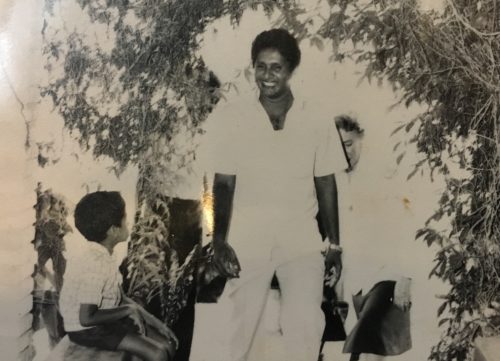
A younger Reverend Mendis with a sponsored child in Sri Lanka.

EM: In 1981. A German national was on vacation in Hikkaduwa, a town just a few miles away from Gonapinuwala with a lovely beach and tourist hotels. While he was there, he heard about the Senehasa Children’s Home and came to meet us.

During the visit, he told me about Children Incorporated. He was a sponsor, and he said he was going to go back to Germany and write Mrs. Wood a letter recommending that we work together.

A few months later, I received a letter from Mrs. Wood saying that she wanted to include the children in our home in her sponsorship program. So we partnered with Children Incorporated even before Mrs. Wood had visited Sri Lanka. It was very important for us to have her support at the time — at first, my wife and I were paying all the expenses ourselves to take care of the children in the home, but after some time it had become too much for us to do on our own.

SC: That is amazing! When did you first meet Mrs. Wood?

EM: She came to the home a few years later, in early 1983. And then I had a chance to go to Richmond, Virginia in the summer of 1983 and visit the office. At the time, Children Incorporated worked out of Mrs. Wood’s home. I had a wonderful time talking to the staff about our program in Sri Lanka.

SC: How many years did you partner with Children Incorporated?

EM: I moved to Chicago in 1987 to pursue my doctoral studies. My wife stayed in Sri Lanka and continued to run the home. Unfortunately, the second Janatha Vimukthi Peramuna insurrection began the same year and violence and conflict erupted in the country. In 1988, I moved my family to the United States so they would be safe, and in 1989, I closed the home.

“I always knew — and still know now — that with Children Incorporated, the children are the primary focus and I have seen and experienced it for myself.

SC: That is very sad. Is the home still there today?

EM: Yes, it is. Today, it is being taken care of by local staff and used for community events. There are meetings and groups that use it for retreats. We still own the property, and both the land and the buildings are still being used.

SC: That is nice to hear. how did you feel that the Children Incorporated program affected the children at the home during the years it was in operation?

EM: Thanks to the support from Children Incorporated sponsors, we were able to provide more food to children, employ additional staff and improve the buildings. Donations also helped us have play equipment on the grounds.

More than just the material items, sponsorship gave the children a feeling that they were a part of a global village — a global family. It gave them a sense of belonging, and the sponsors brought a lot of joy to the children through their letters and pictures.

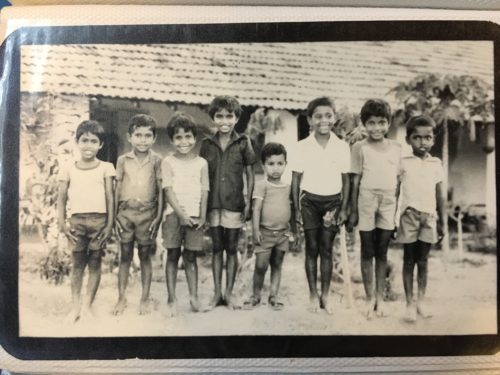
Sponsored children posing for the camera in the 1980s.

It is a great thing. The program is excellent for serving the welfare of children.

I always knew — and still know now — that with Children Incorporated, the children are the primary focus, and I have seen and experienced it for myself.

SC: Thank you so much for your time. Could you please tell us a little more about your life in Chicago currently?

EM: You are welcome. Yes, today I am part of the Evangelical Lutheran Church in America and serve a multi-cultural church in Logan Square. Our primary outreach is for the homeless population, and we provide winter clothes and food for all who enter our doors.

I also continue to be a Children Incorporated donor today — I do what I can, and I am grateful to have seen for myself what donations to Children Incorporated is doing for those in need.

***

HOW DO I SPONSOR A CHILD IN SRI LANKA?

You can sponsor a child in Sri Lanka in one of three ways: call our office at 1-800-538-5381 and speak with one of our staff members; email us at sponsorship@children-inc.org; or go online to our sponsorship portal, create an account, and search for a child in Sri Lanka that is available for sponsorship.

SPONSOR A CHILD