Tag Archives: sponsors

The mountains of Eastern Kentucky are breathtaking. Rolling hills stretch for miles. Horses graze quietly in green pastures. The Red River Gorge draws visitors from across the country to hike towering cliffs and explore the beauty of Appalachia. But beyond the scenic overlooks and winding mountain roads, many families are quietly struggling just to get by.

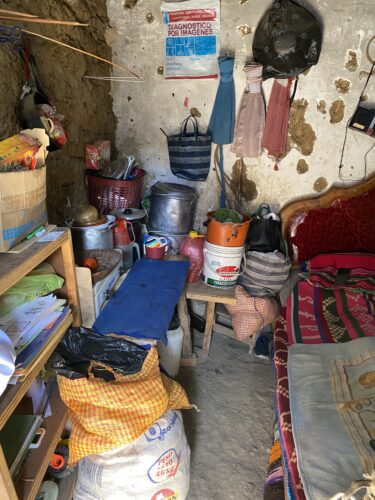
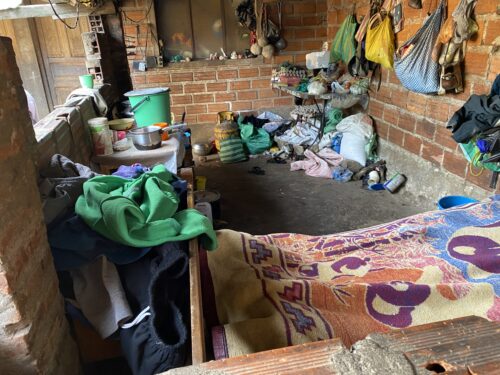
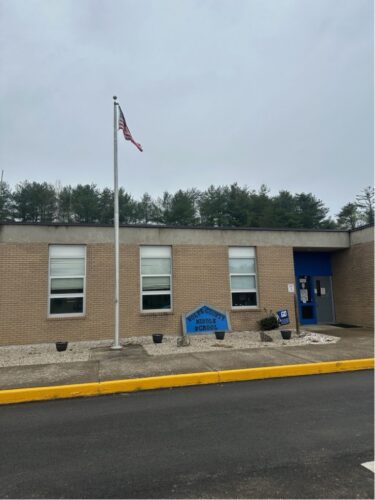
Recently, our Director of US Programs, and our Assistant Director visited Wolfe County, Kentucky — one of the poorest counties in both the state and the nation. In Wolfe County, poverty rates remain staggeringly high, often reaching more than double the national average. Many families live paycheck to paycheck. Others rely on grandparents raising grandchildren on fixed Social Security incomes. Parents work hard in low-paying jobs, seasonal work, farming, or service industries, yet still struggle to afford essentials like clothing, school supplies, hygiene products, or reliable transportation. We can see firsthand how sponsorship is helping children face these challenges with dignity and confidence.

Wolfe County: “Proud as Peacocks”

In Wolfe County, poverty rates remain stuck between 28–37%, more than double the national average. Once supported by coal and logging industries, the county now relies heavily on schools, healthcare, tourism, and low-wage service jobs.

At Wolfe County High School, coordinator Connie Burks described how sponsorship helps students feel confident during some of the hardest years of adolescence. She organizes shopping trips so students can choose clothes, shoes, hygiene items, and essentials many families cannot otherwise provide. “It’s so rewarding to see the students come to school ‘proud as peacocks with their new clothes,’” Connie shared.

For many students, these experiences are completely new. Some are being raised by grandparents. Others are helping support their families while trying to stay focused on school and their future. There’s Austin, a senior accepted into a technical institute to study diesel mechanics. There’s LaDella, who worked after school jobs to help her struggling family before deciding she wanted to pursue nursing. And there’s Ricky, who visits the resource center almost daily — sometimes for a pencil, sometimes for deodorant, and sometimes simply to say hello. At Wolfe County Middle School, coordinators spoke openly about how difficult middle school years can be for children living in poverty. “Most are desperate to fly under the radar, and to fit in with their peers,” the report explains.

New clothes and shoes do more than meet physical needs. They ease embarrassment, reduce bullying, and help children feel accepted during years when fitting in feels incredibly important.

Food insecurity remains a constant concern throughout the county. While a local food pantry has helped, transportation barriers and long wait times often prevent families from accessing help consistently.

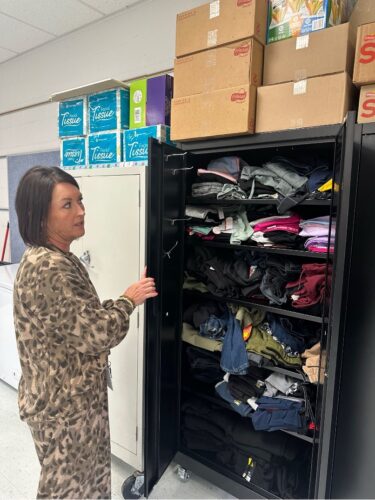
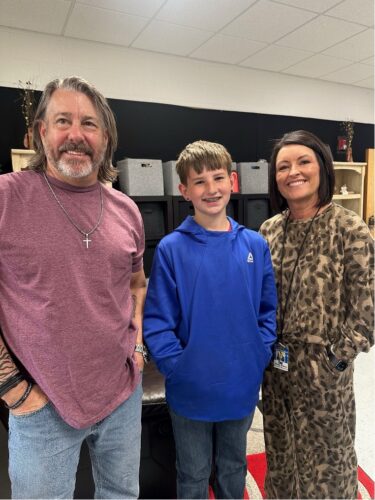
At Campton Elementary School, the Family Resource Center serves as a lifeline for struggling families. Coordinator Becky Dickey and assistant Tom Yeager maintain food supplies, hygiene items, and a clothing closet for students who may come to school without weather-appropriate clothes, properly fitting shoes, or clean outfits.

Sometimes the needs are urgent and immediate. During one visit, a student came into the resource center wearing shoes and pants that were far too small. She left excitedly carrying heart-covered leggings and sandals she had chosen herself. That moment captured the heart of sponsorship in Eastern Kentucky: meeting practical needs while also restoring dignity.

At Campton Elementary, 87% of students come from low-income families.

There’s seven-year-old Jacey, who loves horses, unicorns, and caring for chickens on her family’s small property. Her father works hard doing handyman jobs and small farming projects, but inconsistent income makes supporting six children incredibly difficult. “There are so many reasons they need a well-stocked closet,” Becky explained.

At nearby Rogers Elementary School, coordinators shared stories of grandparents raising grandchildren on small Social Security checks, families living in mobile homes, and children whose sponsorship support has become “a lifeline.”

Breathitt County: Poverty, Flood Recovery, and Resilience

In neighboring Breathitt County, many of the same struggles continue.

The county remains deeply affected by generational poverty and, more recently, by the devastating 2022 Eastern Kentucky floods. Even four years later, flood damage remains visible across the region — damaged homes, boarded windows, warped siding, and families still struggling to rebuild. At Breathitt County Junior/Senior High School, coordinator Kelli Gross described how poverty affects every part of students’ lives. “Some students are staying up all night to make sure a parent doesn’t overdose,” she explained. “Others are taking care of younger siblings late into the night.”

For some students, school simply cannot become the priority it should be because survival at home comes first. Many families rely on government assistance, low-paying retail jobs, school system employment, or nursing home work. Grandparents raising grandchildren is common here as well. Kelli shared that some middle and high school students had “never been inside a store before and didn’t know how to shop for themselves.” Through sponsorship shopping trips, students slowly gain confidence — not just in choosing clothes, but in themselves. At Jackson City School, sponsorship has become woven into the culture of the school itself.

Unlike many schools where students may feel embarrassed receiving support, coordinator Ashley Combs explained that students openly celebrate the program and talk proudly about their sponsors. Ashley described one student with an insulin pump who used to hide the tubing beneath long sleeves, even during warm weather, because he felt self-conscious about the adhesive patches on his skin. With consistent access to supplies and support, he eventually grew more confident. Recently, she saw him wearing short sleeves at school for the first time. “It felt like a small but meaningful victory,” she shared.

At Highland-Turner Elementary School, sponsorship helps children navigate the vulnerable years before transitioning into much larger schools. Coordinator Linda Oaks emphasized how meaningful sponsor relationships become for students. One student proudly shared that she named her black chicken “Smudgy” after her sponsor’s cat because she feels so connected to the family who writes to her.

Those relationships matter deeply.

Children Incorporated doesn’t simply provide clothing and supplies. It creates consistent, caring connections in places where many children desperately need stability and encouragement. At Breathitt Elementary School, coordinator Amanda Miller described how students “light up” when they hear something has arrived from their sponsor. For children being raised by grandparents or living in financially unstable homes, those moments mean more than sponsors may ever fully realize.

A Home Visit That Told the Whole Story

One of the most moving moments of the trip came during a home visit with grandparents Jack and Marilyn Fugate. Now in their late seventies and early eighties, the couple is raising four grandchildren after their daughter passed away from cancer in her thirties. Their only income comes primarily from Social Security.

Jack proudly showed staff the barn he built himself decades ago, once filled with horses he trained and showed throughout the Southeast. Dust-covered trophies still line the shelves inside. Then he walked visitors to the home he also built with his own hands. The couple spoke with deep gratitude for the support their grandchildren receive through Children Incorporated. “It was clear that the assistance makes a meaningful difference — not just in meeting basic needs, but in easing some of the daily pressure they carry.”

That sentence could summarize the entire trip.

Sponsorship is a source of hope

Across every school visit, one message remained clear: sponsorship matters deeply.

It helps children arrive at school prepared to learn. It eases pressure on caregivers already stretched thin. It provides confidence, stability, and encouragement during difficult seasons of life. In places like Wolfe County, poverty is not simply about income. It affects education, transportation, nutrition, emotional well-being, and future opportunity.

But sponsorship creates a connection powerful enough to interrupt that cycle.

Through the support of compassionate sponsors, children in Eastern Kentucky are receiving more than clothes or school supplies. They are receiving reassurance that someone believes in them, cares about their future, and wants them to succeed. And for many children, that hope can make all the difference. What they found was not a lack of love or determination among families. Instead, they witnessed the ongoing realities of generational poverty, limited opportunities, food insecurity, and the daily challenges that children face simply trying to attend school ready to learn.

***

Join Us in Making a Difference

These stories reveal just a glimpse of your support’s impact. Will you help us write the next story?

You can sponsor a child in one of three ways:

SPONSOR A CHILD

written by Renee Kube

Renée oversees Children Incorporated’s work in the United States – from the rural southeast and southwest to our urban areas in New Orleans, Washington, D.C. and Richmond, Virginia. She works closely with our network of more than 100 volunteer coordinators at each affiliated site. For sixteen years, Renée managed our sites in the Appalachian Region before taking her current role in 2010.

» more of Renee's stories

Our Spring 2026 Newsletter is Here!

Your compassion is doing more than meeting needs: it’s changing what’s possible. From delivering life-sustaining meals to over 7,000 children, to empowering young leaders in New Orleans and expanding access to specialized education across the globe, your support is creating real, lasting impact. Whether it’s helping a child stay nourished, confident, or prepared to learn, every act of generosity is an investment in their future.

Working to Fight Food Insecurity

This past October, your compassion took a seat at the table for thousands of children. As global food insecurity continues to rise, our CEO, Liz Collins, mobilized an emergency boost of $25 per child across all our affiliated sites. The scale of your impact is staggering – over 7,000 children received the extra nourishment they needed to grow, learn, and thrive. You didn’t just send a donation, you sent a lifeline.

What You Helped Provide:

  • A week of school meals for one child.
  • One month of weekend food packages for a family in need.
  • Supplies purchased for the sustainability of community gardens.
  • Nutrition support for multiple unsponsored children in a high-need area.

Female Empowerment​ Opportunities ​in New Orleans

At Arthur Ashe Charter School, a remarkable group of young women is proving that with the right support, the future is bright. In “The Ladies of Tomorrow,” an 8th-grade sisterhood, students cultivate empathy and strengthen their emotional health.

Because of your contributions to the Hope In Action Fund, these young leaders had everything they needed—from project supplies to professional clothing—to make their mark this year.

Your generosity empowered them to:

  • Speak Up: They wrote, directed, and filmed two anti-bullying commercials for the weekly school news broadcast.
  • Give Back: The Ladies of Tomorrow mentored the next generation by hosting reading sessions for the first grade classes.
  • Celebrate Culture: They choreographed and led a powerful performance for the school-wide Black History Program.

Seeing Impact Through Letters

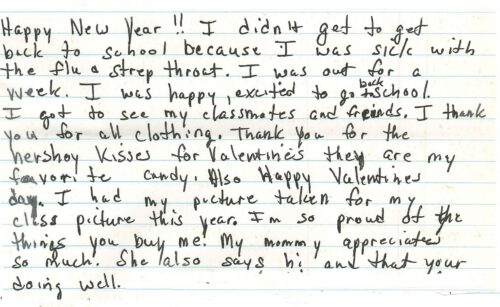
Writing to your sponsored child is a fun and informative way to learn more about their life as well as see the progress brought by your generosity. Some children write more than others, and patience is essential in allowing children to express themselves. We ensure at least one letter a year is delivered to our sponsors.

Educational Therapy in Puerto Rico

Success for a few of our children at Iglesia Bautista requires more than just a standard classroom setup. Through your gifts to the Hope In Action Fund, we recently provided targeted educational and therapeutic grants to ensure every student has the tools they need to grow.

These grants are changing the daily lives of families:

  • Consistency in Therapy: One student can now practice her therapeutic exercises at home with the same equipment used by her specialists.
  • Advancing Education: A young boy was able to trade his “little kid” map for an advanced version that shows every country, matching his growing curiosity and skill level.
Your generosity transforms a child’s potential into real opportunities to learn, grow, and thrive.

COORDINATOR SPOTLIGHT

Serving as the Family Resource Center Coordinator at Salyersville Grade School for the past three years, Kelly Simpkins has embraced her calling to support children and families in a rural community with limited resources. After being encouraged by the school’s principal to apply, she stepped into a role that allows her to make a meaningful difference each day.

She shares that Children Incorporated is an invaluable partner, providing essential support where few other resources exist and helping meet the needs of the most vulnerable students. Grateful for the ongoing encouragement from the Children Incorporated team, she remains focused on her hope that the children and families she serves will overcome generational poverty, achieve self-sufficiency, and grow into happy, healthy, and thriving members of their community.

Building Futures in El Salvador

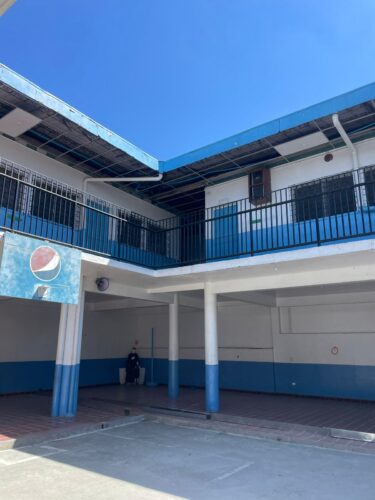
Located near the Civic Center in San Salvador, El Salvador, stands the Laboure School, one of our affiliated sites. The school currently educates over two hundred of the capital city’s boys and girls from first through ninth grade. Due to damages from earthquakes over recent years, a large section of the school was condemned. The rest of the school, though safe, is in desperate need of improvements.

With the government’s increased focus on public safety and security, fewer funds have been available for health and education purposes. That meant we had an opportunity to help. We are thrilled to announce that with Children Incorporated supporters, like you, we secured funding for the remaining amount needed to build a new school.

Luis Bourdet, our Director for International Programs, has diligently worked with Laboure School administrators to obtain building designs and estimates, submit permits, and create project timelines. We are waiting on one more civic permit approval and hope to break ground early-to-mid-May 2026.

This is the largest building project that Children Incorporated has funded, and we are excited to partner with the Laboure School administrators and the San Salvador Civic Center community. We will keep you updated with the progress!

Maximize Your Impact with a Donor-Advised Fund (DAF)

Think of a Donor-Advised Fund (DAF) as a simple and flexible way to support the mission of Children Incorporated. 

How do I contribute to Children Incorporated from my Donor Advised Fund?

  1. Login to your Donor Advised Fund account through your DAF sponsor, such as Fidelity Charitable, DAFGiving360, or Vanguard Charitable.
  2. Recommend a grant to Children Incorporated
  3. Provide Children Incorporated’s tax ID (54-0761510) to your DAF sponsor or advisor

Have questions about how to get started or how to link your existing DAF to our mission? We are here to help! Please reach out to Steve Mitchell, our Director of Donor Development, at 800-538-5381 or via email at smitchell@children-inc.org  to discuss how a DAF can be a powerful tool for your legacy of giving.

READ THE FULL NEWSLETTER

At its heart, literacy is about possibility. It’s about giving a child the tools to learn, to dream, and to choose their own path forward. When we invest in literacy early, especially in underserved communities, we aren’t just teaching children how to read: we are helping them write a different future.

current literacy issues

79% of adults in the U.S. are functionally literate. That means roughly one in five adults struggle with basic reading and writing skills past a sixth grade level. That number is staggering. Literacy affects so much more than the person, it affects whole families, communities, and entire countries.

  • 20% of Americans read below the level needed to earn a living wage.
  • Almost half the adults in the U.S. earn well below the poverty level because of their inability to read.
  • Illiteracy costs U.S. taxpayers an estimated $20 billion each year.
  • Across Latin America and the Caribbean, an estimated 28 million young people cannot read or write, and rural communities bear the brunt of this inequality.


Book Fairs and their impact

For many children, a book fair is a moment of excitement. Colorful displays, new stories, and the joy of choosing a book that feels like it was meant just for them. But for children growing up in underserved communities, book fairs are much more than a special event. They are a meaningful literacy intervention and, in many cases, a child’s first opportunity to truly own a book.

In communities facing persistent poverty, from rural areas of Kentucky and inner-city neighborhoods, to the Navajo Nation, New Orleans, and remote regions abroad, access to books is not guaranteed. Homes may have few, if any, age-appropriate reading materials. Libraries can be far away or under-resourced. Schools often stretch limited budgets just to meet basic needs. As a result, many children fall behind in reading not because they lack ability or motivation, but because they lack access.

This is where book fairs matter.

Research consistently shows that children who have books at home read more, develop stronger vocabulary, and build confidence as learners. Book fairs help bridge the gap between school and home by putting books directly into children’s hands, books they choose themselves, books they are excited to read, and books they can return to again and again. That sense of ownership is powerful. It transforms reading from an assignment into a personal experience.

Book fairs also play a critical role during the early years of education, when literacy development has the greatest long-term impact. Children who are not reading proficiently by third grade are significantly more likely to struggle academically in later years. In underserved communities, where educational setbacks are often compounded by economic stress, early literacy support can change the course of a child’s entire educational journey.

Beyond early childhood, book fairs reinforce the idea that reading has value: that stories matter, learning matters, and the child matters. For students who may feel overlooked or underestimated, choosing a book can be an affirming experience. It tells them that their curiosity is worth nurturing and that their education is something to invest in.

Internationally, the impact is just as meaningful. In remote areas of South America and other underserved regions, access to books can be especially limited by geography and infrastructure. Book fairs and book distribution initiatives help reach children who might otherwise have little exposure to reading materials beyond a classroom setting. Even in countries where national literacy rates appear strong, rural and indigenous communities often face hidden barriers that make access to books inconsistent or unreliable. In these settings, a single book can spark a lifelong love of reading.

What makes book fairs especially effective is how they work in partnership with broader educational support. When paired with school supplies, meals, encouragement from teachers and coordinators, and the stability that sponsorship provides, book fairs become part of a larger system that helps children stay engaged in school and continue learning despite the challenges they face.

At their core, book fairs represent something simple but profound: opportunity. They meet children where they are and give them tools to move forward. They remind students that learning can be joyful, personal, and empowering.

When we invest in book fairs, we invest in literacy, and when we invest in literacy, we invest in a child’s future. Every book placed in a child’s hands is a step toward confidence, independence, and possibility. For children in underserved communities, that step can make all the difference.

books at the dorm

Many Native American students live in such remote areas that they spend most of the academic year in dormitories. Although not all students board, these residential programs make it possible for many young people to receive the education they need and deserve. Children Incorporated, through our sponsorship program and generous donations from caring individuals, helps ensure they have the supplies they need to grow and thrive in these settings.

Over the summer, staff at Dzilth Community School in New Mexico shared a simple but powerful request: more books. Not just “educational” titles, but fun, engaging stories that spark curiosity and make kids want to read.

Our Hope in Action Fund exists for exactly this reason. With donations to this fund, we provided small bookcase libraries for the residential buildings, giving students easy access to books. These new libraries have already inspired more reading and kindled the students’ interest in learning.

vending machines

At many schools a quiet and exciting addition to resource classrooms is being delivered. Through grant funding and community sponsorship, we have several schools within our program that have been gifted book vending machines. These do not operate on money, but rather coins that are distributed to students as a reward for a myriad of positive reasons. Keeping a good grade in a subject, helping others, positive attitudes, all are joyous reasons to be rewarded with a chance to choose a book from the machine.

Besides being a fun tool, there are drastically important cognitive lessons at play with book vending machines. Besides being a healthy reward, it gives a child positive reinforcement, they allow them the control of picking their own item, as well as a chance to express themselves with the choice they make. To them, it isn’t about literacy, it is about the freedom of getting to make your own decision and being acknowledged for their hard work, which carries a tremendous weight in the positive growth of the child, especially one living in poverty.

Children Incorporated has been able to participate as well by providing funding for more books as they are needed through our Hope In Action Fund. As more and more of these book cases are installed in schools around the country we will continue to provide resources for as long as possible.


Thank you sponsors and donors!

Sponsorship provides more than just financial assistance—it offers hope, stability, and opportunity. Whether through education, healthcare, or the simple encouragement of knowing someone cares, children are growing into capable, hopeful young adults. To our sponsors: your support is the reason these opportunities exist. Thank you for walking alongside these children on their journey to a brighter future.

***

Join Us in Making a Difference

These stories reveal just a glimpse of your support’s impact. Will you help us write the next story?

You can sponsor a child in one of three ways:

SPONSOR A CHILD


Sources: https://www.thenationalliteracyinstitute.com/2024-2025-literacy-statistics?

Dear Friends,

Hunger isn’t just an inconvenience — it remains one of the most persistent barriers that dims a child’s chance to succeed. Around the world, millions of children struggle with food insecurity, and too many families don’t know where their next meal will come from.

Across the United States and around the world, children in poverty face a challenge no child should have to navigate: hunger. For too many families across the United States and abroad, the cost of food competes with rent, utilities, school supplies, and basic health needs. Children feel those sacrifices most. When kids don’t know when they will eat again, their ability to focus, grow, and thrive begins to slip away.

For over six decades, we have joined forces with local schools and community organizations to make sure children receive the nourishment they need, not only during the school day, but also on weekends, during school breaks, and in seasons of crisis, so hunger does not get the final say in a child’s future.

How the Feeding Program Works

IN THE UNITED STATES
Children take home bags of nutritious, non-perishable food from school on Fridays. This ensures they have meals throughout the weekend when free and reduced‑price school meals pause.
For families already stretched thin, these bags offer reassurance that their children will not face long gaps between meals. A $50 donation can can provide a filled backpack for a month. Could you find it in your heart to donate this amount for a child needing food?

AROUND THE WORLD
The Feeding Program provides daily meals or essential food supplies at partner schools in countries such as Guatemala, the Philippines, Kenya, and Ethiopia. Your $100 donation can fund a partner school’s nutrition program for an entire week.
In many of these communities, these meals are the most reliable nutrition a child receives, giving them the physical energy and mental focus they need to learn and grow.

Why this work matters now

Hunger remains one of the most persistent barriers to a child’s well-being and education. In America alone, millions of children face food insecurity​, going without adequate nutrition because their families simply cannot afford it. Globally, lack of food and proper nutrition contributes to stunted growth, weakened immune systems, and limited opportunities for children desperately trying to rise above poverty.

Without consistent access to food, children aren’t just hungry​, they’re at risk of falling behind in school, struggling with health issues, and losing confidence in their ability to succeed.

Here’s what your generosity can do

$25 – A week of school meals for one child.
$50 – One month of weekend food packages for a family in need.
$100 – Supplies can be purchased for the sustainment of community gardens.
$350 – Nutrition support for multiple unsponsored children in a high-need area.
$1000 – Long term nutrition support for an entire international school and their families.

What your gift means in Action

  • Food packages sent home on weekends or holidays give families peace of mind, so kids don’t go hungry when school isn’t in session.
  • Through our global network of local partners and volunteer coordinators, every dollar goes directly to putting nutritious food into the hands of children who need it — in the U.S. and abroad.

Today we ask that you stand with these children

When you give to the Feeding Program Fund, you join a compassionate community that refuses to let hunger dim a child’s potential. Consider making a gift to the Feeding Program Fund today. With every contribution, you help provide nourishment, stability, and opportunity to a child who is waiting for someone to care, someone like you.

Sincerely,

Liz Collins, President of Children Incorporated

Want to PARTICIPATE in our feeding program fund?

Breaking the cycle of poverty takes more than one approach. Children Incorporated has helped more than 300,000 children access education, healthcare, and basic necessities since 1964 — and there are many ways to be part of that work. Whether you want a direct relationship with a sponsored child, the flexibility of a one-time donation, or the scale of a corporate partnership, this guide covers every giving path available to you.

1. Sponsor a Child — $35/Month

Child sponsorship is the foundation of Children Incorporated’s mission.

For $35 a month, you are matched with a specific child living in poverty across one of 20 countries, including the United States. Unlike programs that distribute pre-packaged goods, Children Incorporated works through local volunteer coordinators — teachers, social workers, and community members who know each child personally. They use your monthly gift to individually source custom-fit clothing, proper shoes, school supplies, and medical care tailored to that child’s actual needs.

Sponsors receive letters from their child and annual photo updates, creating a real, lasting relationship. Roughly 10,000 children are enrolled in the sponsorship program each year.

Who this is for: Donors who want a direct, personal connection to the child they’re helping.

2. One-Time or Recurring General Donation

Not ready for a monthly sponsorship? A general donation — one-time or automatic monthly — keeps Children Incorporated’s programs running and ensures that resources can be deployed wherever the need is greatest at any given moment. These flexible funds support operational oversight, volunteer coordinator networks, and the community infrastructure that makes individual sponsorships possible.

Who this is for: Donors who want flexibility without a long-term commitment.

3. Honor and Memorial Donations

Give a gift that means something. Donations made in honor of a living friend or family member — for a birthday, anniversary, or holiday — are a meaningful alternative to a traditional present. Memorial donations celebrate the legacy of someone who has passed. Children Incorporated sends a personalized card to the honoree or their family acknowledging your tribute.

Who this is for: Donors looking for a purpose-driven gift for someone they love.

4. Host a Fundraiser

You don’t have to give alone. Children Incorporated actively supports donors who want to mobilize their own networks. Options include:

  • Online birthday fundraisers on social media platforms
  • School supply drives in your neighborhood or workplace
  • Community walk/run events
  • Charity dinners or local gatherings

Hosting a fundraiser multiplies your personal impact and introduces new donors to a cause that changes children’s lives.

Who this is for: Community organizers, teachers, local businesses, and anyone with a network ready to rally around a cause.

5. Specialized Giving Funds

If you want your gift to address a specific, immediate need, Children Incorporated manages four dedicated funds:

  • Shared Hope Fund — Ensures children on the sponsorship waitlist receive basic necessities while they wait to be matched with a sponsor.
  • Hope in Action Fund — Provides rapid-response emergency support — food, clothing, and medical care — for families facing natural disasters or personal crises.
  • Feeding Programs Fund — Funds consistent, nutritious meals for school-aged children so hunger doesn’t become a barrier to learning.
  • Higher Education Fund — Scholarships and financial aid for students pursuing college or vocational training as a path out of generational poverty.

Who this is for: Donors who want to target a specific area of need rather than give to a general fund.

6. Fund a Special Community Project

Children Incorporated partners with local communities to build and improve the environments where children learn, play, and grow. Special Project donations fund infrastructure improvements that benefit entire groups of children at once:

  • Classroom construction and expansion — Building or renovating educational spaces and sanitation facilities
  • Playgrounds — Safe, dedicated spaces for play, physical development, and social skills
  • Community and school gardens — Teaching self-sustainability while providing a steady source of fresh food

Who this is for: Donors who want to see a tangible, community-level result from their giving.

7. Corporate Partnership

Children Incorporated’s Corporate Partnership program is designed for businesses that want meaningful, measurable corporate social responsibility (CSR) impact. Rather than sponsoring individual children, corporate partners typically fund an entire project or fully support an affiliated site — a school, orphanage, or community center. This creates a clear, direct line between your company’s investment and the outcomes it produces.

Children Incorporated works with 225 affiliated sites across 8 U.S. states, Puerto Rico, and 19 foreign countries, giving corporate partners a wide range of communities and causes to engage with.

Who this is for: Companies seeking scalable CSR impact with visible, reportable outcomes.

8. Legacy Giving and Bequests

For donors who want their impact to outlast them, legacy giving allows you to name Children Incorporated as a beneficiary in your will, trust, or life insurance policy. Your gift continues to fund education, health, and opportunity for children in need for decades to come — a lasting expression of your values.

Children Incorporated has been a registered 501(c)(3) nonprofit since 1964, and contributions may be tax-deductible. Consult your tax advisor for guidance specific to your situation.

Who this is for: Donors engaged in estate planning who want their generosity to create a generational legacy.

Frequently Asked Questions About Giving to Children Incorporated

How much does it cost to sponsor a child? Child sponsorship is $35 per month. That gift is used by a local volunteer coordinator to individually purchase clothing, school supplies, and medical care for your specific child.

Is Children Incorporated a legitimate charity? Yes. Children Incorporated is an independent 501(c)(3) nonprofit that has operated since 1964. It has no religious or political affiliation and has assisted more than 300,000 children worldwide.

Can I give a one-time donation instead of a monthly commitment? Yes. One-time general donations and one-time gifts to specialized funds are both available and help Children Incorporated direct resources where they’re needed most.

What happens to children waiting for a sponsor? The Shared Hope Fund provides for children on the sponsorship waitlist so they aren’t left without support while waiting to be matched.

Can my company partner with Children Incorporated? Yes. The Corporate Partnership program allows businesses to fund entire projects or fully support an affiliated site, creating large-scale, measurable impact.

Choose Your Path

Every giving path — from a $35 monthly sponsorship to a corporate grant to a bequest in your estate plan — funds the same core mission: giving children living in poverty access to education, healthcare, and the opportunity to reach their full potential.

Explore all giving options at Children Incorporated →

***

Join Us in Making a Difference

These stories reveal just a glimpse of your support’s impact. Will you help us write the next story?

You can sponsor a child in one of three ways:

SPONSOR A CHILD


Sources: https://www.thenationalliteracyinstitute.com/2024-2025-literacy-statistics?

What is energy insecurity?

For many Southern families in the United States, winter brings more than a chill; it brings tough decisions. Energy insecurity (EI), a silent crisis affecting millions nationwide, often signifies an inability to meet heating, cooling, and energy needs. Low-income families, especially in rural areas, often face drafty homes and skyrocketing utility bills that outpace paychecks.

When the cold sets in, some must make heartbreaking “heat or eat” choices, spending what little they have on warmth or on food. In rural regions across Kentucky, West Virginia, and beyond, older homes and limited access to energy assistance leave families vulnerable to another bitter season.

The Impact of Cold Weather on Children

When temperatures drop, the challenge for our enrolled children extends far beyond just a  “chilly morning”. By lacking warm coats, shoes, or clothing, some students must miss school entirely, not by choice, but out of necessity. Missing school deepens existing attendance struggles, especially for children already living in poverty.

Helping provide warm clothing isn’t just about comfort; it’s about keeping children in class, connected, and ready to learn. A warm jacket can mean the difference between isolation and opportunity.

Climate and Inequality: When Weather Hits Harder

Extreme weather magnifies long-standing disparities in high-poverty, Black, and Hispanic neighborhoods, which already face structural barriers. When harsh heat or cold hits, those barriers grow higher, affecting health, school performance, and family stability.

Southern cities like New Orleans may see fewer winter storms than northern states, but when cold snaps hit, they hit hard. Older homes aren’t built to retain heat, and families living on thin margins have few safety nets. Even though New Orleans is in the South and bouts of cold weather are limited, the need for warm clothing is still their greatest need and the area in which our sponsors help children the most.

In the deep rural areas of Appalachia, steep mountain roads become treacherous when ice or snow arrives. When communities are cut off, students lose access not only to school but to the nutritious meals they depend on there. When significant winter weather hits, it is not an easy task to make the roads passable again – which limits the resources available to already struggling families.

Across North Carolina, from urban Raleigh to rural mountain towns, energy insecurity creates a health and learning risk. Studies find that households that must allocate more than a large share of income toward utilities are far more exposed to extreme temperature swings and health risks.

In the inner-city neighborhoods where we work in Washington, D.C., and Richmond, Virginia, winter brings a different kind of strain. Many families live in older buildings with inconsistent heat and rising utility costs. A stretch of freezing temperatures can mean crowded living spaces, missed school days, and parents forced to choose which bill to pay first. For children already navigating economic hardship, winter can interrupt learning, routine, and a sense of security.

How you can help

In times of hardship, whether from a cold snap, a family crisis, or ongoing energy insecurity, children need to know they are not alone. Through funds like Hope In Action and the Clothing Fund, our donors help provide warm coats, hats, gloves, emergency food, and other critical supplies when families need them most.

Working with trusted school partners and local volunteer coordinators who know their communities well, we quickly identify children who are struggling and respond with compassion and care. Your donations and sponsorship support helps them stay warm, stay in school, and stay focused on learning rather than survival.

Harsh winter conditions do not affect every family equally. Some can absorb the shock; others feel every degree of cold intensely. That is why your sponsorship and donations matter. When you give, you help a child stay warm, fed, and present in the classroom, and you invest in their future, building resilience and hope that last long after winter has passed.

***

How do I sponsor a child with Children Incorporated?

You can sponsor a child in one of three ways:

  • call our office at 1-800-538-5381 and speak with one of our staff members;
  • email us at sponsorship@children-inc.org; or
  • go online to our sponsorship portal, create an account, and search for a child in that is available for sponsorship.

SPONSOR A CHILD