Tag Archives: hope

Sri Lanka is an island country in South Asia, just below India, that is known for its natural beauty, wildlife, and tea and cinnamon exports. Its heritage rich in Buddhism, Sri Lanka is the oldest democracy in Asia. And although thriving with regard to tourism and commerce, many people in the country live in poverty — especially children who have been removed from their homes by the government because of abuse and neglect, like those that live at the Touch a Life with Hope Center.
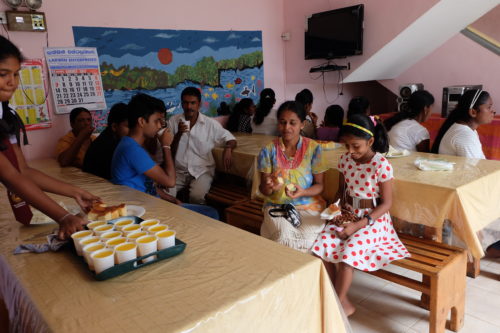
Children and their parents enjoy refreshments during our visit.

When Luis Bourdet, Children Incorporated’s Director of International Programs, and I arrived in Sri Lanka, I first noticed how nice the roads were – a sign of development and progress for nations that are considered to be developing or underdeveloped. Since the end of Sri Lanka’s 25-year civil war between the Liberation Tigers of Tamil Eelam (LTTE) and the Sri Lankan government in 2009, a war that caused great hardship for the population, economy, and environment of the country, the focus has shifted to increasing tourism, which has meant improvements to highways, and the construction of more hotels and business, most prominently seen in the capital city of Colombo. Though Sri Lanka is much better off in certain ways than it was eight years ago, the country and its people are still recovering from the instability and lack of infrastructure caused by decades of war.

Fifteen cents a day is not enough

Though Sri Lanka is much better off in certain ways than it was eight years ago, the country and its people are still recovering from the instability and lack of infrastructure caused by decades of war.

We arrived at the Touch a Life with Hope Center, centrally located in Colombo, just a minutes drive from our hotel. The center is tucked away down a small, narrow road lined with tall palm trees. A security wall protects the building, which is not only a home for girls, but also serves as a place for children who live with their families to receive support. Our sponsored children who do not live at the home, but in neighborhoods close by, are both girls and boys. The children attend local public schools, where core academic subjects are taught, including English. Children Incorporated has been affiliated with the home for over thirty years, thanks to a partnership developed by our founder, Mrs. Wood.

We were greeted in the courtyard by a few of the board members; our Volunteer Coordinator, Mrs. Chandini Tilakaratna, was away on business, but her cohorts were more than knowledgeable about the center and its inner workings, and they shared with us in great detail the ways in which the children are provided for at the home. The home was founded in 1982 and is operated by a group of supporters from the community.
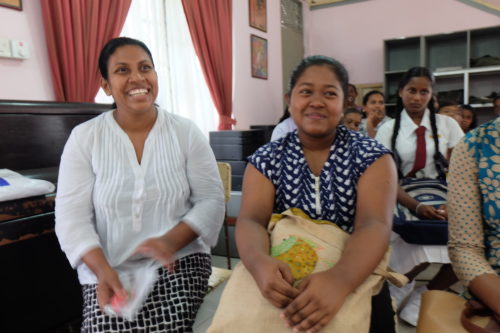
A proud mother (left) who works hard to help her daughter stay in school

Most donations to the center come entirely from private donors, either in the form of actual monetary funds or through the donation of clothing and food for the girls. Since the government provides only forty rupees a day for each child — about the equivalent of fifteen U.S. cents — sponsorship is really important in ensuring their needs are met. Although the girls attend free public schools, the cost of school supplies and books is always additional, and the center has little money to use for things other than food and boarding expenses.

Some children go to the Home at a very early age and stay until they are eighteen years old. Currently, 29 girls live at the home, the youngest being seven years old. The sponsored children we met there were of varying ages. They ranged in grade level from elementary to high school. Some of the children have been in our program for as many as fifteen years — a true testament to how sponsorship can support children long-term.

A motivated mother

We met with both parents and sponsored children throughout the day. We spoke with one mother who talked about how she and her husband both work – but the work is never permanent, meaning they don’t have a steady income. She works for a small business that makes and sells crafts, and he works as a rugby coach — two jobs that aren’t consistent year-round, and pay only around 500 rupees a day, or a little more than three U.S. dollars.

Their rent alone costs them 100 U.S. dollars a month, so many times, they have to decide which bills to pay to keep the lights on or to have running water. Money from sponsorship helps her purchase books and pay class fees for tutoring or art classes for her daughter — things that the family would otherwise not be able to afford. The mother talked about how she is very motivated to help her daughter excel, and we could see that she is successfully encouraging her daughter. Her daughter hasn’t finished high school yet, but is already taking nursing courses.

Some of the children have been in our program for as many as fifteen years — a true testament to how sponsorship can support children long-term.

Never without a home

After meeting with the children, we took a tour of the two-story building; we saw the library, the two study rooms, and the computer lab. The center has a lunchroom and kitchen, one dorm for the younger girls and one for the older girls, and showers and a washing area. Each bed has a custom-made mosquito net big enough to cover the entire bunk. There are four full-time matrons who live in separate living quarters at the home, and the center’s administrative offices are in the building as well.

It was explained to Luis and me that when the girls turn eighteen years old, they move out of the home, but continue to receive support for three years as they acclimate to living on their own, and continue their education or find jobs. Sometimes the girls go to live with family, and sometimes they find their own way, but they are always welcome to return to the home to visit – and there is even a bedroom where they can stay the night if they wish.

The center does such a good job of keeping in touch with the girls who have grown up in the home and moved on that they even have special events and holiday parties which they invite them to join. No longer girls, these women, some who moved out as many as ten years ago, return to the home with their own children.

And the women reciprocate the invitation to celebrate as well. As we were leaving for the day, I noticed a bulletin board in the hallway that had dozens of wedding photos pinned to it – beautiful brides stood with their grooms, smiling at the camera. There were thank-you cards to the matrons and administration for having been in attendance on these special days – a gesture that showed me that the girls considered those who raised them in the home family.

***

HOW DO I SPONSOR A CHILD IN SRI LANKA?

You can sponsor a child in Sri Lanka in one of three ways: call our office at 1-800-538-5381 and speak with one of our staff members; email us at sponsorship@children-inc.org; or go online to our donation portal, create an account, and search for a child in Sri Lanka that is available for sponsorship.
SPONSOR A CHILD

Earlier in the summer, as Luis Bourdet, Children Incorporated’s Director of International Programs, and I discussed our upcoming trip in August to India and Sri Lanka to visit twelve of our affiliated projects, I asked Luis what the children living in this particular region of the world could benefit from most outside of what sponsorship already provides for them. He said he would reach out to our volunteer coordinators to find out.

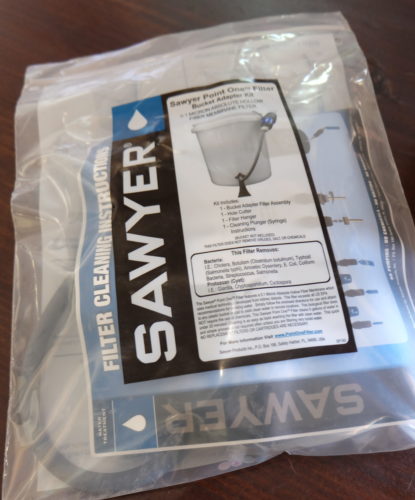
When a Sawyer water filter is properly maintained, it can last for ten years.

It didn’t take long for Luis to come back to me with a response: the biggest issue that our coordinators face — accessing clean water for children in our program.

The global water crisis

Nearly one billion people in the world lack access to safe drinking water; and roughly 3.5 million people die each year because of water-borne illnesses such as cholera and typhoid, as well as severe diarrhea. According to Luis, providing clean water systems for our projects is something than can be done, but not quickly — and not inexpensively.

Through a process called reverse osmosis, bacteria and other types of microscopic species can be removed from water; but the cost for each system can be as high as $8,000, and would take time to install. In order to help our sponsored children sooner, I reached out to a nonprofit organization called Wine To Water to see if they could offer a solution.

It didn’t take long for Luis to come back to me with a response: the biggest issue that our coordinators face – accessing clean water for children in our program.

Wine To Water’s story

Wine To Water was founded by Doc Hendley in 2003. A former bartender from North Carolina, Doc began focusing on the global water crisis after working in Sudan with a nonprofit organization called Samaritan’s Purse, implementing clean water projects. After a year in the field, Doc returned home fully aware of the global water crisis, and decided to start his own organization to bring clean water to some of the most remote areas in the world. In 2012, Doc was selected as a top-ten finalist for the CNN Heroes Award for his work with Wine To Water; the organization has now provided clean water to over 300,000 people in eighteen countries.

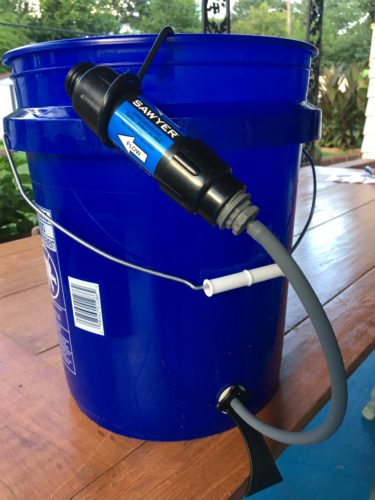
A Sawyer water filtration system set up and ready to use.

When I reached out to Wine To Water and spoke with their International Operations Director, Josh Elliott, he explained that the organization’s goals are larger than just taking clean water to communities – Wine To Water also works to improve sanitation practices, teaches hygiene education, collaborates with local people in each country, repairs wells, and disperses water filters and rainwater harvest tanks all around the globe. Josh’s solution to taking clean water to Children Incorporated projects in India and Sri Lanka was to offer Luis and I Sawyer water filters to take with us. The filters are small, easy to transport, and last ten years if used properly, which is a big deal for families in need.

Keeping kids health

A few weeks after talking with Josh, I took a training class at the Wine To Water office in Boone, North Carolina to prepare myself for showing our coordinators how to properly use the water filters – filters that will keep our sponsored children healthy. Each project will receive two or three filters, which can be used in common areas, such as in the school office or cafeteria of the schools that the children attend, which they may access daily. Our hope is that with Wine To Water’s help, offering clean water will keep our sponsored children healthy so they can attend school each and every day.

***

HOW DO I SPONSOR A CHILD IN INDIA OR SRI LANKA?

You can sponsor a child in India or Sri Lanka in one of three ways – call our office at 1-800-538-5381 and speak with one of our staff members, email us at sponsorship@children-inc.org, or go online to our donation portal, create an account, and search for a child in India or Sri Lanka that is available for sponsorship.

SPONSOR A CHILD

After hearing story after story from her friend Hilary about child sponsorship through Children Incorporated, Kathy Niles decided she wanted to sponsor a child of her own. Little did she know that sponsorship would lead to unforgettable travels with her friend, getting to know several children – and an even deeper understanding of and appreciation for Native American culture.

We caught up with Kathy to find out about her experiences as a child sponsor, and about the impact those moments have had on her life.

SC: Tell us a little about yourself.

Kathy’s sponsored child in Arizona

KN: My home is in Ashaway, Rhode Island, and I am 64 years old. I have two children of my own, and was a single mom for most of their childhoods. I held several manufacturing jobs off and on, but finally started my own cleaning business fifteen years ago, of which I am the only employee.

It hasn’t been an easy road for me – especially career-wise. My grandmother used to say, “You have to have the bitter to appreciate the sweet!” The bitter can be very hard; but in many cases, it forms the mold in which one becomes stronger, more caring, and driven to work harder to succeed.

 SC: How did you get involved with Children Incorporated?

KN: I learned about Children Incorporated through a friend of mine, Hilary, who was sponsoring a child in Appalachia. So in 2007, I sponsored my first child, Joel*, who attended the same school as Hilary’s sponsored child – and Hilary and I traveled to the school together to spend the day there and visit our sponsored children. It’s something any sponsor should do if they have the opportunity, because it was so rewarding, and I felt very blessed to have been able to visit the project.

In 2011, Joel moved to a different area, and that’s when I started sponsoring Chelsea* – and I have been sponsoring her ever since!

Hilary’s stories of Children Incorporated made me want to do something for a child in need; I didn’t have grandchildren, so I figured I would spend my money on sponsorship. And I decided that I would like to have the chance to help a child get ahead, and to have the chance to fight through their struggles to go on to college and better themselves.

SC: How many children have you sponsored through Children Incorporated?

I decided that I would like to have the chance to help a child get ahead, and to have the chance to fight through their struggles to go on to college and better themselves.

KN: I followed Hilary’s lead and started sponsoring children on the Navajo Reservation, too. Some of them have moved away, so I have had a few different ones there; but I don’t want stop sponsoring there, because I feel bad for these kids that need help.

SC: When you signed up, did you specify preferences for your sponsored child?

KN: Yes – originally, I wanted a sponsored child in Appalachia; I started sponsoring in the Navajo Reservation when I decided to add an additional sponsorship.

I visited the Shonto Preparatory School in Arizona with Hilary, who was traveling there to see her sponsored child graduate high school. It was a very inspirational, rewarding experience for me. In this world stricken with poverty and strife, there is a strong family bond that I noticed, and we were welcomed and accepted – even as minorities.

That’s when I decided to sponsor a Native American child, too. I just recently received information on a new child there, and I am hoping that this will be a lasting relationship, for as long as she is in the school.

Kathy also sponsors a young girl in Kentucky.

SC: Is there anything more you can tell us about the projects you have visited?

KN: The volunteers at the schools are people that give of their time, hearts, and souls to help.

SC: Please tell us about the children you currently sponsor.

KN: Chelsea in Appalachia is fifteen and in the tenth grade; she lives with her mom and four sisters, two brothers, and some cats. She likes playing games, and is good at building things – and not surprisingly, she wants to be a mechanical engineer when she grows up!

I would love to be able to go to her high school graduation; that is my goal. And I would love for my kids to join me when I do. I pray that Chelsea continues to do well, and that she finds a special interest that she can pursue for her future. She is a beautiful young woman; I always get a new picture of her every year.

And Cari* in the Navajo Reservation is also in the tenth grade, and enjoys studying global issues in school. She likes to listen to music, and she’s good at singing; she especially likes the music of singer-songwriter Ed Sheeran. She lives with her mom, and has two brothers and one sister – and she wants to be a veterinarian when she grows up!

SC: Do you communicate with them regularly?

KN: Yes – I send them packages and letters. I send Chelsea money for her birthday, back to school, Christmas, and sometimes in the spring. I also buy her school supplies and hygiene articles; and I know she likes to read, so I have gotten her a gift card to Barnes and Noble. And every once in a while, I get a thank-you note from her, and it always touches my heart!

SC: What do you know about Arizona?

For those who can afford to help, I strongly suggest that you give to a child in need. It can and will make a huge difference in their lives and in their future; it will help mold them into strong individuals.

It was an eye-opener to go to Arizona and see children in their native regalia, and to hear children speaking their native language; it was beautiful!

SC: Is there any advice you might have for someone considering sponsoring a child?

KN: Children Incorporated is a great program, and it has helped many. For those who can afford to help, I strongly suggest that you give to a child in need. It can and will make a huge difference in their lives and in their future; it will help mold them into strong individuals.

I pray that my help has touched each one of these children that I have at some point given to.

*Names changed for children’s protection.

***

HOW DO I SPONSOR A CHILD IN APPALACHIA?

You can sponsor a child in Appalachia in one of two ways: call our office at 1-800-538-5381 and speak with one of our Sponsorship Specialists, or email us at sponsorship@children-inc.org.

 HOW DO I HELP CHILDREN IN ARIZONA?

You can help children in Arizona in one of two ways – our Hope In Action Fund provides for children in special cases, such as in emergencies, and when special items, like eyeglasses, mattresses, and bedding are needed. Our Warm Clothing Fund and our Back to School Fund support children in the Navajo Nation as well.

Last November, Children Incorporated staff members Renée Kube, Shelley Oxenham, and Chuck Smith helped rebuild a playground at G.H. Reid Elementary School in Richmond, Virginia, where we partner with Communities in Schools of Richmond (CIS) to support sponsored children in the Richmond area, near our headquarters.

Just a few months prior, over summer break, the old playground was set on fire, and it spread around the equipment, melting and disfiguring most of it, and leaving the 750 Richmond public school children with few options for outdoor play.

Partners in Rebuilding

Fun supplies makes for a good time for kids

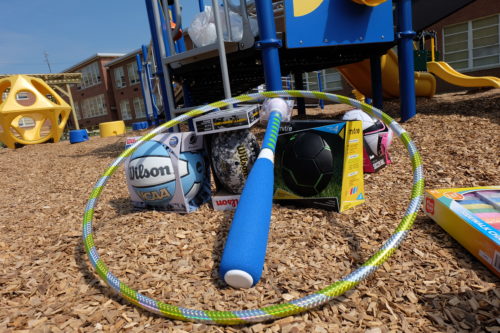
A few of the donated supplies for kids at G.H. Reid Elementary

Renée, our Director of U.S. Programs, explained that the playground rebuild project was able to happen thanks to KaBOOM, a national nonprofit that builds playgrounds, especially in low-income areas.

The CarMax Foundation also stepped up to contribute funds and materials for the build, and Renée attended the volunteer workday, along with her Children Incorporated coworkers Shelley, U.S. Programs Specialist, and Chuck, U.S. Sponsorship Manager.

About 250 volunteers built the playground from the ground up in just one day. One of the jobs Renée, Shelley, and Chuck were assigned was painting maps and game boards onto the playground surface.

A Big Initiative

By the end of May, we had $1,000 to donate to G.H. Reid, and we couldn’t wait to present the check to them, as well as contribute some supplies to get them started.

In early 2017, Children Incorporated promoted Renée, Shelley, and Chuck’s story about helping to rebuild the playground. We took that opportunity to mention another initiative as well: we wanted to provide additional funding to the school for the playground’s upkeep, such as laying new mulch and repainting, which it would be in need of at the end of the school year. But by early spring, that initiative grew beyond just helping with maintenance, thanks to a special sponsor, Micah Greer – it turned into a campaign to raise funds to purchase playground supplies as well.

Micah is the founder of Operation Optimist, a web-based clothing company in Austin, Texas, and he is a personal trainer. Micah has been a sponsor through Children Incorporated for more than a year, and he decided to take his involvement to new heights by making the generous offer to donate ten percent of all of his merchandise sales to our organization. When Micah sent Children Incorporated a check for $500 in April, we decided we would use the funds to purchase supplies for children to use in support of healthy living, since that’s one of Micah’s primary focuses. And we asked donors to match it – which they happily did! By the end of May, we had $1,000 to donate to G.H. Reid, and we couldn’t wait to present the check to them, as well as contribute some supplies to get them started.

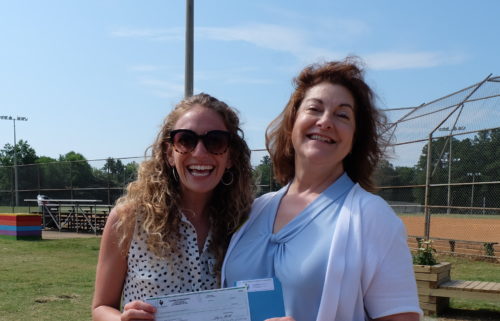
Presenting the check to our volunteer coordinator to purchase even more playground supplies for the fall

The Dream List

With the funding in place, Renée asked for a “dream list” of playground supplies from G.H. Reid, which was provided by Mr. Vickers, the physical education teacher there. Mr. Vickers told our volunteer coordinator, Sydney Capito, that the children could use detachable hurdles, a handled parachute, dumbbells, basketballs, footballs, soccer balls, kick balls, and hula-hoops. Renée purchased some of the items, including a flag football set and wiffle ball bats. We were so excited to take fun supplies to the school last week, and to present a check to Sydney, who knows the children will be thrilled to have all this new gear to play with in the upcoming school year.

***

HOW DO I SPONSOR A CHILD IN RICHMOND, VIRGINIA?

You can sponsor a child in Richmond in one of two ways: call our office at 1-800-538-5381 and speak with one of our sponsorship specialists, or email us at sponsorship@children-inc.org.

SPONSOR A CHILD

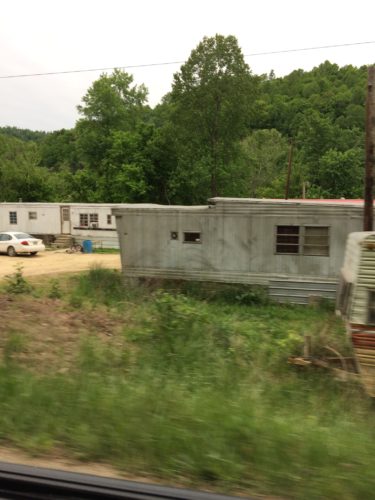
In May, our Director of U.S. Programs, Renée Kube, visited Martin County in Kentucky, where she met with many of our sponsored children at our affiliated schools, as well as at some of their homes. The breadth and depth of the poverty in Martin County is staggering. Over the many years that Renée has been visiting Eastern Kentucky, she has seen the homes of the impoverished on the sides of main roads; but it still amazed her that home visits would take her off state roads, and onto tiny county roads, where along gravel lanes and dirt ruts, there is even more dire poverty. Some homes are so far into the mountain hollows that Renée can’t even begin to imagine how the homes were placed there.

Grandparents Stepping Up

Upon visiting with Billy* at his school, Renée found his situation to be very representative of many Martin County children, because his grandparents are raising him and his little sister, Kristen*. Both grandparents are disabled and subsist on small disability allotments from the government.

Renée with a sponsored child and her parents

Renée noticed that Billy is cheerful and has a positive attitude. He was comfortable telling her that he loves having a sponsor, and that it has helped him very much. He was excited to talk about the opportunity to enjoy a week at Trooper Island Summer Camp in Dale Hollow Lake State Resort Park; the camp gives underprivileged Kentucky children, ages ten to twelve, some time away from their stresses so they can simply be kids. State troopers lead them in all kinds of recreational activities, and they have conversations about healthy living, safety, and making wise choices.

So Many Children in Need

Renée also met with Blake* and Ruby* at their school; these two siblings had been living with their parents in a partially burned house that had no running water. The Family Resource Center, our partnering organization in Kentucky, worked with other county partners to find the family another place to live. The kids’ housing is now better and safer, but their circumstances are still extremely bad.

As Renée spoke with the parents, they told her how much the sponsorship program has meant to them, because the kids’ sponsors have helped so much over the years.

Another sponsored child, Scott*, was just enrolled in our program in January. He lives with his grandparents, siblings, and other relatives. There are ten people in the home, which is a very dilapidated dwelling. Renée also met Stuart*, who lives in a camper trailer by a local pizza restaurant. There are ten people living in his home as well, including his first cousin, Nathan*, who is also in our program. Their home life is not only an impoverished one, but it is also incredibly unstable and rather neglectful.

Loving Parents Struggle to Provide Support

Her first visit took Renée to the home of the Johnson family, who lives in one of the most deprived trailer communities in the county. Both the mother and father are kind and loving, but have little education or physical capacity. Their children are Susan*, age fourteen and in high school; Brooke*, age eighteen and also in high school; and Holly*, age nineteen and a former sponsored child. The father is a general laborer and can find only temporary jobs. The mother has respiratory problems and is in poor health, which often causes her to be bedridden.

Homes in Eastern Kentucky, which are sometimes too small for large families

When Renée entered the home, she saw that the front door opened directly into the living room, and a small sofa was in front of her. There was a small bed against a wall, and that’s where one of the girls sleeps. To the right of the living room was the kitchen. To the left of the living room was a doorway that opened into the parents’ room, which was taken up by a king-sized mattress and box spring foundation, and is where the mother spends most of her time. The family had decorated the home with old beach towels, which hung from the walls and the ceilings.

As Renée spoke with the parents, they told her how much the sponsorship program has meant to them, because the kids’ sponsors have helped so much over the years. The Johnsons are among the poorest of the families with kids in our program; but even though it seems virtually impossible for the parents to improve their situation, Renée could tell that they have hope for their children, and that the support they receive from sponsorship is important in encouraging the girls to do well in school and succeed.

The Wilson family also welcomed Renée into their home. Mr. and Mrs. Wilson are the parents of Becky*, nine; Lola*, seven; and Maria*, five. All three girls are sponsored. The middle child, Lola, is extremely small for her age and has some health challenges. The parents have tried diligently over the years to support their children, and our volunteer coordinators have worked closely with them in their efforts.

These are just a few examples of how much of a difference your sponsorship and contributions make; little by little, we can help break the cycle of poverty by offering more and more children education, hope, and opportunity.

They were living in a ramshackle apartment, but are now in a public housing complex – which is a big step up for them. The parents are extremely proud of their small apartment, and the mother has decorated it with modest items purchased at yard sales, thrift shops, and dollar stores. This home is much better for the girls than their former situation.

Through her home visits, both parents and guardians told Renée over and over that the most important things for their children to have are absolute basics, like food, clothing, school supplies, and hygiene items. After paying rent and utilities, caretakers often find they have virtually nothing left over to help support their rapidly growing children, which is why our sponsorship program is so valuable to these families.

These are just a few examples of how much of a difference your sponsorship and contributions make; little by little, we can help break the cycle of poverty by offering more and more children education, hope, and opportunity.

*Names changed for children’s protection.

***

HOW DO I SPONSOR A CHILD IN KENTUCKY?

You can sponsor a child in Kentucky in one of two ways – call our office and speak with one of our sponsorship specialists at 1-800-538-5381, or email the sponsorship department at sponsorship@children-inc.org.

SPONSOR A CHILD

As of January 2026 we are no longer able to operate within Nicaragua

Almost as soon as we arrived in Managua after our flight from San Jose, I could tell that Nicaragua was vastly different from Costa Rica. As we drove out of the capital city, the jungle landscape we had seen just one day before had been replaced by flat, open land where cows and horses roamed for miles. Along the road to Leon, the second-largest city in Nicaragua after Managua, we saw cowboys, both young and old, leading herds of animals, and I felt like we were in an old Western movie.

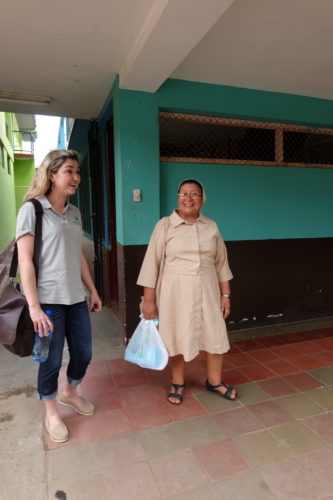
Andreia, International Project Specialist, with Sister Olga, our volunteer coordinator

That feeling didn’t change when we arrived two hours later at the La Recoleccion Home, a school for girls that has been around since 1880. La Recoleccion itself looked like a movie set – the large hallways and courtyards of the school were picturesque, towering stories above us. Lush trees and blossoming flowers grew all around, and archways leading into grand halls were enormous. I hadn’t known what to expect on my first trip to Nicaragua, but its beauty overwhelmed me, which was striking, considering we were in one of the poorest countries in the Americas.

The Land of Lakes and Volcanoes

Geographically, Nicaragua is the largest country in Central America. It is a multi-ethnic country of six million people, and the main language spoken there is Spanish. Tourism in Nicaragua has grown exponentially in recent years, but the population of the country still remains very poor. 48 percent of its people live below the poverty line, living on less than two dollars a day.

The country is primarily an agricultural one, and its minimum wage is among the lowest in all of the Americas. For that reason, many Nicaraguans leave to try to find better work in neighboring countries like Costa Rica, even though that means leaving their families, including their children, behind.

But those who are accepted have a safe place to be during the day; and for some, La Recoleccion offers an escape from a world of poverty during the night as well.

A Safe Place for Girls

At La Recoleccion, more than 1,300 girls attend the school every day. Sister Olga is our volunteer coordinator at the school, which also serves as a girls’ home. She has been working at La Recoleccion since 2014, when she moved from Honduras, where she had been working as our coordinator at another affiliate project since 1998. In all, Sister Olga has been associated with Children Incorporated for almost twenty years; and like Sister Bertalina at Santa Luisa in Costa Rica, she has worked at multiple projects in multiple countries!

Of the 68 girls enrolled in our program and attending the school, 25 live in the home full-time because their families have moved away to look for work. Many of the girls who don’t live at the Home live with single mothers who work long hours away from home in fields, or as housekeepers for other families. Violence is a concern because the girls are at home alone in the afternoons while their mothers work late – and unfortunately, abuse sometimes comes from people the mothers are associated with, like stepfathers or boyfriends.

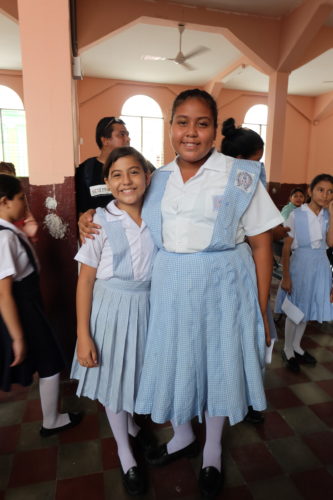
Sponsored girls smile for the camera

Since its inception, La Recoleccion has been assisting girls who are orphaned, abandoned, or neglected, offering them educational and additional support through sponsorship, like with school uniforms, school supplies, meals, and room and board. Of those girls that don’t live permanently at La Recoleccion, there is the option for them to stay after school until their mothers get off work.

A Beacon of Hope

It’s hard for Sister Olga to decide who gets to go to the school – more parents approach the school about enrolling their daughters than there is room for students in the classrooms, even though it is a very large school. But those who are accepted have a safe place to be during the day; and for some, La Recoleccion offers an escape from a world of poverty during the night as well.

The girls are well-cared-for by Sister Olga and the teachers and staff, so they can worry less and focus more on getting a good education. The girls also receive counseling, and Sister Olga offers sewing classes to their mothers so that they may acquire the skills they need to make a better living for themselves and their families. In the beautiful land of volcanoes and lakes in Nicaragua, La Recoleccion offers a safe and special beacon of hope for so many girls and their mothers.

***

HOW DO I SPONSOR A CHILD WITH CHILDREN INCORPORATED?

You can sponsor a child in one of three ways:

  • Click Here to go online to visit our sponsorship portal and search for a child that is available for sponsorship
  • call our office at 1-800-538-5381 and speak with a real person in our sponsorship department
  • email us at sponsorship@children-inc.org

SPONSOR A CHILD

written by Children Incorporated

We provide children living in poverty with education, hope and opportunity so they have the chance for a brighter future. Thanks to past and current supporters around the globe, we work with 225 affiliated sites in 20 countries to offer basic needs, emergency relief, and community support to thousands of children and their families each year.

» more of Children's stories