Tag Archives: coal country

Bath County, Kentucky is known historically for the mineral and medicinal springs from which its name was derived. Unlike many other counties in Eastern Kentucky, Bath County is not a coal-producing area, and the main cash crop there used to be tobacco. This crop provided small farmers with a decent living with the help of the federal Tobacco Price Support Program, in which the government purchased surplus tobacco from farmers to ensure a yearly income for them.

“Sponsors give these teens hope and a window into a bigger world,” said Cindy. “The clothing and shoes received through sponsorship funds give these kids a sense of dignity and pride.”

When the Tobacco Price Support Program ended in 2004, small farmers were no longer secure supporting their families by farming tobacco, so they began to seek out other work opportunities. As a result, most tobacco farmers in the county switched to raising cattle, which does not require nearly as many laborers as tobacco farming does, so many jobs were still lost.

Unfortunately, the loss of farming jobs in Bath County isn’t the only thing that negatively affected the local economy there. Most of Cave Run Lake, built by the Army Corps of Engineers in 1973, is located in Bath County – another potential source of income for families could come from tourist dollars generated by use of the lake; but all of the boat ramps, marinas, small restaurants, and gas stations around it are nestled on either the Rowan County side or on the Menifee County side. A path that was bulldozed on the Bath County side of the lake shows the start of construction; but many years after it was first blazed, subsequent work has yet to be done – and even Bath County residents have to leave the county to access the lake.

When parents aren’t being parents

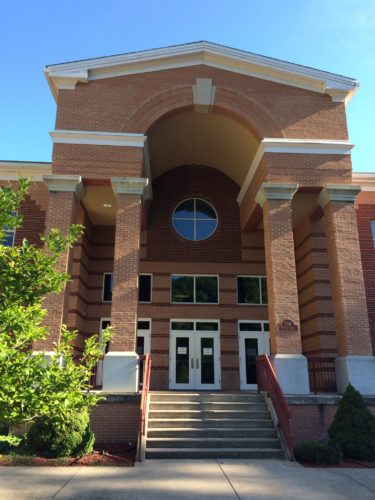
On a recent trip to Bath County, our Director of U.S. Programs, Renée Kube, visited the only high school in the county, Bath County High School. Sitting on a large complex, the school has 589 students in grades nine through twelve. Seventy-four percent of those students qualify for free breakfast and lunch every day, which is a reflection of great poverty in the county. One in five Bath County citizens are living in poverty; and 29 percent of the children there are living below the poverty line.

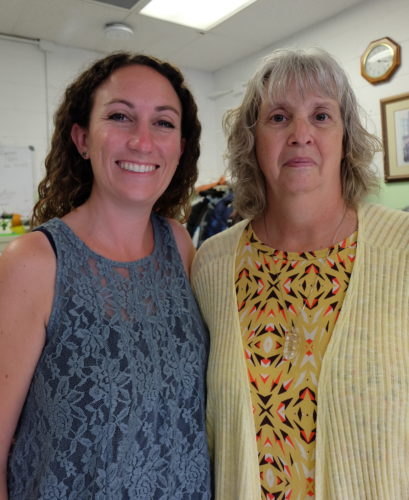
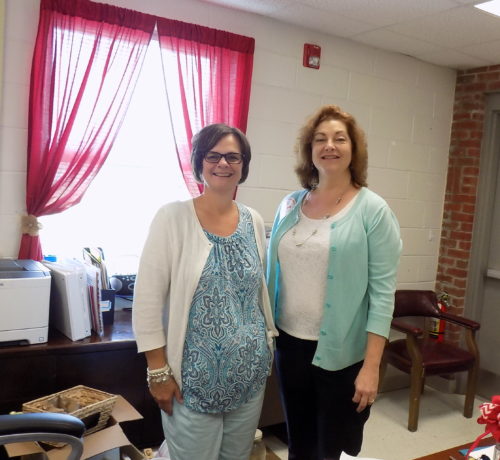
When Renée arrived at the school, she met Cindy, our Volunteer Coordinator, in the school’s Resource Center, along with Cindy’s assistant, Sandy. Both Cindy and Sandy work very hard to help the children in their care to get basic needs, as many of them come from neglectful households. Cindy told Renée that she thinks the children are having to grow up too fast – some of them have to fend for themselves completely.

Their parents or guardians are absent from their lives in different ways – sometimes physically, sometimes mentally or emotionally. In some cases, they are away from the home a lot, working minimal-income jobs; in some instances, they are disabled and unable to do much to support their children. Some caretakers, tragically, due to a serious drug problem in Bath County, aren’t looking after their kids as a result of their addictions. Last year alone, there were fourteen overdoses of parents of Bath County High School students.

According to Cindy, many of these families can’t even begin to imagine another way of life for themselves, and they teach their children to think no other life is possible for them, either. This fostering of this negative mentality is one of the many reasons why Cindy and Sandy value the Children Incorporated program as much as they do. “Sponsors give these teens hope and a window into a bigger world,” said Cindy. “The clothing and shoes received through sponsorship funds give these kids a sense of dignity and pride. Being sponsored is encouraging for the students to stay in school and achieve their diplomas.”

It is important for these impoverished kids that Cindy and Sandy see the value in our program, and what sponsorship does for those children. When teens live in poverty, but are expected to get their schoolwork done and take care of themselves with little to no support from family, it is invaluable for them to have sponsors. It helps them to not feel alone, and to receive the positive motivation they need to keep working hard, so that they can have better lives once they graduate.

Going above and beyond for kids
Sponsorship helps children in Kentucky.

Renée and Cindy in the Resource Center

Cindy and Sandy do more than just help kids in our program receive basic needs – they also do a lot to prepare them for being on their own, as many of them practically already are. There is a washer and dryer in the Resource Center for the students to use to wash their own clothes, because many of their parents don’t do it for them. There is also a shower for the kids to use to clean up when they don’t have a usable shower at home.

Cindy also takes the students that she feels need extra attention on field trips, because she knows that many of them never leave their homes other than to go to school. She takes groups to a ropes course at Morehead State University for team building. She also takes some to a cosmetologist for haircuts and conversations about appearing professional for job interviews. She takes some teens to a restaurant – for some students, for the first time in their lives – where they can practice table manners.

It’s hard to think about what these children have to endure while they are still so young, with little to no guidance at home. Even before they graduate, some Bath County High School students are kicked out of their homes when they turn eighteen years old, because at that age, their parents stop receiving welfare checks with which to support them.

Now homeless, those kids go to school hungry and desperate. Thankfully, however, each school year, Cindy and Sandy help these scared and overwhelmed teens move into tiny public housing apartments, and they teach them to apply for welfare in their own names, so that they may receive that assistance until they graduate from high school; and our sponsors are there to provide additional support for these kids who are forced to grow up too fast when they really need it the most.

***

HOW DO I SPONSOR A CHILD IN KENTUCKY?

You can sponsor a child in Kentucky in one of two ways: call our office at 1-800-538-5381 and speak with one of our staff members, or email us at sponsorship@children-inc.org.
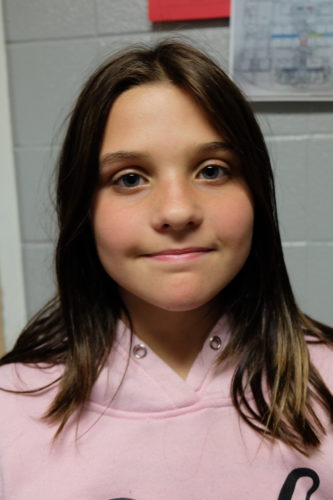
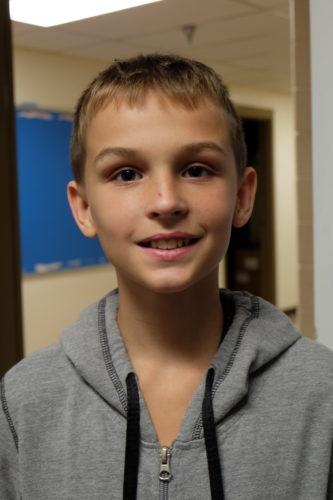
After two days of visiting our affiliated schools in Lawrence County, Kentucky, U.S. Projects Specialist Shelley Oxenham and I traveled about an hour south to Floyd County to meet with a new Volunteer Coordinator, Scott Shannon, as well as to visit with a long-term coordinator, Sharon Collins, who had recently been transferred to a new school.

Although Scott was brand new to the Children Incorporated program and Sharon was not, since they were both new to their respective schools this year, each of them was meeting the children for the first time, many of whom they found would greatly benefit from having a sponsor.

With newly enrolled children, new sponsors are needed.

Scott is the Resource Center Coordinator for both James A. Duff Elementary School and Allen Central Middle School, which share the same building. The elementary school classrooms are on the first floor of the building, and the middle school classrooms are on the second floor.

Scott just started his position at the beginning of July. He has had a busy school year starting his new position – as a former football coach in the school system, not only is he learning the ropes as a coordinator, but he is also meeting the more than 600 children that attend the two schools for the first time.

Scott talked to Shelley and me about how many of the children who attend the schools come from families with financial problems, and how many of them are living with their grandparents, because their parents aren’t able to support them. A long-time resident of the area, Scott has seen a lot of people struggle to find work because many businesses in town have closed over the years.

Sometimes new shoes are not enough

When the school year started just a few weeks prior, Scott told us that he had given a lot of clothes away to children – more than he had ever anticipated. He was surprised by just how many kids came the first week of school in old, dirty clothes, wearing shoes with holes and broken flip-flops. He is just getting to know many of them, and is already sending food home with seventeen children on the weekends, because he worries they won’t eat otherwise. Scott says his greatest need right now is for more clothes for the kids, especially bigger clothes for the middle school-aged kids.

Before we left, Scott introduced us to six siblings who all attend the schools – four of the children are currently sponsored through our program, but two, Mark* and James*, are still waiting to be sponsored. Scott said that this family really needs additional support beyond what the Resource Center can provide; he already gave each of the kids new shoes at the beginning of the school year, thanks to a shoe drive held by community members.

He was surprised by just how many kids came the first week of school in old, dirty clothes, wearing shoes with holes and broken flip-flops.

Scott would love to see all of the kids have sponsors because he knows how much it would help them in getting school supplies year-round, and holiday gifts and coats in the winter.

No money to help kids

After leaving James A. Duff Elementary School and Allen Central Middle School, we visited with one of our long-term coordinators, Sharon, at May Valley Elementary School. Sharon was our coordinator at a high school in Kentucky for many years, until she was transferred to the elementary school in May. Although she is an experienced coordinator, like Scott, she is only getting to know the children at her new school.

Sharon told us that when she arrived at the school, she was given very little money to purchase items for the Resource Center, and what she was given had to last the whole year. Once her funds – which were to supply everything from clothes to food, to shoes, to school supplies – ran out, she would have to rely on donations from the community and support from our sponsorship program to get the children the help they need.

She said that the elementary school serves three housing projects in the county, and that even though she gets help from a great partnering organization in town that has a clothing closet and provides book bags at the beginning of the school year and blankets at Christmas, there are just so many more kids that she knows need assistance.

Our coordinators would love to see more of their students get sponsored.

Siblings with a lot of love

Sharon has enrolled eleven children in our program so far, but she wants to add close to twenty more kids – an ambitious and admirable goal. She first started by enrolling a family of five children – three boys and two girls – who all attend May Valley, and whose parents are struggling to support them. Sharon told us that one of the girls broke her glasses months ago, but her parents don’t have the money to replace them – and the girl is still in need of new ones now.

Like the family we met with Scott, these children are also very close in age to one another. But unlike that same family, all five of the children at Sharon’s school are currently waiting for sponsors.

Sharon took us around the school to pull the kids out of their classrooms so we could meet with all the siblings in the Resource Center. We stopped by the youngest boy’s classroom first, and when we told him we were going to get his brothers and sisters, he became incredibly animated. Even though he had seen them just a few hours before, he was so excited to get to see them in the middle of the school day.

As we continued down the hallways, and each child joined us, I could tell that this is a close-knit group of siblings who really watches out for one another. They held hands as they walked, and the older ones stopped to tie the younger ones’ shoes. It was sweet to see them together, and I was glad to know they had one another. Although they were lacking many things they needed, it was apparent they were not lacking in love for one another.

*Names changed for children’s protection.

***

HOW DO I SPONSOR A CHILD IN KENTUCKY?

You can sponsor a child in Kentucky in one of two ways: call our office at 1-800-538-5381 and speak with one of our staff members, or email us at sponsorship@children-inc.org.
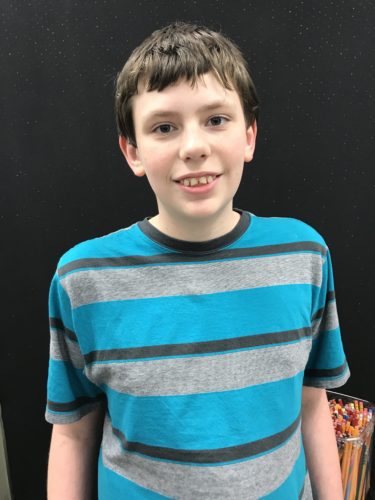
When Shelley Oxenham, U.S. Projects Specialist, and I met with our Volunteer Coordinator, Brenda Curry, at Fallsburg Elementary School in August, the first thing Brenda wanted to talk about was a very special family that she had arranged for us to visit with that afternoon. Stewart and Carolyn Sawyer* live in a small home in Lawrence County, Kentucky, about a twenty-minute drive away from the school, where their son, Michael*, who is sponsored through Children Incorporated, is in the eighth grade.

Stewart and Carolyn’s son Michael benefits greatly from our sponsorship program.

Of the nineteen children that are in our program at Fallsburg Elementary, Brenda has the greatest connection with Michael and his parents. They are more than just a family that Brenda has helped to get support when they have needed it over the years – the Sawyers are like family to her. She has known Michael since he was in preschool, and she talked about what a sweet little boy he was, and how he always gave her a hug when he saw her in the hallways.

In the ten years that Brenda has been a coordinator for Children Incorporated, she has grown close to Stewart and Carolyn, too, who live only a few minutes from Brenda and her own family. Brenda described them as amazingly kind, humble, and grateful for everything they have in life, even though they are very poor, and struggle to get by.

Volunteering to show gratitude

Stewart and Carolyn have been together for fourteen years, and Michael, who is thirteen years old, is their only son. Many years ago, Stewart owned a garage where he was the head mechanic; but hard times fell on him, and he lost his shop, and everything he owned. Now he works odd jobs, mostly doing landscaping for local families – and much of that work comes as a result of referrals from Brenda. But the work is inconsistent, and it pays very little.

Carolyn has struggled with health issues for many years, and is unable to work. With only one income to support them, the Sawyers struggle to get by, as do many poor families in Eastern Kentucky. But Brenda told us that, despite the difficulties they face, both Stewart and Carolyn consider themselves lucky, and do whatever they can to give back to the community. They are grateful for Michael’s sponsor because without that support, there would have been many years without a Christmas, and Michael wouldn’t get new school clothes or supplies when times are tough.

Just like his parents, Michael, who doesn’t have very much, has found a way to go above and beyond to give back to others – to say thank you for all that he feels that he has to be thankful for in life.

Because they want to show their gratitude to others for helping them when they need it, Stewart and Carolyn regularly volunteer at the school in order to give back. Stewart often helps out with special events, like directing traffic during the Fall Festival, and helping to set up and break down tables and chairs when the school hosts holiday parties. And Carolyn works with the pre-school children at the school, mostly reading to them and helping their teacher out as best she can.

Feeling blessed through it all

After we visited with Brenda at the resource center, she took us to meet Stewart and Carolyn at their home. Their house sat on a hill along a narrow gravel road, far off of the main highway. When we arrived, they greeted us warmly, and invited us inside. We walked up to their tattered porch, old wooden boards creaking under our feet. It was obvious that the house was in need of repair. Inside, the floors were worn, the wallpaper was peeling away, and the furniture was torn and stained. Stewart and Carolyn had done their best to make this house their home, using what little they had.

As we sat down in the living room to talk, I noticed black plastic trash bags scattered about the floor. Stewart told us they were filled with Michael’s toys, which they had bagged up because earlier in the year, the chimney began to fall, damaging the wall between the living room and the back bedroom. Stewart spent months tearing it down and repairing the wall so they could use the bedroom again.

On top of that, Stewart spent the summer ripping up the floor of their small home to replace rotten boards, because the floor had started to cave in. His next project would be to start replacing boards in the walls between the living room and the kitchen, which were now too short because of the repairs he made to the floorboards.

The Sawyers’ home is in constant need of repair.

It was overwhelming listening to him talk about his endless repair list – but the whole time he spoke, Stewart had a smile on his face, as though he didn’t have a care in the world. Even when he talked about having recently wrecked his truck upon swerving to avoid hitting a dog that ran out in front of him on the road, he and Carolyn giggled at the story of the small, mangy animal not knowing how much damage it had caused to his vehicle.

As we were listening to their stories, Brenda noticed that their air conditioning unit was no longer working, and offered to find a new one for them. She felt confident that she would find someone in the community willing to donate one. Both Stewart and Carolyn thanked Brenda for having the idea, but declined her offer, because they knew there were other people that could use one more than they could – and they instead talked about how blessed they are each and every day.

After we said goodbye to Stewart and Carolyn, Brenda drove us back to the school. On the way, she told us about how Michael always buys her a Christmas gift – something small from the dollar store, like a necklace or earrings – with money he saves helping his grandfather with odd jobs throughout the year. Just like his parents, Michael, who doesn’t have very much, has found a way to go above and beyond to give back to others – to say thank you for all that he feels that he has to be thankful for in life.

*Names changed for family’s protection.

***

HOW DO I SPONSOR A CHILD IN KENTUCKY?

You can sponsor a child in Kentucky in one of two ways: call our office at 1-800-538-5381 and speak with one of our staff members, or email us at sponsorship@children-inc.org.
Since I first started visiting our affiliated projects in Eastern Kentucky in April of 2015, I have been reporting on the burden of poverty that our sponsored children and their families face every day. With a lack of jobs and scarcity of resources for people in need in this region of the United States, I often get asked when I return home: Why don’t people in need just move somewhere else?

It is a question that I had not been able to answer on my own, because quite honestly, I didn’t know how to answer it. When your situation seems bleak, and there are few opportunities for a better future for you and your children, why not leave and start over in a new place?

Feeding kids hundreds of miles away

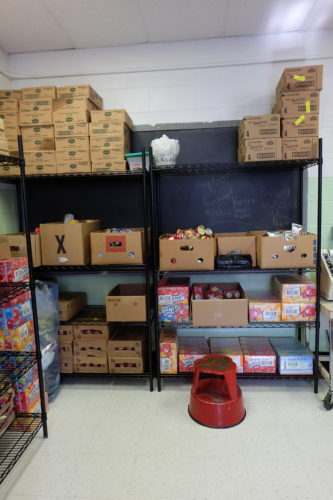
Boxes of food line the walls of the resource center.

I decided to talk to our Volunteer Coordinator, Barbara Hall, at Blaine Elementary School in Lawrence County about this issue. I knew Barbara would be able to shine some light on the subject; she has been working in the school system for 23 years, and has been a resource coordinator since 2000. Currently, Barbara plays an integral role in ensuring that students are fed every day, in addition to her many other responsibilities.

200 children attend Blaine Elementary School in Blaine, Kentucky, and 85 to 95 percent of those kids are receiving reduced price or free lunches. There are currently 79 children receiving food to take home on the weekends through the school’s backpack feeding program. Barbara explained that without the help of a church in Alabama that supports her school, she wouldn’t be able to help all these children.

The church not only raises money to provide food for the students, but they also do all the shopping – and they even drive eight hours to Blaine Elementary School once a month to distribute the food. Barbara is incredibly grateful for this support; she said that there are very few businesses in Blaine to sponsor food and clothing drives for poor families. Without this church, she doesn’t know how she would ever help so many children who would otherwise not be able to eat on the weekends.

The children most in need of sponsors are the ones that come to school dirty, with worn out clothes and old shoes, and providing them with new items is something they really value.


Through Barbara’s story, it was apparent that she knows very well the hardships that families living in poverty face here – especially the children in our program. She said that the children most in need of sponsors are the ones that come to school dirty, with worn out clothes and old shoes, and that providing them with new items is something they really value.

When I asked her the tough question about why families have stayed in Eastern Kentucky long after the coal mines closed, businesses started to move out, and stores closed down, she said that in actuality, many families have left to look for jobs elsewhere. But a lot of people haven’t moved away, and it was for more reasons than I could have come up with on my own.

The many reasons not to move

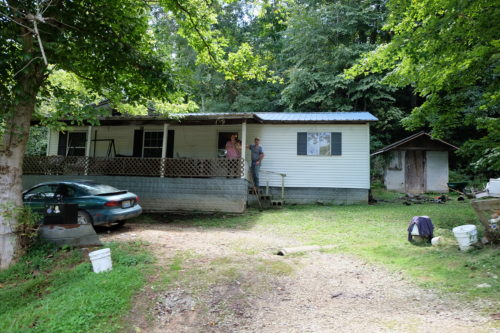
For many families, the simple answer is that they have nowhere else to go. They have no relatives outside of Eastern Kentucky, and everyone they know lives near them. Another reason families don’t move is because they are comfortable where they are and with their current surroundings, and the idea of making a big change in life is overwhelming, because it is easier to stay in an already familiar place. And even though they may not have much beyond a small piece of land and an old trailer in which to live, these families, despite being poor, have a great deal of pride in what little they have. It was something with which I could empathize greatly, as I, too, am proud of my home.

Our Volunteer Coordinator, Barbara, and U.S. Projects Specialist, Shelley Oxenham at Blaine Elementary School

Another reason many families don’t move is because moving is too expensive. Jobs aren’t guaranteed anywhere, and neither is housing. I had heard the day before from our coordinators LuAnn Kelly and Anne Preece, who also work in Lawrence County, that many parents travel as far as South Carolina and North Carolina to work, and return home only on the weekends. Others drive a few hours each day to commute to jobs within the state. Those who don’t drive out of the county for work have settled for jobs that would typically be for high school students, like at fast food restaurants, to support their families.

It all started to make more sense. Why would you move your kids away from grandparents, aunts and uncles, and cousins, and have them change schools, when you can’t be sure the next place would even offer anything better?

Come to find out, the answer to my question was complex; not only did it have many practical implications, but it had a lot of heart to it, too. Whether living in poverty or not, moving isn’t easy, and it’s not something that just anyone can do. Even if resources are scarce, some families in Lawrence County can count on the support of coordinators like Barbara, and programs like our sponsorship program and the backpack feeding program.

Beyond that, Kentucky is home for these families, no matter what changes around them. Whether businesses move in or out of the county, and as industry comes and goes – it doesn’t make Kentucky any less of a home and a place to be proud of for its residents.

***

HOW DO I SPONSOR A CHILD IN KENTUCKY?

You can sponsor a child in Kentucky in one of two ways: call our office at 1-800-538-5381, or email us at sponsorship@children-inc.org.
written by Shelley Callahan

Shelley is the Director of Development for Children Incorporated. She is also the lead social correspondent, regularly contributing insights through the Stories of Hope blog series. Sign up for Stories of Hope to receive weekly email updates about how your donations are changing the lives of children in need.

» more of Shelley's stories

In May of this year, Renée Kube, our Director of U.S. Programs, and Shelley Oxenham, U.S. Projects Specialist, traveled to Kentucky together to visit two counties that Children Incorporated serves. Once they arrived in Kentucky, they split up – Renée in the direction of Martin County, and Shelley to Magoffin County. Both counties are close to each other in proximity, east of Lexington, and are two of the poorest counties in our nation.

For many children, their only hot meals of the day are at school.

In Martin County, the median yearly household income is $27,484; it is ranked as having the greatest rental cost burden in the state, and the poverty rate is 35.2 percent. In Magoffin County, the median yearly household income is $29,421; it has the fifth-greatest rental cost burden in the state, and the poverty rate there is 28.6 percent.

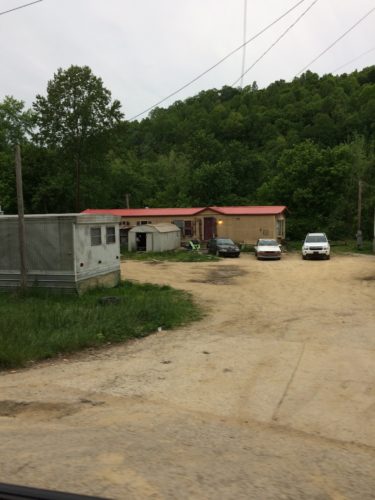
A community of trailers in Martin County, Kentucky – many of our sponsored children live in homes like these.

Some of the most severe poverty in both counties is out of the sight of state and county roads, and away from the county seats. This poverty is tucked in hollows between mountains, or up their ridges. According to research from the Annie E. Casey Foundation’s Kids Count Data Center, of the 119 counties in Kentucky, the 25 with the highest rates of child poverty include both Magoffin and Martin Counties. Not surprisingly, both counties also rank poorly on other measures of child well-being.


WHEN Disaster Strikes

Renée remembers very clearly when, more than five years ago, on March 2 and 3, 2012, a tornado outbreak occurred over a large part of the southeastern U.S. There were a total of seventy confirmed tornadoes that resulted in 41 fatalities, 22 of which occurred in Kentucky. The counties affected included Children Incorporated-affiliated projects in Bath, Johnson, Lawrence, Menifee, Morgan, and Wolfe Counties, as well as in Martin and Magoffin counties in Kentucky.

After the disaster, our volunteer coordinators went to the schools as soon as they had the chance, and began contacting families to see what they needed — some of their houses had been damaged or destroyed, and many had lost a lot of their belongings, and didn’t have the means to even begin to clean up the mess from the tornadoes.

As information arrived from the coordinators to Renée about the needs of the families, Children Incorporated put out an appeal to donors and sponsors to help, and contributions began pouring in. From March to May 2012, Children Incorporated raised a total of $10,818. Our President and CEO, Ron Carter, delivered some of these disaster relief checks in person to various counties, which provided the families with emergency supplies such as replacement clothing, food, and cleaning supplies, like bleach.

Both Terrie and Debbie say that the biggest barrier for families is a lack of reliable transportation.

It was so important to be able to help individual families during this time of crisis; but unfortunately, much more extensive damage had been done to a few schools. In Magoffin County, three schools were damaged: Salyersville Elementary, Herald Whitaker Middle, and Magoffin County High. The elementary and high schools were repairable, but the middle school was not; so those students were moved into the high school building, where they shared tight quarters – and that was the situation for almost five years.

Welcome to Martin County

Exterior view of Martin County Middle School

Back in 1964, Martin County was the Appalachian county that gave a face to President Lyndon B. Johnson’s ‘”War on Poverty.” Many residents vividly remember when the president visited the Fletcher home to speak with them about their struggles. Over fifty years later, improvements to the communities in Appalachia have occurred; most have been made, however, in the outer bands of the area, and not in regions such as Martin County.

The central core of the Appalachian region still lags behind the rest of the nation in most measures. Schools have greatly improved, but mining jobs have steeply declined, leaving many residents with few options for work. The remaining jobs are mostly service-related, such as at small stores and convenience marts. The hours are often part-time only, and the pay is minimum wage with few or no benefits.

As a result, many people still live on government aid of one kind or another. But poverty has remained high for the poorest residents. The loss of mining jobs has meant high unemployment; many families have moved away. Those who have remained continue to struggle. For many children, their only hot meals of the day are at school. Drug abuse compounds poverty in a cycle of hopelessness, and it is children who are the most vulnerable. Social service professionals are grateful for the programs that exist, but agree with the families that programs won’t render long-term improvements without decent employment opportunities.

Sheldon Clark High School’s Shining Stars

At Sheldon Clark High School, one of five schools in Martin County that Renée visited on her trip, Children Incorporated is well-served by two amazing women: Terrie Simpkins is the Youth Services Center Coordinator, and Debbie Fluty is the Assistant Coordinator. Both have been employed by the school system for a long time, and they have years of experience working with Children Incorporated at multiple schools in Kentucky.

Despite the consistently trying circumstances in which this young man lives, support from Thomas’ Children Incorporated sponsor presents him with opportunities he most certainly wouldn’t have otherwise.

Terrie and Debbie are responsible for a wide variety of programming for their high school students, including referrals to health-related and social services, career exploration and development, summer and part-time job development, and alcohol and drug awareness and addiction prevention. But their budget is a shoestring one; both Terrie and Debbie are constantly overworked and overwhelmed with the needs of the students and their families, as they are both fiercely devoted to supporting them.

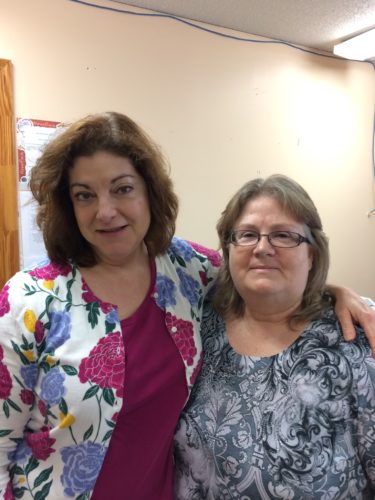
Renée and Terrie pose for a photo together.

Terrie conducts regular needs assessments; the top requests are help for clothing, shoes, hygiene items, and dental care. Terrie and Debbie have repeatedly stated that our sponsorship program is a godsend — that the kids would have almost nothing without their sponsors’ help.

Both Terrie and Debbie say that the biggest barrier for families is a lack of reliable transportation. Families have trouble finding and keeping jobs when their old cars break down, or when they cannot afford to buy one in the first place. There are students who are desperate for work to help their families — but after-school jobs are few and far between.

Debbie and Terrie shared that there are few local businesses or churches that are in a position to help, and those that can are inundated with requests. Most of the responses from the community for support go to the three elementary schools. A lot of the time, most people like to help younger kids, so teenagers are often forgotten and overlooked.

Meeting a Special Senior

Renée met with one student while at Sheldon – a rising twelfth-grade boy named Thomas* who is homeless and sleeping in a barn; there are no vacancies at the only federal housing project in the county. Thomas has no money to pay rent or utilities at the trailer parks. Terrie called him into the office, and Renée was able to meet him and hear his story.

He has such a positive attitude, and he is determined to stay in school and get his diploma, even though he has no home to go to. Normally, a guardian would sign the forms to enroll a child in our program; but since Thomas is eighteen, he was able to enroll himself in our program, so he will be able to get the support he needs to get him through the end of the school year and graduation.

Despite the consistently trying circumstances in which this young man lives, support from Thomas’ Children Incorporated sponsor presents him with opportunities he most certainly wouldn’t have otherwise.

*Name changed for child’s protection.

***

HOW DO I SPONSOR A CHILD IN KENTUCKY?

You can sponsor a child in Kentucky in one of two ways – call our office and speak with one of our sponsorship specialists at 1-800-538-5381, or email the sponsorship department at sponsorship@children-inc.org.
SPONSOR A CHILD

It goes without saying that our Hope In Action Fund, which allows Children Incorporated to provide for sponsored children and their families in emergency and special circumstances, comes to the rescue quite often. Whether funds go to purchasing cleaning supplies after families have been affected by flooding, or to replacing a pair of eyeglasses when a child falls and breaks them on the playground, Hope In Action is such an important part of how Children Incorporated helps beyond sponsorship.

When Renée Kube, our Director of U.S. Programs, was first informed about a particular situation that involved Robert, one of our sponsored children in Eastern Kentucky, she immediately felt touched and called to act.

When Renée Kube, our Director of U.S. Programs, was first informed about a particular situation that involved Robert, one of our sponsored children in Eastern Kentucky, she immediately felt touched and called to act. Robert had lost four teeth in an accident in elementary school, and years later – now a high school freshman in a new school – he was still without those teeth.

Hearing Robert’s Story

Robert met his new Children Incorporated Volunteer Coordinator, Rhonda, for the first time as an incoming freshman student last fall. Rhonda was just getting to know the children who had moved up from the elementary school – it’s a big adjustment to receive all the information about the new sponsored children at the school, and it’s a big responsibility to help them adjust their new academic environment.

Luckily, thanks to our partnering organization in Kentucky, the Family Resource and Youth Services Centers, coordinators just like Rhonda are used to the heavy workload, and they recognize just how important it is to pay attention to each and every child’s special needs – which is exactly what Rhonda did with Robert.

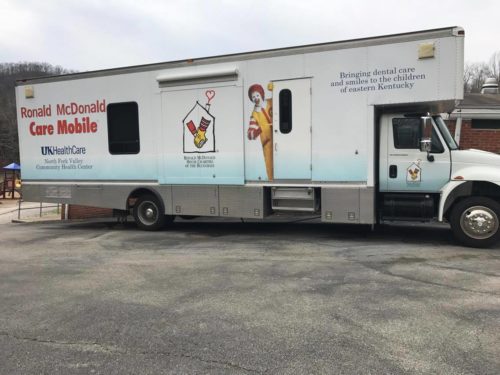
Dental Care_UK Ronald McDonald Care Mobile 2

The Ronald McDonald Dental Care Van of Kentucky

Robert’s elementary school coordinator had been especially close to him, and when she spoke with Rhonda at the beginning of the school year, she expressed that she had a special place in her heart for him. She shared some information about his life at home – and most importantly, about the degree of need that he experiences.

Robert lives with his single father; they had been renting a trailer, but could no longer afford it, and had to move to a very small apartment. Robert’s father is disabled, and his limited disability benefits hardly pay the rent. The father has no transportation, and sometimes struggles to provide food. Furthermore, it wasn’t just the details of his home life that she wanted to share with Rhonda; she also felt it was important to mention that Robert was really self-conscious about his appearance.

She explained that, at some point during elementary school, Robert’s four front teeth had been knocked out, and he was desperately in need of a dental partial plate. At the time of the injury, a dentist had been able to help him recover from losing his teeth. Later, the dentist made an impression for a bridge, which was covered by Robert’s medical insurance – but the insurance does not cover partials or dentures.

When Robert’s father was told the cost of the partial plate, he told the dentist he couldn’t afford it. Years later, when Robert reached high school, he was still without some of his teeth – and he was unwilling to smile or talk to teachers or other students directly, because he was so embarrassed.

“I have heard stories from coordinators about their worries for kids with poor oral health, and about their efforts to bring help – and to encourage available services to be used,” she said.

And it wasn’t just a matter of self-esteem that concerned his elementary school – and now high school – coordinators; his missing teeth were also a health concern. Not restoring missing teeth can lead to several issues down the road. Chewing is obviously affected, but bone loss is especially a worry; when teeth are present and functioning, bone is maintained; so missing teeth can eventually lead to bone loss.

Dental Issues in Eastern Kentucky

Robert’s story was not a first for Kube, who has been working with Children Incorporated for over 32 years now. “I have heard stories from coordinators about their worries for kids with poor oral health, and about their efforts to bring help – and to encourage available services to be used,” she said.

“And it is not just specific to Eastern Kentucky; I would say poor oral health is spread across our country wherever poverty exists. I’ve seen it with urban kids, as well as rural – the combination of cheap soda and a lack of knowledge about brushing, and no access to regular, new toothbrushes and toothpaste play a part,” she continued.

Over the years, there have been a few opportunities for Children Incorporated to help with the occasional specific dental need, such as removing an abscessed tooth. But as Kube says, generally, the coordinators have reached out within their own communities to bring free dental vans sponsored by universities.

 A few months after hearing about Robert’s special situation, Kube spoke with Rhonda to see what Robert might like for Christmas. Rhonda told Kube that when she asked him about gifts for the holiday, his response was, “I’ve not had a Christmas at my house in so long, I try not to think of it anymore.”

A SPECIAL CHRISTMAS FOR ROBERT

But thanks to Robert’s wonderful sponsor, for Christmas, he did receive needed items and gifts from the monthly subsidy funds; and Rhonda also included him in another holiday donation from a local church. He had a wonderful Christmas, thanks to these special gifts – but his coordinator still felt that it was important to address his self-consciousness over his appearance, and she really thought that he would have more confidence if he could get his partial plate, and start using it right away.

harley c.2

Robert with his new teeth.

Shortly after winter break was over and the children were back in school, Rhonda reached out to Kube, and asked if Robert could be considered for assistance from the Hope In Action Fund to replace his missing teeth.

Looking Like a Brand New Kid

Kube didn’t waste any time working on the request. By February, just one month after the request had been made, Rhonda received the funds needed to purchase Robert’s dental plate, and she ordered it for him immediately.

Once his plate was ready, Rhonda took pictures of Robert with his new teeth to share with Kube and the Children Incorporated staff, and to also share with his sponsor. Robert showed off his new teeth for the camera with a new plate taking the place of the gaping hole that he had spent so many years trying to hide. Thanks to the Hope In Action Fund, Robert finally has something to smile about.

***

HOW DO I SPONSOR A CHILD IN Kentucky?

You can sponsor a child in Kentucky by calling our office and speaking with one of our sponsorship specialists at 1-800-538-5381 or emailing us at sponsorship@childrenincorporated.org.