
It goes without saying that our Hope In Action Fund, which allows Children Incorporated to provide for sponsored children and their families in emergency and special circumstances, comes to the rescue quite often. Whether funds go to purchasing cleaning supplies after families have been affected by flooding, or to replacing a pair of eyeglasses when a child falls and breaks them on the playground, Hope In Action is such an important part of how Children Incorporated helps beyond sponsorship.
When Renée Kube, our Director of U.S. Programs, was first informed about a particular situation that involved Robert, one of our sponsored children in Eastern Kentucky, she immediately felt touched and called to act.
When Renée Kube, our Director of U.S. Programs, was first informed about a particular situation that involved Robert, one of our sponsored children in Eastern Kentucky, she immediately felt touched and called to act. Robert had lost four teeth in an accident in elementary school, and years later – now a high school freshman in a new school – he was still without those teeth.
Hearing Robert’s Story
Robert met his new Children Incorporated Volunteer Coordinator, Rhonda, for the first time as an incoming freshman student last fall. Rhonda was just getting to know the children who had moved up from the elementary school – it’s a big adjustment to receive all the information about the new sponsored children at the school, and it’s a big responsibility to help them adjust their new academic environment.
Luckily, thanks to our partnering organization in Kentucky, the Family Resource and Youth Services Centers, coordinators just like Rhonda are used to the heavy workload, and they recognize just how important it is to pay attention to each and every child’s special needs – which is exactly what Rhonda did with Robert.
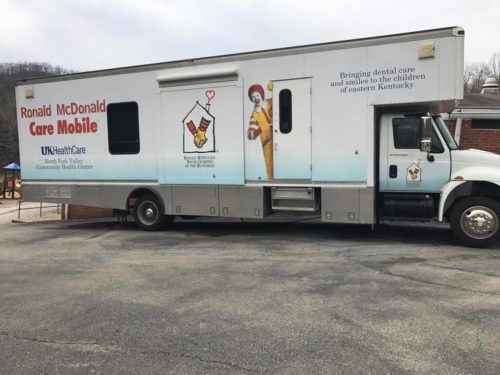
The Ronald McDonald Dental Care Van of Kentucky
Robert’s elementary school coordinator had been especially close to him, and when she spoke with Rhonda at the beginning of the school year, she expressed that she had a special place in her heart for him. She shared some information about his life at home – and most importantly, about the degree of need that he experiences.
Robert lives with his single father; they had been renting a trailer, but could no longer afford it, and had to move to a very small apartment. Robert’s father is disabled, and his limited disability benefits hardly pay the rent. The father has no transportation, and sometimes struggles to provide food. Furthermore, it wasn’t just the details of his home life that she wanted to share with Rhonda; she also felt it was important to mention that Robert was really self-conscious about his appearance.
She explained that, at some point during elementary school, Robert’s four front teeth had been knocked out, and he was desperately in need of a dental partial plate. At the time of the injury, a dentist had been able to help him recover from losing his teeth. Later, the dentist made an impression for a bridge, which was covered by Robert’s medical insurance – but the insurance does not cover partials or dentures.
When Robert’s father was told the cost of the partial plate, he told the dentist he couldn’t afford it. Years later, when Robert reached high school, he was still without some of his teeth – and he was unwilling to smile or talk to teachers or other students directly, because he was so embarrassed.
“I have heard stories from coordinators about their worries for kids with poor oral health, and about their efforts to bring help – and to encourage available services to be used,” she said.
And it wasn’t just a matter of self-esteem that concerned his elementary school – and now high school – coordinators; his missing teeth were also a health concern. Not restoring missing teeth can lead to several issues down the road. Chewing is obviously affected, but bone loss is especially a worry; when teeth are present and functioning, bone is maintained; so missing teeth can eventually lead to bone loss.
Dental Issues in Eastern Kentucky
Robert’s story was not a first for Kube, who has been working with Children Incorporated for over 32 years now. “I have heard stories from coordinators about their worries for kids with poor oral health, and about their efforts to bring help – and to encourage available services to be used,” she said.
“And it is not just specific to Eastern Kentucky; I would say poor oral health is spread across our country wherever poverty exists. I’ve seen it with urban kids, as well as rural – the combination of cheap soda and a lack of knowledge about brushing, and no access to regular, new toothbrushes and toothpaste play a part,” she continued.
Over the years, there have been a few opportunities for Children Incorporated to help with the occasional specific dental need, such as removing an abscessed tooth. But as Kube says, generally, the coordinators have reached out within their own communities to bring free dental vans sponsored by universities.
A few months after hearing about Robert’s special situation, Kube spoke with Rhonda to see what Robert might like for Christmas. Rhonda told Kube that when she asked him about gifts for the holiday, his response was, “I’ve not had a Christmas at my house in so long, I try not to think of it anymore.”
A SPECIAL CHRISTMAS FOR ROBERT
But thanks to Robert’s wonderful sponsor, for Christmas, he did receive needed items and gifts from the monthly subsidy funds; and Rhonda also included him in another holiday donation from a local church. He had a wonderful Christmas, thanks to these special gifts – but his coordinator still felt that it was important to address his self-consciousness over his appearance, and she really thought that he would have more confidence if he could get his partial plate, and start using it right away.
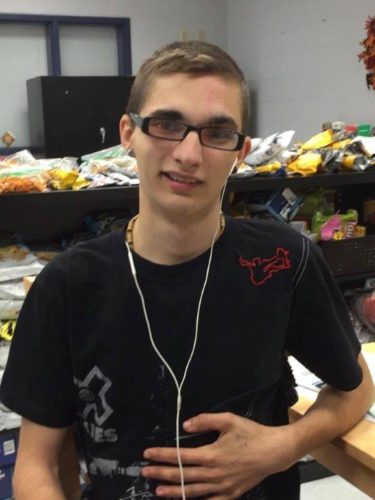
Robert with his new teeth.
Shortly after winter break was over and the children were back in school, Rhonda reached out to Kube, and asked if Robert could be considered for assistance from the Hope In Action Fund to replace his missing teeth.
Looking Like a Brand New Kid
Kube didn’t waste any time working on the request. By February, just one month after the request had been made, Rhonda received the funds needed to purchase Robert’s dental plate, and she ordered it for him immediately.
Once his plate was ready, Rhonda took pictures of Robert with his new teeth to share with Kube and the Children Incorporated staff, and to also share with his sponsor. Robert showed off his new teeth for the camera with a new plate taking the place of the gaping hole that he had spent so many years trying to hide. Thanks to the Hope In Action Fund, Robert finally has something to smile about.
***
HOW DO I SPONSOR A CHILD IN Kentucky?
You can sponsor a child in Kentucky by calling our office and speaking with one of our sponsorship specialists at 1-800-538-5381 or emailing us at sponsorship@childrenincorporated.org.