Tag Archives: children

In 1997, Southwest Airlines distributed thousands of copies of Dr. Richard Carlson’s bestseller, Don’t Sweat the Small Stuff, to its employees — including pilot Don Wyatt of Palm Coast, Florida.

Inspired by the sentiment of the book, Wyatt wanted to give back. And since the late author was a strong supporter of Children Incorporated, Wyatt began to research the organization.

“There are many fine agencies to choose from, but my personal favorite is Children Incorporated… The experience has brought tremendous joy and satisfaction to my entire family.”

– Dr. Richard Carlson

After thoughtful consideration, Wyatt signed on. He currently sponsors four siblings — three sisters and a brother. They live in El Progreso, Honduras, a town still recovering slowly from the destruction caused by Hurricane Mitch in 1998. Today, the population still grapples with the effects of homelessness, disease and continued poverty stemming from that natural disaster.

El Refugio Welfare Center opened soon after the hurricane to provide a place for poor and abandoned children to go to for food, clothing, and educational assistance. The center provides for the children during the day and invites parents to become involved at the center by providing support in childcare, hygiene and healthcare.

A sponsor since 1999, Wyatt has consistently gone above and beyond to help provide the siblings with the essentials they need to succeed. He is currently paying for one to attend college and plans to help the other three when the time comes.

We sat down with Wyatt to learn more about why he chose to become a sponsor, and what he’s learned along the way.

CI: How did you get involved with Children Incorporated?

DW: Like many other people, I learned about Children Incorporated though the book, Don’t Sweat the Small Stuff. I acquired that book through my employer, Southwest Airlines, in 1997. The company thought so much of the book that they bought thousands of them for their employees. The book says to give back to others, and I was impressed with what the author said about Children Incorporated. I have contributed to other charities, and one of the things that I liked the most was that the money goes straight to the children.

CI: What do you know about Honduras?

DW: It was the first time I had been in Honduras in about three years. I am prior military and have lived all over the world. I am very familiar with how things are in underdeveloped countries. I have been to Korea and the Middle East, and I have seen poverty.

CI: What do you know about the childrens’ living situation?
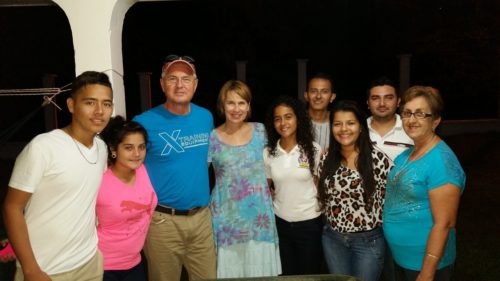
Mr. Wyatt with his family and sponsored children’s family

DW: They live with their mother. She is the primary caregiver, and she has worked several odd jobs in El Progreso. Employment is hard to come by, so she has worked as a clerk in a grocery store, and a custodian at a hospital. But recently, the mother has had health problems. I don’t know how she helped the children when they were not old enough to take care of themselves.

They live in a very rough part of town, and it is amazing that they have somewhere to live at all. They rent the home. For a while they were squatting in a home, and they got into the program because they found an empty home right next to the coordinator’s home. She enrolled the children in Children Incorporated’s program, and then they eventually moved into a home that they could legally pay for.

CI: What do you know about El Refugio?

DW: I met an assistant coordinator, Trenie, who always arranged for a translator and a driver, and has always met me, and spends the whole time with me and my wife, and going about visiting the children’s homes. I have visited all of their schools, and I have taken them out to restaurants and water parks for a day of relaxation. The children are being provided for at the center after school with supplies, clothes and large bags of groceries on a monthly basis.

CI: What can you tell us about the children you sponsor?

The book says to give back to others, and I was impressed with what the author said about Children Incorporated. I have contributed to other charities, and one of the things that I liked the most was that the money goes straight to the children.

DW: Bernardo* was my first sponsored child, but he ended up dropping out of the program. I was asked if I was willing to sponsor a child in the same program in Honduras, which is when I learned about Samuel*. Over the course of a few months, I was told about some special needs of this family, and found out that he had three sisters as well. For about six months, I was only sponsoring Samuel, and then started sponsoring all the children — and that was in 2005.

Cándida* is the eldest of the four children. She was about eleven back then, and now she is 21. She is in her second year of the higher education program in university classes in El Progreso, where she studies information technology. When she’s not studying, she spends her time listening to music and watching movies with her friends.

Right behind her is Mariluz*, who just graduated last December. She’s also a movie buff. We got her a computer to help her with her studies.

Samuel is seventeen. He took an auto mechanics course in junior high school and is continuing his studies at a technical trade school, along with some regular classes.

Natalia* is the youngest. She’s in high school. Like any other teenager, she likes movies and listening to music — but mostly, she looks for simple things to do that don’t cost that much.

CI: Do you communicate with the children directly?
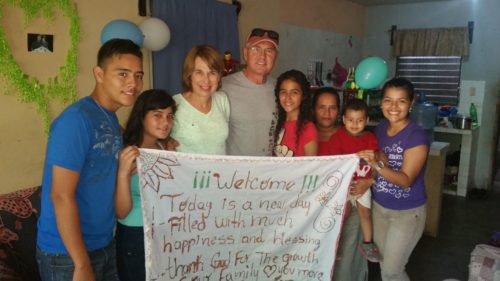
DW: Yes, I try to write them at least as often as they do, if not more — six to eight times a year, and then on birthdays and holidays as well. I tell them a little bit about my life and what I do, and I take pictures of the cockpit of the airplane and send those, and ask them about their health and happiness, and try to encourage them in school. I am hopeful that it will provide some additional opportunities for them.

CI: Do they write back? What do they say to you?

DW: The letters are normally eight to ten lines long, and they give a brief sentence of how they are doing. And then say they hope my family is happy and healthy.

CI: What advice would you have for someone reading about you and your sponsored children, and considering sponsorship?

DW: Children Incorporated is extremely responsive. They welcome inquiries, pass along concerns and are willing for me to get more personally involved with the needs of the children. I am very happy being associated with Children Incorporated, and I feel that the organization has a great history, and every dollar goes to the direct needs of the child.

People contribute to charities for a lot of different reasons. If you are the type of person that wants to become more involved on a personal level, Children Incorporated lets you do that. Often with other charities, you don’t feel like you have a personal impact. With Children Incorporated, you can be more than just a contributor of money.

* Names changed for children’s protection.

***

HOW DO I SPONSOR A CHILD IN HONDURAS?

You can sponsor a child in Honduras in one of three ways – call our office and speak with one of our sponsorship specialists at 1-800-538-5381, email us at sponsorship@childrenincorporated.org, or go online to our donation portal, create an account, and search for a child in Honduras that is available for sponsorship.

SPONSOR A CHILD

Someone set fire to the playground matting at G.H. Reid Elementary School last summer. The fire spread around the equipment, melting and disfiguring most of it, and leaving the 750 Richmond, Virginia public school children with few options for outdoor play.

But when bad things happen, good people often start showing up to help. Hundreds of volunteers from various Richmond organizations, including Children Incorporated, stepped up to help out last November.

But when bad things happen, good people often start showing up to help.

Together, they rebuilt the playground in just one day.

Community support

Renée Kube, director of U.S. Programs for Children Incorporated, explained that the project was led by KaBoom, a national nonprofit that builds playgrounds, especially in low-income areas.

“We had been told by our volunteer coordinator at the school that funding had been secured from KaBoom,” she said. “But KaBoom requires community buy-in — additional community funding and also hands-on help — so what they really needed from us was warm bodies to come and work all day.”

They also needed maintenance funding, and Children Incorporated pledged to provide that as well.

A one-of-a-kind design

But it was the children who designed the playground, which was based on ideas and drawings submitted by students at the school. Because the children created their own ideas and voted on what they wanted, the Reid Elementary School playground is one-of-a-kind.

img_9088

The playground under construction

The CarMax Foundation and KaBoom put in most of the upfront money and materials, and on November 3rd, Kube turned up to work, along with her Children Incorporated co-workers, Shelley Oxenham, U.S. Programs Specialist, and Chuck Smith, U.S. Sponsorship Manager.

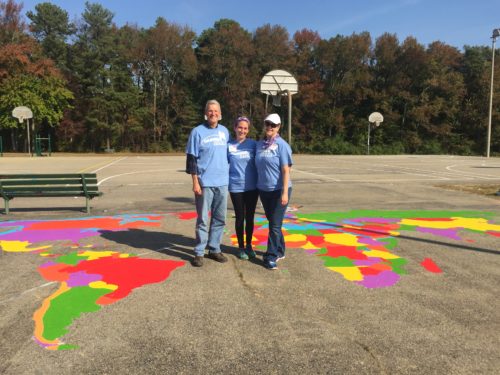
They were among about 250 volunteers who built the playground from the ground up in just one day. One of the jobs Kube, Oxenham, and Smith were tasked with was painting maps and game boards onto the playground surface.

A global concern

They painted maps of the United States and of the world, a hopscotch board, and other game lines on the blacktop. Fortunately, Kube said, they didn’t have to be experts on global geography in order to get the maps down.

“KaBoom sent people out the day before to plan out where things would go,” she said. “They decided where to put the monkey bars and swings, and they drew out the outline of the maps for us.”

When the work team arrived on November 3rd, they painted the maps, after some redesign.

“One of the volunteers looked at the map of the world and said, ‘That’s not right,’” Kube recounted. “He was Dutch, and he said that part was wrong – so we said, ‘Okay, you’re in charge of Scandinavia.’”

They also needed maintenance funding, and Children Incorporated pledged to provide that as well.

An enthusiastic audience

In addition to the playground, the team built a swing set, a giant Connect 4 board, and a trellis with a bench and cubbies. They also painted the maps and blacktop games, and repainted the lines on the basketball court. They cleared out a garden area, and removed trash and debris from the site.

While the volunteers worked, the children tried – mostly without success – to concentrate in their classes.

“It was tremendously exciting,” Kube said. “The kids were peeking out the windows to watch it going up, and at the end of the day, they were leaning out of the school buses, looking at this new equipment so longingly.”

“They had to wait several days for the concrete to set before they could use their new playground, but since then, it’s been well-used and appreciated,” Kube said.

Ongoing maintenance

Our staff members Renée, Shelley and Chuck

The heavy use the playground will get is one of the things Children Incorporated has pledged to keep up with. With 750 children running across its surfaces every day, the paint won’t hold up forever – and neither will the mulch spread around it.

Children Incorporated will provide funding to repaint and re-mulch the playground as needed – and they may even provide the manpower, too, Kube said.

“We just built it in November, so maintenance is not an issue yet,” she said. “They’ll look at it at the end of the school year and see what needs to be done. We will definitely be providing funding for mulch and maintenance – and, if needed, we’ll be doing the work ourselves.”

Other community groups may put in the physical labor too, Kube said. One church in the area said they couldn’t raise maintenance funds but could provide volunteers to help spread mulch once Children Incorporated purchases it. The paint job may go the same way.

“We want to keep it attractive, and we want to keep it safe,” Kube said.

***

HOW DO I SPONSOR A CHILD IN Richmond?

You can sponsor a child in Richmond, Virginia by calling our office and speaking with one of our sponsorship specialists at 1-800-538-5381 or by emailing us at sponsorship@childrenincorporated.org.

SPONSOR A CHILD

It’s hard to imagine a lack of food in the nation’s capital — but there is one.

A “food desert” is a place where fresh fruit and vegetables can’t be purchased, and Washington, D.C. is just such a place. Large parts of the city — specifically the poorer — don’t have grocery stores. Instead, they have corner markets where one can purchase snacks and some canned goods, but not nutritious whole foods.

“On average, we have between sixty and 100 families that attend our monthly market,” she said. “Many of our families have a lot of people living in the household, so one limitation of our particular market is that we cannot give out food in accordance to the number of people living in the home.”

“If families have transportation barriers or illnesses, or mobility problems or other barriers to getting out of their neighborhoods, what they’re limited to is these little corner stores,” said Renée Kube, Director of U.S. Programs for Children Incorporated. “For thousands of families in the city, fresh fruits and vegetables just can’t be found.”

Except at school.

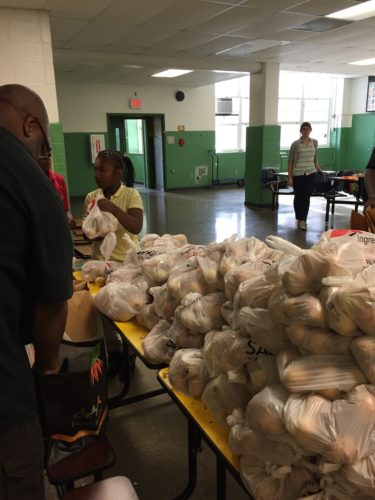
Lucy Ellen Moten Elementary School is located in Ward 8 – one of D.C.’s poorest areas. But families there are getting fresh produce each month through the Joyful Market, a partnership program between Children Incorporated and local nonprofit, Martha’s Table.

Free Shopping

Florangel Cuesta-Smith, our volunteer coordinator at Lucy Ellen Moten, said the program serves about 150 families a month in a school of about 430 students.

Once a month, volunteers set up a market of fresh fruit and vegetables inside the school. Families — or the children — can come shop for their own produce, picking out the items they want.

Everything is free, and each family is allotted a certain portion based on the number of people in them. In many cases, parents or caregivers can’t attend, so the children can do the shopping for themselves with help from volunteers.

“Because the school offers a pre-K program, children as young as three often participate on their own,” said Cuesta-Smith.

Students “shop” for fresh produce to take home

“I pre-package the produce for the littlest ones so it’s not too much for them to carry,” she said. “They take it out with them to parent-pickup at the end of the day.”

“While some children do the shopping alone, in other cases, parents or guardians help with the operation,” Kubée said.

“It’s been very appreciated, and it’s also increased parent engagement, because parents are volunteering to come in and do set-up or clean-up,” she said. “That’s a big deal for a school that’s struggling to have a viable PTA.”

“That involvement has had positive repercussions for the school as a whole as well,” Kubée said. Parents have been telling school officials that before, the only interaction they ever had with the school was when their children were in trouble. Now, they’re working with teachers and officials in happier situations, forming bonds between the school and the families it serves.

Learning to Cook

Another reason for parent involvement at the Joyful Market is the guest chef.

Each month, Martha’s Table brings in a guest chef who prepares a healthy snack or meal using the items featured in the market.

Shoppers can try out banana apple smoothies or bean soup, or they can learn how to prepare and cook a butternut squash.

“The kids love that,” said Cuesta-Smith. “And the chef hands out recipes they can take home with them.”

“Allowing kids to try the food first, and letting adults see how easy it is to prepare has been a good way to encourage healthy eating,” Kubée added.

“‘You, too can try eggplant and love it!’ is an idea that resonates if the kids actually get a chance to try it first,” she said.

Portion Control

Nearby Hart Middle School also has a successful Joyful Market program, and coordinator Ashely Lyles, said they’re hoping for more funding to expand its portions.

“On average, we have between sixty and 100 families that attend our monthly market,” she said. “Many of our families have a lot of people living in the household, so one limitation of our particular market is that we cannot give out food in accordance to the number of people living in the home.”

“Currently,” she added, “a family of ten gets the same portions as a family of five, and that’s an issue they could fix with more money as the market grows in popularity. It would be great to be able to provide extra food for the families with lots of folks living in the home,” she said.

But the Joyful Market hasn’t worked everywhere, so Children Incorporated and local volunteer coordinators have branched out with alternative ideas.

“We all know intuitively that children who are hungry when they go to school cannot do their best work while in class,” Kubée said. “Relieving hunger is a vital part of our kids’ ability to develop, grow, learn, and thrive.”

Digging in the Dirt

On the other side of D.C., in Ward 1, the Cardozo Education Campus is a combined middle and high school where Children Incorporated helped create a school garden after the market didn’t work.

One of the problems was that many of the students there are homeless or live in shelters. “Because they can’t cook or prepare food in the shelters, take-home shopping bags full of squash or zucchini didn’t work well for them,” Kubée said.

So volunteers nixed the market, and instead built a school garden.

“When the kids grew their own fresh Roma tomatoes, they were more likely to eat them — especially when they could add basil and oregano that they’ve grown, and put the tomatoes and herbs on a pizza,” she said.

The garden is also being used by the science teachers, so kids get biology lessons from it as well.

“After you try new foods, you and your science teacher can take them apart and dissect them,” she said, noting that they use vegetables to learn about cell structure and functions. “It’s great hands-on learning.”

Across the Country

The school garden is an alternative that Children Incorporated has been using in rural food deserts as well. At the Saint Michaels Association for Special Education in Arizona, the school has built a handicap-accessible garden with paths and plant beds built for easy access by students in wheelchairs.

It’s all part of an overall plan to reduce food deserts and food insecurity nationwide.

“We all know intuitively that children who are hungry when they go to school cannot do their best work while in class,” Kubée said. “Relieving hunger is a vital part of our kids’ ability to develop, grow, learn, and thrive.”

***

HOW DO I SPONSOR A CHILD IN Washington, D.C.?

You can sponsor a child in D.C. in one of two ways – call our office and speak with one of our sponsorship specialists at 1-800-538-5381, or email us at sponsorship@children-inc.org.

SPONSOR A CHILD

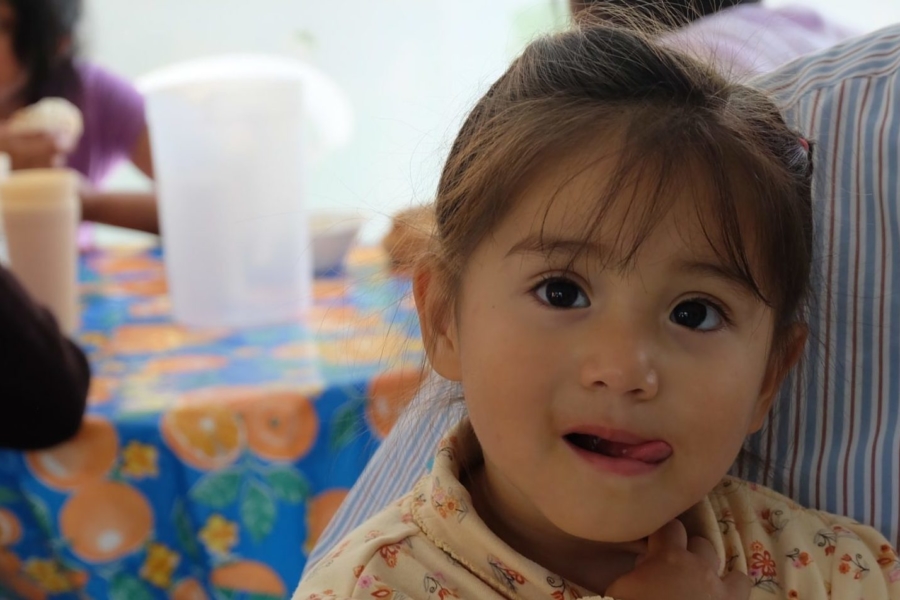
Mexico is such a modern, developed place that in many respects reminded me of America – but high unemployment rates have cities grappling with spikes in poverty and crime.

As a result, there are many children who have been abused, neglected, or flat-out abandoned by family members in distress. In several cases, the parents are unable to care for their children because they are incarcerated.

As a result, there are many children who have been abused, neglected, or flat-out abandoned by family members in distress.

Children without families to help keep them safe, healthy, and to make sure they’re going to school often find themselves involved with drugs and crime. It’s because of this that Luis and I so loved to see the Sisters step in and fill the void.

At homes like Hogar Santa Maria, Hogar Santa Ines, Mexiquito, and La Luz, it was the Sisters who were there for the children, providing not only support and guidance but real and moving affection, too. These parental figures provide the structure and consistency that help kids bloom into a generation that can positively impact their country. They foster a loving, nurturing environment where the children have adults to depend on and other children to play with.

Together, they’ve made a family.

***

How do I sponsor a child in Mexico?

You can sponsor a child in Mexico in one of three ways: call our office at 1-800-538-5381 and speak with one of our staff members; email us at sponsorship@children-inc.org; or go online to our sponsorship portal, create an account, and search for a child in Mexico that is available for sponsorship.
SPONSOR A CHILD

written by Shelley Callahan

Shelley is the Director of Development for Children Incorporated. She is also the lead social correspondent, regularly contributing insights through the Stories of Hope blog series. Sign up for Stories of Hope to receive weekly email updates about how your donations are changing the lives of children in need.

» more of Shelley's stories

After just a few days in Mexico, Luis and I have already seen the impact of not just Children Incorporated’s efforts in these communities, but the impact of local generosity and perseverance too.

dscf2891

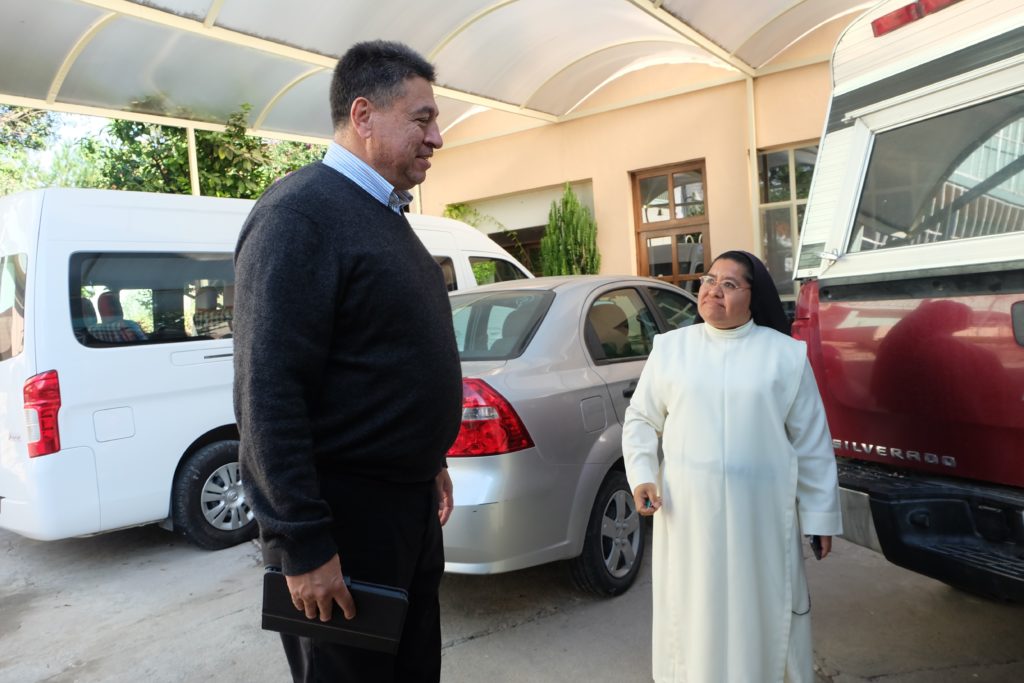
Luis pictured with Sister Isabel

Santa Julia, a home for girls just outside downtown San Miguel de Allende, was both like and unlike Mexiquito. Narrow roads led to the home, which is closely surrounded by private residences separated from the home by steep, protective walls, giving it a sort of tightly packed fortress feel.

In reality, Santa Julia is larger than it initially appears. The tall dorms obscure the rest of the property from sight, but the property includes a computer lab, an art room, a recreation room, a sanctuary, a cafeteria, a playground, and gorgeous grounds with the lime trees that are starting to feel to me like a symbol of comfort and calm.

Meeting Sister Isabel

Luis is initially confused by the introduction of Sister Isabel, Santa Julia’s new director. She’s not the director we’re used to working with — her predecessor, Sister Lydia, had been transferred a month ago. That’s fairly standard practice among the sisters so that they can have experience doing different kinds of work. At first, Luis was nervous. Sister Lydia had been a huge advocate for Children Incorporated and had taken great care to learn the program and diligently reported information about the 30-plus children who are enrolled at Santa Julia.

After just a few days in Mexico, Luis and I have already seen the impact of not just Children Incorporated’s efforts in these communities, but the impact of local generosity and perseverance too.

Sister Isabel quickly made us realize that our timing couldn’t be better. She’s new, but she’s very enthusiastic about learning more about Children Incorporated, so we took the opportunity to familiarize her with the program. And Sister Isabel, for her part, told us about the 36 girls who live at Santa Julia.

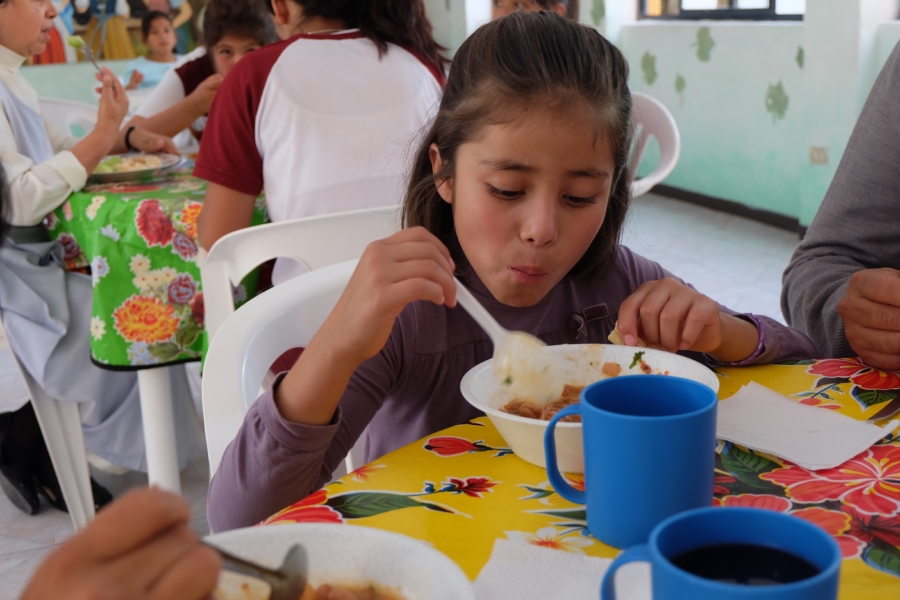
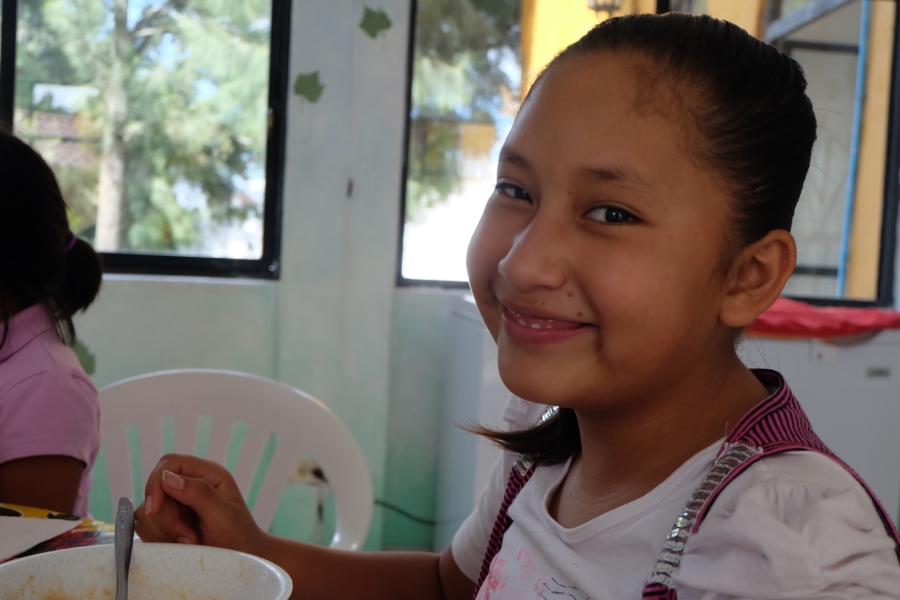
But really it wasn’t until we met them at lunchtime that we really fell in love. The Santa Julia girls introduced themselves by giving us hugs — they were so well-behaved, energetic, and loving. And it extended to the sisters, too. Each girl seemed so affectionate with their caretakers, and we realized it was probably the only affection the girls ever experienced. Most of them were abandoned or orphaned, and some come from abusive or neglectful families. But now, all of them — from age two all the way to university-age — are surrounded by love and support.

The children were so excited to have their guests sit and eat with them at lunchtime, and we were surprised that they knew all about sponsorship. Some of them kept asking us why we didn’t bring the sponsors — they call them “padrinos,” which means “godparents” — with us! I loved the idea that they so warmly wanted to meet their sponsors.

Like Mexiquito, Santa Julia received some funding from the government, but only for individual children who the government placed in the home. Unlike Mexiquito, the surrounding community donates not just in-kind services but a significant financial gift as well, particularly the foreign community in San Miguel de Allende. Their funding is evident in the brand new dorms, the new playground, and the English classes taught by a dedicated teacher.

By the time we leave, we’re fully convinced that Sister Isabel is the right person to be at the helm of the good ship Santa Julia. Even though she’s new to the job, her big heart and enthusiasm are so evident, as is the experienced team she has working with her.

We wave goodbye to the girls of Santa Julia, promise to thank their padrinos, and get ready for a visit we’d been looking forward to since the day we started planning our trip.

21st Century Knowledge for 21st Century Children

About four years ago, a few Children Incorporated donors traveled with Luis to San Miguel de Allende to meet with Sandra Suaste, director of the local library. The idea had been floated that if Children Incorporated focused on coming up with a way to teach technology to the children in both San Miguel de Allende programs, that would give those boys and girls a significant leg up for the future.

We wave goodbye to the girls of Santa Julia, promise to thank their padrinos, and get ready for a visit we’d been looking forward to since the day we started planning our trip.

Often, local schools and even the homes themselves don’t have the resources to dive into teaching technological skills. The donors and Luis envisioned an environment where children could be instructed on how to use computers and even get the building blocks for how to build digital products. Adults, too, could use the facility to take classes that might generate a little income for the library. Like farming, which we’ve seen some of the more rural programs make a priority for learning, tech instruction has the potential to reach down through multiple generations and change lives.

The Director of the Biblioteca Publica de San Miguel de Allende was on board, and now, our mission was to check on the classes.

Sandra was all smiles — the classes were going well, and she even had some recommendations for updating the computers at the lab and donating the older ones for the community to use. Having just met the children from Santa Julia and Mexiquito, we were able to picture them at the lab. It felt great to know that they were receiving something that they’d have trouble getting access to otherwise.

I enjoyed finding another way that Children Incorporated has helped these kids. The Biblioteca Publica reminded me that Children Incorporated work goes beyond homes and schools, sometimes setting up entirely new programs with willing partners.

***

HOW DO I SPONSOR A CHILD IN MEXICO?

You can sponsor a child in Mexico in one of three ways – call our office and speak with one of our sponsorship specialists at 1-800-538-5381, email us at sponsorship@children-inc.org, or go online to our donation portal, create an account, and search for a child in Mexico that is available for sponsorship.
SPONSOR A CHILD

written by Shelley Callahan

Shelley is the Director of Development for Children Incorporated. She is also the lead social correspondent, regularly contributing insights through the Stories of Hope blog series. Sign up for Stories of Hope to receive weekly email updates about how your donations are changing the lives of children in need.

» more of Shelley's stories

It’s our fourth day in Mexico, and Luis and I have left a truly special place. I have never felt so much serenity when visiting one of our projects — in Mexico, in Africa, in Bolivia, or anywhere else. The sisters who run the Mexiquito Home outside San Miguel de Allende have just shown us a sanctuary (in every sense of the word) for boys of all ages.

Everybody needs help, as Luis said, and it’s true. The most charming cities to visit can be home to so many children who depend on the kindness of others to survive and flourish.

When we left Mexico City yesterday around noon, we found ourselves in San Miguel de Allende late in the afternoon. The bus ride to the far eastern part of Guanajuato was nice, and we were charmed by the city, as many before us have been. San Miguel de Allende’s cobblestone streets and colonial features dating back to its founding in 1541 have made it a scenic destination for tourists, artists, and writers. The restaurants, small shops, galleries, and hotels are all results of today’s tourism industry, but the 17th and 18th-century historic city center and cathedral are so well-preserved, you can easily imagine yourself hundreds of years back in time.

There seems to be so much money in the beautiful city of San Miguel de Allende, so it’ll be interesting for me to learn more about the community’s needs. I asked Luis how it is that Children Incorporated has gotten to work with so many different projects, and he responded, “Everyone needs help.”

Helping boys find their future

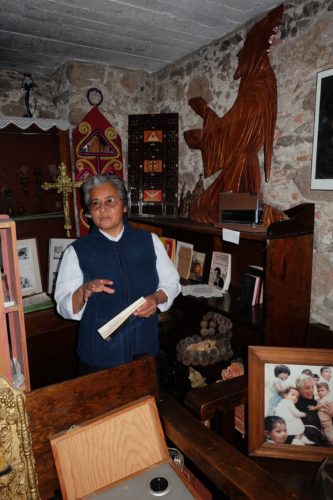
Sister Teo showing us the former room of Jose Mojica in San Miguel de Allende.

The next day, I was shocked when I arrived at the Mexiquito Home, just a short distance outside of the city. Luis had told me many things, but he wasn’t able to prepare me for just how stunning the property is. Mexiquito is located on a beautiful compound, with an iron gate that led up a lushly landscaped driveway and expansive stairs that led up to the entranceway of the building. From the top of those stairs, we could see the entire grounds — with dorms, a sanctuary, a cafeteria, and even a large courtyard with basketball hoops.

Once we met the director, Sister Teo, and we began our tour, I began to understand why the Mexiquito Home is the way it is. Jose Mojica, a famous Mexican singer and actor, founded the home in 1960 after following a calling to become a priest. He built the home to provide shelter and support for orphaned, abandoned, and underprivileged children — 50 years later, it’s still doing just that.

The government and the surrounding community help out as much as they can, with donations of food, books, clothes, and school supplies. Organizations like Children Incorporated make up a much-needed difference through sponsorships, making it possible for these boys to leave the streets and grow up in such a serene and loving environment.

The property’s sanctuary housed Mojica’s living quarters until he died in 1974. Sister Teo made the sanctuary the first stop on our tour. She and her fellow sisters commissioned local artists to paint portraits of Mojica and other prominent people affiliated with the home, as well as some children, and at one point next year, they hope to open the sanctuary as a museum with a café to honor Mojica’s legacy as well as generate some extra income for the home.

Something in the air

As we toured the sanctuary,  I assured them with complete sincerity that I would be thrilled to visit a museum such as they’d described. The actor-turned-priest’s story is fascinating, and his living quarters are really impressive to see.

But to me, the real attraction is the home itself and what the sisters have been able to do with it.

Organizations like Children Incorporated make a difference through sponsorships, making it possible for these boys to leave the streets and grow up in such a serene and loving environment.

With 31 boys currently enrolled, the Mexiquito Home is not at its 50-student capacity. We were asked not to take photos of the boys living there, who range in age from toddler up to teenager. Their backgrounds are sad stories and they remain vulnerable to danger outside of the home, so the sisters do what they can to keep them in an entirely safe environment. It doesn’t hurt that the same environment is beautiful to the eye and even the nose — the whole place smells like lime trees!

Sister Teo took us up to the roof, where we saw the newly installed solar panels. Solar energy provides all of the school’s power and heats its water, which feels so resourceful in addition to being environmentally friendly. A Canadian volunteer comes and teaches music to the boys once a week in a music room, college students come to the Mexiquito Home to run the facility’s greenhouse, and there’s also a small dental and medical facility run by a volunteer doctor and nurse, in addition to a psychology room, a large playground, and a computer lab.

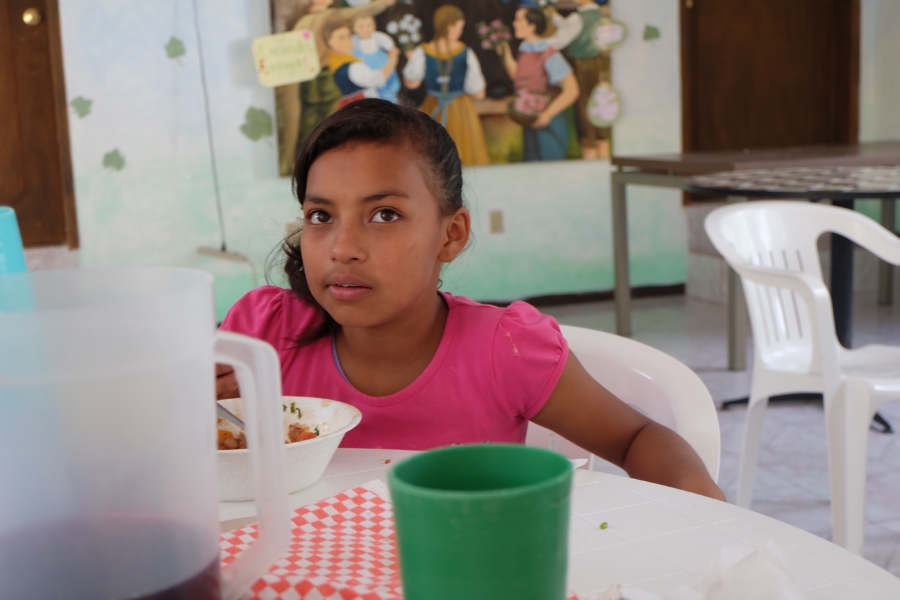
The sisters even keep chickens and sheep for trading and for food. We eat lunch alongside the boys as they return from school. They’re so sweet to us and each other, despite what we’ve heard about their difficult lives. I can only imagine what they’ve been through, but it’s clear that they have the support not only of Sister Teo and the other four sisters, but of each other as well.

Even in San Miguel de Allende, an exquisite city that, by all appearances, is doing so well for itself, there’s poverty and crime. Everybody needs help, as Luis said, and it’s true. The most charming cities to visit can be home to so many children who depend on the kindness of others to survive and flourish.

More and more on this trip, I’m reluctant to leave the places we visit. But we return home to our hotel and I think about the faces of the boys I met. Without pictures to remind me, I’ll have to rely on my memory.

***

HOW DO I SPONSOR A CHILD IN MEXICO?

You can sponsor a child in Mexico in one of three ways – call our office and speak with one of our sponsorship specialists at 1-800-538-5381, email us at sponsorship@children-inc.org, or go online to our donation portal, create an account, and search for a child in Mexico that is available for sponsorship.
SPONSOR A CHILD

written by Shelley Callahan

Shelley is the Director of Development for Children Incorporated. She is also the lead social correspondent, regularly contributing insights through the Stories of Hope blog series. Sign up for Stories of Hope to receive weekly email updates about how your donations are changing the lives of children in need.

» more of Shelley's stories