
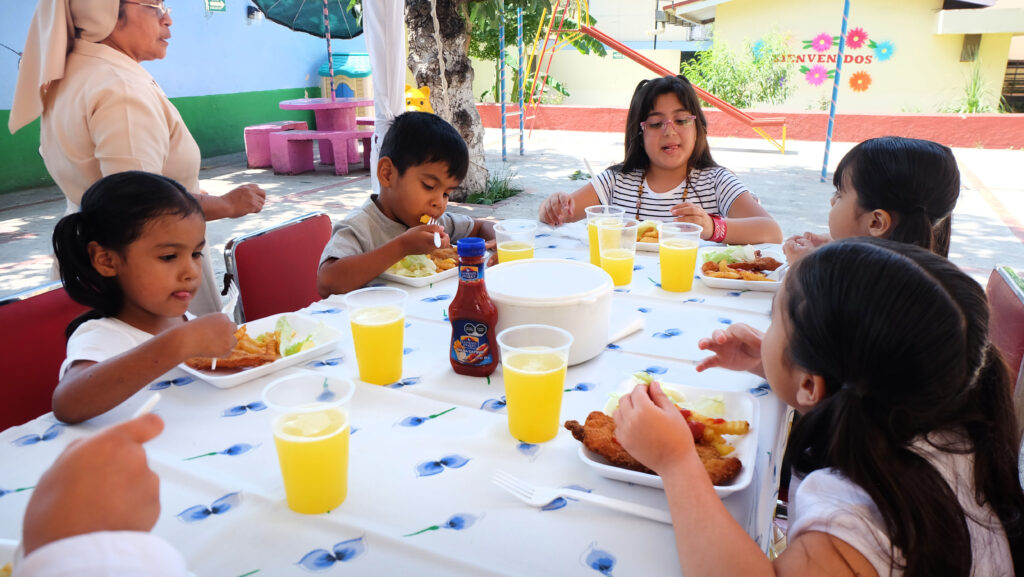
Hunger is defined by not having enough food to meet daily energy and nutritional needs. It is a problem that most often affects low-income families, because living in poverty means that people are often going without basic needs such as food, clothing, and adequate shelter.
In order for a child to have a chance at a bright future, they need to eat healthy meals every day. When they’re hungry, children are more likely to be hospitalized, and they face a higher risk of health conditions because they have weakened immune systems. A brain starved of vital nutrients is one that can’t concentrate, setting hungry kids up for failure in school.
Without enough food or proper nutrition, kids face a variety of setbacks that can derail their path out of poverty.
Even those who survive face lifelong consequences. Malnutrition can cause permanent damage to brain development and weaken the immune system, leaving children more vulnerable to disease. From developing countries to the United States, children and families don’t always have enough to eat.
Global hunger has declined significantly since the 1970s, when roughly one in four people experienced hunger. But the crisis is far from over.
How does poverty affect world hunger for kids?
Worldwide Child Hunger Facts
– Every year up to two million children die each year due to poor nutrition
– Today, one in 11 people in the world go hungry
– Approximately 28% of all children in developing countries are considered to be underweight, or have had their growth stunted as a result of malnutrition
– Worldwide, malnutrition causes nearly half of child deaths worldwide, yet most kids go untreated.
National child hunger facts
– In America, 1 in 8 households suffer from food insecurity, and don’t know where they will get their next meal from
– 85% of counties with the highest food insecurity are rural.
– Nearly 9 out of 10 high food insecurity counties are in the South, indicating regional disparities.
– For every 100 school lunch programs, there are only 87 breakfast sites, and just 36 summer food programs
What Children Incorporated does to alleviate hunger for children
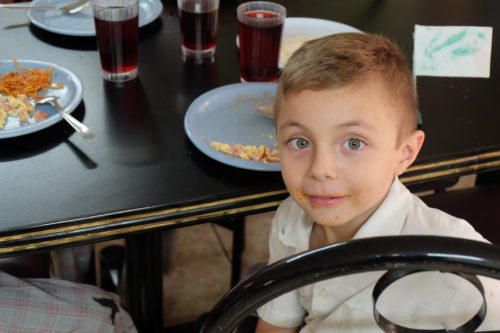
Donations to our Feeding Program provide meals for children around the world.
Children Incorporated provides basic necessities such as food, clothing, healthcare, and educational support to children living in poverty in the United States and abroad through our child sponsorship program. These essentials are vital to a child’s growth and success in school. We also assist feeding programs in the United States and internationally that ensure that children are receiving meals during the week, and that they are provided with food to take home on the weekends. Additionally, we make contributions toward school gardens so that children living in poverty have the opportunity to obtain fresh, nutritious food, which they would likely otherwise go without.
How you can help
You can help a child who faces hunger in a few different ways! The most long term way to help is by sponsoring a child with us. For $35 a month, you provide basic needs, including food, for a child in need, while also making an investment in their future.
Donating to our Feeding Program Fund is another immediate assistance to children around the world. In the US, donations support such endeavors such as our Backpack Feeding Program, which gives children in Eastern Kentucky food to take home on the weekends and in the summer when school is out. Internationally, our Feeding Program help feed enrolled children who would otherwise go hungry, so that they can be alert at school and ready to learn. These funds support programs in the Philippines, Kenya, and Ethiopia to buy grains, meats, vegetables, and cooking supplies to feed children.
***
WANT TO BE PART OF the worldwide solution?
-Donate to our Feeding Program today
-Sponsor a child in one of three ways:
- call our office at 1-800-538-5381 and speak with one of our staff members
- email us at sponsorship@children-inc.org
- go online to our sponsorship portal and search for a child that is available for sponsorship.
___
References:
http://www.thp.org/knowledge-center/know-your-world-facts-about-hunger-poverty/
http://www.feedingamerica.org/hunger-in-america/child-hunger-facts.html
https://www.wfp.org/node/646670
http://www1.wfp.org/zero-hunger