Tag Archives: help children

In our work at Children Incorporated, we often talk about the importance of getting an education. For children in our program, we believe education is the key to finding jobs upon graduation that will enable them to work toward breaking the cycle of poverty from which they come.

Unfortunately, statistics show that children growing up in impoverished households often perform less well academically than their peers.

The challenges of living below the poverty line
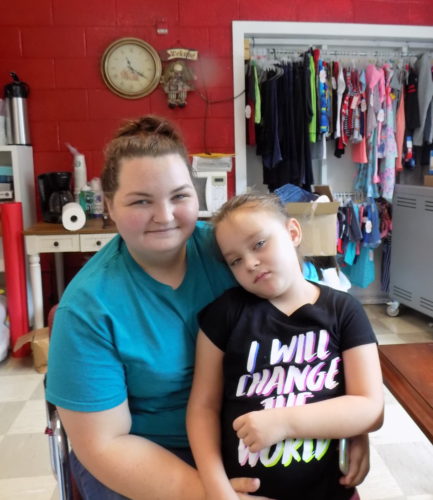
Jackie is pictured here with one of our sponsored children at Beaver Creek Elementary School.

As reported by the non-profit Operation Warm’s website, “Children living above the poverty line are entering kindergarten more prepared than those below it. High-income families are able to put more money towards their children’s cognitive development than those living in poverty.”

“Parents with low incomes, on average, have less time to read to their children, no funds for pre-school and less stable home environments. The difference in preparation tends to persist through elementary and high school.”

Beavers Are Achievers

According to our Director of U.S. Programs, Renée Kube, this achievement gap is prevalent in some of our affiliated schools in Eastern Kentucky, and specifically at Beaver Creek Elementary School in Knott County. Located in the small community of Topmost, families of children enrolled at Beaver Creek Elementary face rampant poverty. They struggle to overcome the common socioeconomic problems that plague Knott County such as adult illiteracy, school absenteeism, child obesity and substance abuse.

“There is no question that poverty can impact academic achievement in ways ranging from lack of books in the home to transportation barriers that make it difficult to travel to cultural and historic sites,” stated Renée. 

While visiting Beaver Creek Elementary School, Renée met with our volunteer coordinator Jackie, who Renée describes as incredibly devoted to helping her students.

During their meeting, Jackie explained that although the school motto is “Beavers Are Achievers” the children are struggling academically as they aim to reach their goals. The school’s test scores lag behind state averages, reaching only the 51st percentile in reading and just the 38th percentile in math in state ranking.

“There is no question that poverty can impact academic achievement in ways ranging from lack of books in the home to transportation barriers that make it difficult to travel to cultural and historic sites,” stated Renée. 

Making kids feel loved
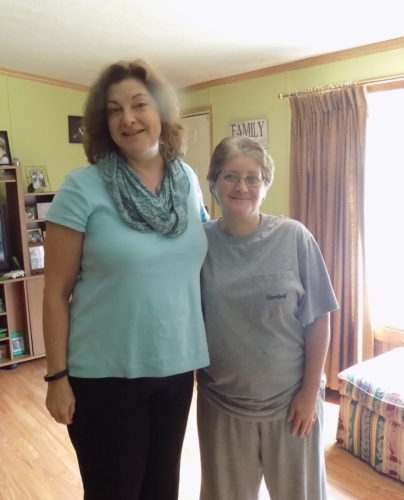
Often times while visiting our affiliated projects, Renée visits with parents of children enrolled in our program.

Jackie told Renée that one of the biggest challenges in the community — and the county as a whole — is coping with drug addiction and the lack of treatment options for it. The fallout affects many children, resulting in them being raised by grandparents or other family members. For other children who still live at home with their parents, they are often being neglected and raising themselves.

Jackie feels fortunate that a local church brings food to the school’s Resource Center for her weekend Backpack Feeding Program. She says that the Children Incorporated sponsorship program is vital in helping with clothing, shoes and school supplies throughout the year. Jackie also values how sponsors make her students feel special and let them know that someone cares for them.

Meeting two special parents

After taking a tour of the building and grounds, Jackie was happy to show Renée the Family Resource Center where she had asked two of her parents — Raven and Scottie — to thank our organization on behalf of all the parents of sponsored children.

While meeting with Raven and Scottie, Renée could tell they were both very dedicated to and concerned for their daughters.

“Raven is a homemaker. Scottie was unemployed for a long time but has recently gotten a job at a small, local non-profit community center. The pay is meager. They told me that our sponsorship program has meant so much to their little girls, and that it warms their hearts to see the excitement their sponsors bring to their children,” said Renée.

***

HOW DO I SPONSOR A CHILD IN KENTUCKY?

You can sponsor a child in Kentucky in one of two ways: call our office at 1-800-538-5381 and speak with one of our staff members, or email us at sponsorship@children-inc.org.
SPONSOR A CHILD


The second-largest nation in Latin America, Argentina is truly a nation of contrasts. In geography alone, its borders envelop a full spectrum of topography including rugged, towering mountains, tropical lowlands, arid steppes and plateaus, and frigid tundra.

Despite being a rather wealthy country, Argentina faces a poverty crisis caused in large part by inflation rates.

Argentina is located mostly in the southern half of South America. The country is bordered by Chile to the West, Bolivia and Paraguay to the north, Brazil to the northeast, Uruguay and the South Atlantic Ocean to the east and the Drake Passage to the south. It is located between the Andes Mountains on one side and the Atlantic Ocean on the other. Despite being a rather wealthy country, Argentina faces a poverty crisis caused in large part by inflation rates.

Facts about Argentina

–    The capital is Buenos Aires

–    Argentina is the second-largest country in South America

–    The population is 44.27 million

–    The official language is Spanish

–  92% of Argentinians are Roman Catholic religion

–  Argentina is the 8th largest country in the world

– The currency is the Argentinian peso

–  The name “Argentina” comes from the Latin word for silver

Facts about poverty in Argentina

  • The government of Argentina estimates that a third of the population lives below the poverty line
  • About 20% of the population lives on less than $2 a day
  • Women make up a larger share of the poor. They comprise a large percentage (60 percent) of those employed in part-time or low-skill (and therefore low-paying) jobs
  • About 50% of children under the age of 14 live in poverty
  • There are currently an estimated 500,000 young people in Argentina outside of the country’s education system

Where we work in Argentina

In Argentina, we are affiliated with two projects, Casa del Nino-Maria de Nazaret and Casa del Nino-Padre Jose Kentenich, both of which are located in Buenos Aires.

Read more about these projects

A Shining Light in the Culture Capital of Argentina

Creative Learning in Buenos Aires

How you can help children in Argentina

You can help a child living in poverty in Argentina in a few different ways. One way is through our child sponsorship program. Sponsorship provides an underprivileged child with basic and education-related necessities such as food, clothing, healthcare, school supplies and school tuition payments.

SPONSOR A CHILD IN ARGENTINA

This vital support allows impoverished, vulnerable children to develop to their full potential — physically, emotionally and socially. Sponsors positively impact the lives of the children they sponsor through the knowledge that someone cares about their wellbeing. This gives children in need hope, which is powerful.

Our on-site volunteer coordinators use those funds to purchase items for children in our program, to ensure that they have what they need to do their very best and succeed in school.

Our policy has always been to consider the needs of each sponsored child on an individual basis. We work closely with our volunteer coordinators at our project sites in Argentina, who are familiar with each individual circumstance and the needs of every child in their care. Sponsorship donations are sent to our projects — orphanages, homes, community centers and schools — at the beginning of each month in the form of subsidy stipends. Our on-site volunteer coordinators use those funds to purchase items for children in our program, to ensure that they have what they need to do their very best and succeed in school.

You can also help children in Argentina by donating to one of our special funds. Our special funds offer a variety of giving options for sponsors who wish to further their support, as well as for donors who wish to make a difference without making a commitment. In the past, thanks to donations to our Hope In Action Fund and our International Feeding Program, we have been able to further support our projects in Argentina beyond sponsorship.

***

The Father Andeweg Institute for the Deaf, or FAID, is one of the few schools in Lebanon that provide an education to hearing-impaired children. A long-time Children Incorporated affiliated project, FAID supports about 100 students every day, many of them refugee children from neighboring countries – primarily Syria.

FAID’s mission:

 To act as a caring institute for the deaf and hard of hearing, which reflects a healthy balance of academic goals and building self-esteem, self-awareness, and life skills.

During a trip to Beirut, Lebanon, our Director of International Programs, Luis Bourdet, visited FAID and met with our Volunteer Coordinator Ms. Shawish. She explained to Luis that the most challenging aspect of her job is that the school receives less and less support from the Lebanese government each year. Yet every year, the need to help more and more children continues to increase. Currently, the school’s funding comes from various local and foreign partners, including Children Incorporated. Our sponsors help to support over sixty students at FAID alone.

A history of FAID 

FAID was founded in 1957 by Anglican clergyman Reverend Dr. Arie J. Andeweg. Reverend Dr. Andeweg, known as “the father of deaf people in Lebanon,” first started his work in 1956 by meeting with deaf adults at local coffee houses in Beirut. He was soon able to communicate with them and decided to establish a club for the deaf so that they could meet on a regular basis. In 1957, with younger deaf children in mind, he founded FAID. Today, FAID is one of the most prominent education centers for the deaf in the Middle East. 

 A leading comprehensive center

Sponsor a child in Lebanon to change their life for the better

Many deaf and hearing-impaired students at FAID could still use the help of a caring sponsor.

FAID provides an education to children from preschool to high school, ages three through eighteen. There, they learn to develop language to support memory and learning, achieve their academic and vocational potential, develop tools for safety and confidence in the modern world, create happy memories of their childhood and lasting friendships, and have a place to be healthy and resilient both physically and emotionally.

While in attendance at the school, students learn the Lebanese national curriculum and sign language. They are provided with much-needed audiology services, including supplies of hearing aids, hearing aid batteries, and ear molds; hearing tests; and hearing aid maintenance. The children also attend speech therapy sessions twice a week; auditory training with methodologies for listening and learning to hear; and they receive psychological and emotional support.

Enabling kids to reach their full potential

While they were meeting, Ms. Shawish explained to Luis that the aim of FAID is for every child and young person that attends to develop into the best possible version of themselves. She stated that the earlier hearing loss occurs in a child’s life, the more serious the effects can be on the child’s development. Similarly, the earlier a problem is identified and intervention begins, the less serious the ultimate impact is likely to be. 

While in attendance at the school, students learn the Lebanese national curriculum and sign language. They are provided with much-needed audiology services, including supplies of hearing aids, hearing aid batteries, and ear molds; hearing tests; and hearing aid maintenance.

As they toured the school and met with some of our sponsored children, Ms. Shawish told Luis that because of the special circumstances that the children are in — especially the older refugee children who attend the school — FAID has created group classes to meet the needs of the students who had never been to a specialized school.

The school also offers a theater class. Ms. Shawish feels that drama is an important tool for preparing students to live and work in a world that is increasingly team-oriented rather than hierarchical. Drama classes also help students develop tolerance and empathy.

Looking towards the future

Although having enough funding to provide for all the needs of the children is an issue, Ms. Shawish is confident that the school will continue to grow and add new programs. She talked with Luis about how FAID is piloting an outreach program among the Syrian refugee camps in Lebanon and the Lebanese community in order to raise awareness regarding deafness and the importance of education for those affected. Ms. Shawish is also hopeful that she will find a means to offer assistance to students who want to continue on to universities or technical schools once they graduate.

Before Luis left, Ms. Shawish assured him that without Children Incorporated’s support, the school, which is incredibly valuable to so many children, would not survive. She also mentioned that there are many deaf and hearing-impaired students at the school who could still use the help of a caring sponsor to ensure that they are equipped to fully participate in the world around them.

***

HOW DO I SPONSOR A CHILD IN LEBANON?

You can sponsor a child in Lebanon in one of three ways: call our office at 1-800-538-5381 and speak with one of our staff members; email us at sponsorship@children-inc.org; or go online to our sponsorship portal, create an account, and search for a child in Lebanon who is available for sponsorship.

SPONSOR A CHILD

The town of Anjar, where our affiliated project the Armenian Evangelical Secondary School is located, is home to a large population of Armenian settlers. Fleeing persecution in Turkey after the Turkish-Armenian War in the 1930s, Armenians found refuge in Anjar.

In order to obtain an education that will yield them the opportunity to attend a technical school or university after graduating, students must attend private schools, such as the Armenian Evangelical Secondary School.

Later, in the 1960s, a Lebanese-Armenian businessman by the name of Stephen Philibosian supported the establishment of the Armenian Evangelical Secondary School to serve those young people in the community who continued to face adversity as children of refugee families.

Our Director of International Programs, Luis Bourdet, visited the school to meet with our Volunteer Coordinator Reverend Akbasharian, who discussed with Luis the importance of our program in ensuring that Armenian children are able to attend this prestigious private school.

About Anjar

Recognized as a United Nations Educational, Scientific and Cultural Organization (UNESCO) World Heritage Site, Anjar is located near the Syrian border in the fertile Beqaa Valley, where much of the nation’s vegetables, grains, and wine grapes are produced.

Sponsor a child in Lebanon.

Currently, about ten percent of children in Lebanon do not attend school.

An extensive portion of Anjar’s population is comprised of Armenian agricultural laborers who earn very little money. For this reason, the Armenian Evangelical Secondary School plays a crucial role in ensuring that children from poor Armenian families are able to receive an education.

Poverty in Lebanon  

In modern-day Lebanon, considerable poverty exists, mostly due to recent conflicts in the country. Almost thirty percent of the Lebanese population lives below the poverty line, which means that children often do not have basic needs or the opportunity to attend school.

Without funds for books, school supplies, or tuition, children do not have the resources they require to go to school, and therefore have no choice but to start working before they reach legal working age. Nearly seven percent of children in Lebanon are forced to work to help their families financially.

Currently, about ten percent of children in Lebanon do not attend school. For those that do, the quality of public education is poor, and the school buildings in which classes are held are in terrible condition.

The Armenian Evangelical Secondary School plays a crucial role in ensuring that children from poor Armenian families are able to receive an education.

In order to obtain an education that will yield them the opportunity to attend a technical school or university after graduating, students must attend private schools, such as the Armenian Evangelical Secondary School. There, teachers are better trained, and the school has higher-quality resources and tools. Unfortunately, however, many families, like those in Anjar, cannot afford to send their children to such schools.

Helping kids in need

During Luis’ visit, Reverend Akbasharian expressed his gratitude for Children Incorporated’s partnership with the Armenian Evangelical Secondary School, where we currently serve many children through our sponsorship program. Because of support from our caring sponsors, Armenian boys and girls of this impoverished and marginalized population are provided with tuition money, food, clothing, and school supplies on a regular basis.

Reverend Akbasharian and Luis agreed that increasing the number of sponsorships at the school would be very beneficial. They both would like to see even more children, who would otherwise have to attend inadequate public schools, get a high-quality education and have the chance to rise above poverty when they reach adulthood.

***

HOW DO I SPONSOR A CHILD IN LEBANON?

You can sponsor a child in Lebanon in one of three ways: call our office at 1-800-538-5381 and speak with one of our staff members; email us at sponsorship@children-inc.org; or go online to our sponsorship portal, create an account, and search for a child in Lebanon that is available for sponsorship.

SPONSOR A CHILD

written by Shelley Callahan

Shelley is the Director of Development for Children Incorporated. She is also the lead social correspondent, regularly contributing insights through the Stories of Hope blog series. Sign up for Stories of Hope to receive weekly email updates about how your donations are changing the lives of children in need.

» more of Shelley's stories

Lebanon’s political climate has long been riddled with conflict, which is often further stirred by external factors. Thankfully, however, our affiliated projects the Armenian Evangelical Schools (AES), a group of affordable private schools, offer a well-rounded education to children living in poverty and suffering from political turmoil.

Compared to public schools in Lebanon, however, the AES offer a much higher quality education. Children are provided with more educational tools and resources than the alternative public schools.

Children Incorporated’s partnership with the AES spans decades. Over the years, we have been able to support thousands of children through our sponsorship program.

About Lebanon

Lebanon is located on the eastern coast of the Mediterranean Sea, bordering Israel to the south and Syria to the east and north. This country of six million people acknowledges eighteen religious groups, the largest being the Shiites and Sunnites; there is also a large Christian population in the country.

Up to the end of World War I, Lebanon was part of the Ottoman Empire. In 1920, the League of Nations issued France a mandate over Syria and Lebanon. 23 years later, Lebanon gained its independence.

Current-day conflict

Since 2006, Lebanon has been politically divided into two almost equally-strong camps, whose conflict has prevented the political institutions in the country from functioning. The internal struggle between the two groups is mostly based on social and economic clashes of interest, linked with religious differences.

Sponsor a child in Lebanon to change their life.

Most of the children supported by the AES are Armenians, but some are Arabs.

Other factors also play a huge role in the strife that exists in Lebanon. Internal disagreements over the conflict in neighboring Syria play a part, as well as foreign countries’ involvement and interests in the Syrian War. Both internal and external arguments on how to handle the crisis in Syria only worsen the current situation in Lebanon. Today, more than a million Syrian refugees have been registered in the country.

Although Lebanon has been rebuilding itself steadily, the well-being of children has largely been undermined by these geopolitical circumstances. The country still has a long way to go before reaching an ideal situation, where the protection of children’s rights is taken into full consideration.

The AES IN ANJAR and Beirut

The AES were established in 1964 by the late Stephen Philibosian, a successful Lebanese-American businessman. The AES run five schools in Beirut and one in the city of Anjar, near Lebanon’s border with Syria. Our donors support children in three of these schools — two in Beirut and one in Anjar. Sponsors provide children with aid to cover monthly school fees. Funds donated also go towards purchasing clothes and shoes, as well as school supplies.

Most of the children supported by the AES are Armenians, but some are Arabs. All have been affected by the political and economic turmoil of Lebanon and its neighboring countries. The children come from families that work in low-paying or minimum wage jobs.

Children Incorporated provides is truly valuable, and we would love to see more students at the AES enrolled in our program. Currently, our sponsorship program supports only ten percent of the total student body.

The AES are all private schools, so monthly fees are required for attendance. Compared to public schools in Lebanon, however, the AES offer a much higher quality education. Children are provided with more educational tools and resources than the alternative public schools. Public schools are also overcrowded; so parents in Lebanon do whatever it takes to send their children to the AES, which have a higher academic standard.

Visiting the schools

While visiting two AES schools in Beirut, our Director of International Programs, Luis Bourdet, noticed that since his last visit many years ago, the schools have improved greatly.

“The infrastructure has been updated, and new and more efficient educational programs have been established to improve opportunities for the children,” he said.

Sponsor a child in Lebanon today.

Students within the AES are required to study Armenian, Arabic, English, and French.

During Luis’ last visit there more than five years ago, the AES were divided into elementary, middle, and high schools. This meant that children were moving to different buildings as they moved up in school. Now, all of the AES offer classes up to high school level in the same building. This keeps students in the same location for a longer time, providing them with more stability, and improving their academic experience.

According to Luis, students within the AES are required to study Armenian, Arabic, English, and French, along with the core educational subjects required by the local government.

“Before, English was not a core course; but it is emphasized now, as the international importance of the language has increased in Lebanon. So students are able to communicate in the English language now,” Luis stated.

“It was great to see many of the students practicing their English skills, asking questions about the United States, and our programs in general.”

On to higher education

Luis also noticed that overall academic core courses at the AES have improved. The labs are better equipped, and teachers are better trained. These improvements prepare students more effectively for higher education, which most students aim to achieve — and they succeed. The AES have a graduation and higher education enrollment rate higher than ninety percent, which is very high for Lebanon in general.

Children Incorporated provides is truly valuable, and we would love to see more students at the AES enrolled in our program. Currently, our sponsorship program supports only ten percent of the total student body. Luis knows that many more of the children at AES could use the help of supportive sponsors.

***

HOW DO I SPONSOR A CHILD IN LEBANON?

You can sponsor a child in Lebanon in one of three ways: call our office at 1-800-538-5381 and speak with one of our staff members; email us at sponsorship@children-inc.org; or go online to our sponsorship portal, create an account, and search for a child in Lebanon that is available for sponsorship.

SPONSOR A CHILD

written by Shelley Callahan

Shelley is the Director of Development for Children Incorporated. She is also the lead social correspondent, regularly contributing insights through the Stories of Hope blog series. Sign up for Stories of Hope to receive weekly email updates about how your donations are changing the lives of children in need.

» more of Shelley's stories

The second-largest country in Latin America, Argentina’s borders envelop a full spectrum of topography: rugged, towering mountains, tropical lowland, arid steppes, plateaus and frigid tundra.

Children often suffer from abandonment as their parents find it too difficult to care for them.

Nestled along the estuary where the Rio de la Plata meets the Atlantic Ocean, the sprawling Argentinian capital of Buenos Aires is the second-largest metropolis in South America and home to the slum neighborhood, Villa Ballester, where our affiliated project Casa Del Niño – Maria de Nazaret is located.

Typical of many area slums, families in Villa Ballester live in hopeless poverty, forced to endure squalid conditions in tin shacks with no running water. Many are immigrants from other Latin American countries and have few family members, limited resources or limited means to gain adequate employment. Children often suffer from abandonment as their parents find it too difficult to care for them.

A blessing for children in need

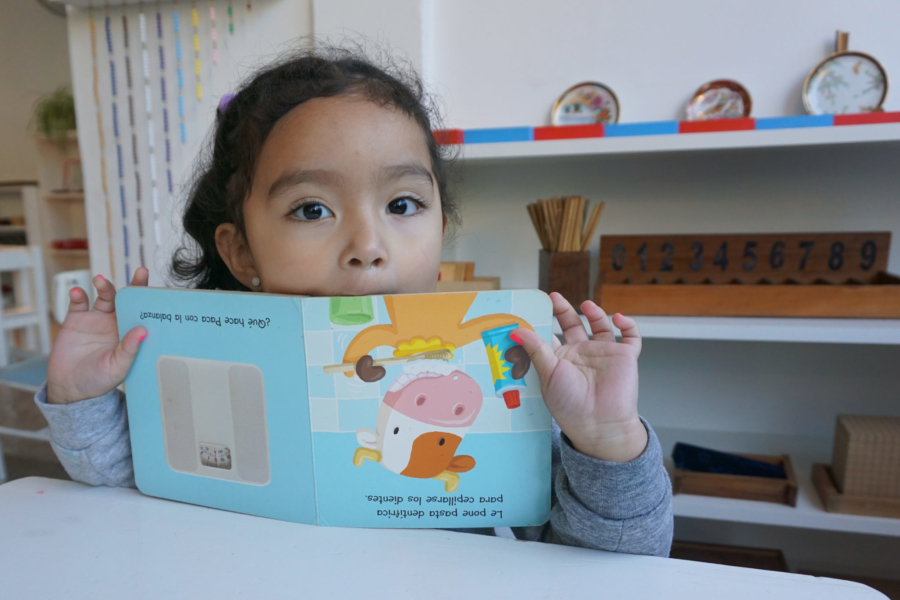
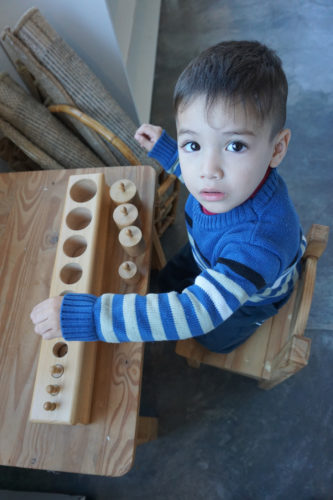
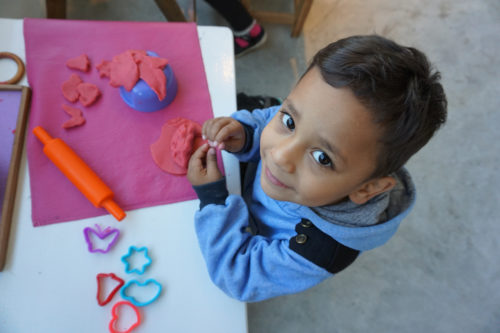
The Montessori method of education has been adopted at Casa del Niño.

For residents of this overcrowded district, the Casa Del Niño – Maria de Nazaret Daycare Center is a blessing of infinite proportions. The center serves over 200 local children during the school day, providing them with a safe and nurturing environment where they are continuously monitored, offered basic necessities and provided with psychological support as needed.

On a visit to Casa Del Niño – Maria de Nazaret, our Director of International Programs, Luis Bourdet, and International Projects Specialist, Kristen Walthall, met with our volunteer coordinator, Dominga, and some of the children at the center.

While they toured the Center, Luis and Kristen asked about the newly implemented Montessori method of education that Casa Del Niño had adopted for the younger children at the center since Luis’ last trip to Argentina.

What is Montessori Education?

According to the website Montessori Northeast, “Montessori is a method of education that is based on self-directed activity, hands-on learning and collaborative play. In Montessori classrooms, children make creative choices in learning, while the classroom and the highly-trained teacher offer age-appropriate activities to guide the process. Children work in groups and individually to discover and explore the knowledge of the world and to develop their maximum potential.”

Luis was pleased to hear from Dominga that the school had been re-organized to function around the Montessori education method that will eventually be used for all the children in attendance.

Luis was pleased to hear from Dominga that the school had been re-organized to function around the Montessori education method that will eventually be used for all the children in attendance.

Doing the most good for kids

“The center is managed by a committee to plan all activities for the children to maximize the support the children are receiving. With the Montessori method of learning, as well as the supplemental support that our sponsorship program is providing, the children at Casa Del Niño – Maria de Nazaret are very well cared for,” exclaimed Luis.

Although Casa Del Niño – Maria de Nazaret is receiving a great deal of support from the local government as well as Children Incorporated sponsors and donors, Dominga expressed to Luis that she wishes to enroll even more children in our program in the future. She would also like to re-establish a few skills training programs for adults in the community, such as cooking and sewing, and acquire funding to pay salaries for teacher aides in each of the classrooms.

***

How do I sponsor a child in Argentina?

You can sponsor a child in Argentina in one of three ways: call our office at 1-800-538-5381 and speak with one of our staff members; email us at sponsorship@children-inc.org; or go online to our donation portal, create an account, and search for a child in Argentina who is available for sponsorship.

SPONSOR A CHILD