Tag Archives: Lebanon

The town of Anjar, where our affiliated project the Armenian Evangelical Secondary School is located, is home to a large population of Armenian settlers. Fleeing persecution in Turkey after the Turkish-Armenian War in the 1930s, Armenians found refuge in Anjar.

In order to obtain an education that will yield them the opportunity to attend a technical school or university after graduating, students must attend private schools, such as the Armenian Evangelical Secondary School.

Later, in the 1960s, a Lebanese-Armenian businessman by the name of Stephen Philibosian supported the establishment of the Armenian Evangelical Secondary School to serve those young people in the community who continued to face adversity as children of refugee families.

Our Director of International Programs, Luis Bourdet, visited the school to meet with our Volunteer Coordinator Reverend Akbasharian, who discussed with Luis the importance of our program in ensuring that Armenian children are able to attend this prestigious private school.

About Anjar

Recognized as a United Nations Educational, Scientific and Cultural Organization (UNESCO) World Heritage Site, Anjar is located near the Syrian border in the fertile Beqaa Valley, where much of the nation’s vegetables, grains, and wine grapes are produced.
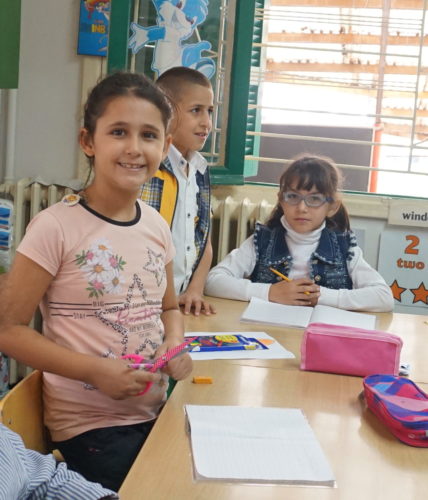
Sponsor a child in Lebanon.

Currently, about ten percent of children in Lebanon do not attend school.

An extensive portion of Anjar’s population is comprised of Armenian agricultural laborers who earn very little money. For this reason, the Armenian Evangelical Secondary School plays a crucial role in ensuring that children from poor Armenian families are able to receive an education.

Poverty in Lebanon  

In modern-day Lebanon, considerable poverty exists, mostly due to recent conflicts in the country. Almost thirty percent of the Lebanese population lives below the poverty line, which means that children often do not have basic needs or the opportunity to attend school.

Without funds for books, school supplies, or tuition, children do not have the resources they require to go to school, and therefore have no choice but to start working before they reach legal working age. Nearly seven percent of children in Lebanon are forced to work to help their families financially.

Currently, about ten percent of children in Lebanon do not attend school. For those that do, the quality of public education is poor, and the school buildings in which classes are held are in terrible condition.

The Armenian Evangelical Secondary School plays a crucial role in ensuring that children from poor Armenian families are able to receive an education.

In order to obtain an education that will yield them the opportunity to attend a technical school or university after graduating, students must attend private schools, such as the Armenian Evangelical Secondary School. There, teachers are better trained, and the school has higher-quality resources and tools. Unfortunately, however, many families, like those in Anjar, cannot afford to send their children to such schools.

Helping kids in need

During Luis’ visit, Reverend Akbasharian expressed his gratitude for Children Incorporated’s partnership with the Armenian Evangelical Secondary School, where we currently serve many children through our sponsorship program. Because of support from our caring sponsors, Armenian boys and girls of this impoverished and marginalized population are provided with tuition money, food, clothing, and school supplies on a regular basis.

Reverend Akbasharian and Luis agreed that increasing the number of sponsorships at the school would be very beneficial. They both would like to see even more children, who would otherwise have to attend inadequate public schools, get a high-quality education and have the chance to rise above poverty when they reach adulthood.

***

HOW DO I SPONSOR A CHILD IN LEBANON?

You can sponsor a child in Lebanon in one of three ways: call our office at 1-800-538-5381 and speak with one of our staff members; email us at sponsorship@children-inc.org; or go online to our sponsorship portal, create an account, and search for a child in Lebanon that is available for sponsorship.
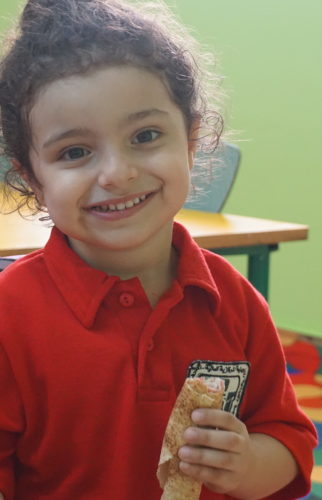
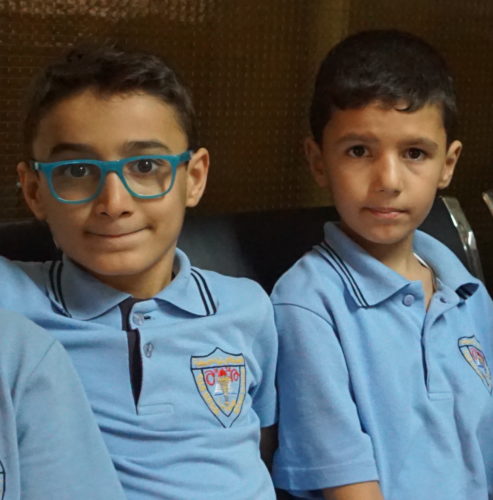
SPONSOR A CHILD

written by Shelley Callahan

Shelley is the Director of Development for Children Incorporated. She is also the lead social correspondent, regularly contributing insights through the Stories of Hope blog series. Sign up for Stories of Hope to receive weekly email updates about how your donations are changing the lives of children in need.

» more of Shelley's stories

Lebanon’s political climate has long been riddled with conflict, which is often further stirred by external factors. Thankfully, however, our affiliated projects the Armenian Evangelical Schools (AES), a group of affordable private schools, offer a well-rounded education to children living in poverty and suffering from political turmoil.

Compared to public schools in Lebanon, however, the AES offer a much higher quality education. Children are provided with more educational tools and resources than the alternative public schools.

Children Incorporated’s partnership with the AES spans decades. Over the years, we have been able to support thousands of children through our sponsorship program.

About Lebanon

Lebanon is located on the eastern coast of the Mediterranean Sea, bordering Israel to the south and Syria to the east and north. This country of six million people acknowledges eighteen religious groups, the largest being the Shiites and Sunnites; there is also a large Christian population in the country.

Up to the end of World War I, Lebanon was part of the Ottoman Empire. In 1920, the League of Nations issued France a mandate over Syria and Lebanon. 23 years later, Lebanon gained its independence.

Current-day conflict

Since 2006, Lebanon has been politically divided into two almost equally-strong camps, whose conflict has prevented the political institutions in the country from functioning. The internal struggle between the two groups is mostly based on social and economic clashes of interest, linked with religious differences.

Sponsor a child in Lebanon to change their life.

Most of the children supported by the AES are Armenians, but some are Arabs.

Other factors also play a huge role in the strife that exists in Lebanon. Internal disagreements over the conflict in neighboring Syria play a part, as well as foreign countries’ involvement and interests in the Syrian War. Both internal and external arguments on how to handle the crisis in Syria only worsen the current situation in Lebanon. Today, more than a million Syrian refugees have been registered in the country.

Although Lebanon has been rebuilding itself steadily, the well-being of children has largely been undermined by these geopolitical circumstances. The country still has a long way to go before reaching an ideal situation, where the protection of children’s rights is taken into full consideration.

The AES IN ANJAR and Beirut

The AES were established in 1964 by the late Stephen Philibosian, a successful Lebanese-American businessman. The AES run five schools in Beirut and one in the city of Anjar, near Lebanon’s border with Syria. Our donors support children in three of these schools — two in Beirut and one in Anjar. Sponsors provide children with aid to cover monthly school fees. Funds donated also go towards purchasing clothes and shoes, as well as school supplies.

Most of the children supported by the AES are Armenians, but some are Arabs. All have been affected by the political and economic turmoil of Lebanon and its neighboring countries. The children come from families that work in low-paying or minimum wage jobs.

Children Incorporated provides is truly valuable, and we would love to see more students at the AES enrolled in our program. Currently, our sponsorship program supports only ten percent of the total student body.

The AES are all private schools, so monthly fees are required for attendance. Compared to public schools in Lebanon, however, the AES offer a much higher quality education. Children are provided with more educational tools and resources than the alternative public schools. Public schools are also overcrowded; so parents in Lebanon do whatever it takes to send their children to the AES, which have a higher academic standard.

Visiting the schools

While visiting two AES schools in Beirut, our Director of International Programs, Luis Bourdet, noticed that since his last visit many years ago, the schools have improved greatly.

“The infrastructure has been updated, and new and more efficient educational programs have been established to improve opportunities for the children,” he said.

Sponsor a child in Lebanon today.

Students within the AES are required to study Armenian, Arabic, English, and French.

During Luis’ last visit there more than five years ago, the AES were divided into elementary, middle, and high schools. This meant that children were moving to different buildings as they moved up in school. Now, all of the AES offer classes up to high school level in the same building. This keeps students in the same location for a longer time, providing them with more stability, and improving their academic experience.

According to Luis, students within the AES are required to study Armenian, Arabic, English, and French, along with the core educational subjects required by the local government.

“Before, English was not a core course; but it is emphasized now, as the international importance of the language has increased in Lebanon. So students are able to communicate in the English language now,” Luis stated.

“It was great to see many of the students practicing their English skills, asking questions about the United States, and our programs in general.”

On to higher education

Luis also noticed that overall academic core courses at the AES have improved. The labs are better equipped, and teachers are better trained. These improvements prepare students more effectively for higher education, which most students aim to achieve — and they succeed. The AES have a graduation and higher education enrollment rate higher than ninety percent, which is very high for Lebanon in general.

Children Incorporated provides is truly valuable, and we would love to see more students at the AES enrolled in our program. Currently, our sponsorship program supports only ten percent of the total student body. Luis knows that many more of the children at AES could use the help of supportive sponsors.

***

HOW DO I SPONSOR A CHILD IN LEBANON?

You can sponsor a child in Lebanon in one of three ways: call our office at 1-800-538-5381 and speak with one of our staff members; email us at sponsorship@children-inc.org; or go online to our sponsorship portal, create an account, and search for a child in Lebanon that is available for sponsorship.

SPONSOR A CHILD

written by Shelley Callahan

Shelley is the Director of Development for Children Incorporated. She is also the lead social correspondent, regularly contributing insights through the Stories of Hope blog series. Sign up for Stories of Hope to receive weekly email updates about how your donations are changing the lives of children in need.

» more of Shelley's stories