Tag Archives: education

Wayne County lies nestled amid the vast natural beauty of the Allegheny Mountains of West Virginia and is home to the small town of Crum.

In recent years, mining companies have been forced to lay off workers or shut down altogether, and unemployment in this region has risen dramatically.

Crum was once a bustling community with a vibrant economy, bolstered by the now-struggling coal mining industry. In recent years, mining companies have been forced to lay off workers or shut down altogether, and unemployment in this region has risen dramatically.

Like many small towns in this rural part of West Virginia, Crum is quite remote, affording very few job opportunities and necessitating long commutes to even a decent grocery store. Residents who choose to stay here — where their families have lived for generations — often live well below the poverty line and face unspeakable struggles.

Escaping the realities of poverty
Students at Crum PreK-8 School enjoy their newly-renovated school building.

Yet despite the adversity they face, Crum’s residents are hearty and resilient. Our affiliated project, Crum PreK-8 School, serves as a testament to their fortitude.

Crum PreK-8 School offers children a place where they can just be kids and escape the overwhelming stress of poverty. Students receive support, encouragement and nutritious meals each and every day. They are also provided with a well-rounded education in a brand new, state of the art building.

Visiting the new school

On a recent visit, Director of U.S. Programs, Renée Kube, was able to see the new school for herself.

“The renovation had been greatly needed for many years. It replaces the very old buildings and the new school is something that the whole community can be proud of,” said Renée.

According to the School’s website, students, parents and faculty do have a lot to be proud of:

“The new Crum PreK-8 School replaces two existing facilities, Crum Elementary and Crum Middle Schools, that have been in disrepair and lacking the spaces and technology required for 21st century learning skills. The total enrollment for the school is 356 students. The new grade configuration separated the elementary students from the middle school students, but still allows the use of the common spaces within the building. They share the dining room, gymnasium, media center and stage.

“The main entrance is accentuated with large steel trusses that form a vaulted wood ceiling that continues through the main corridor. Highlighting the façade is black brick with a glazed yellow brick accent and a stone wall memorializing the historic stone façade from the existing school.”

Only the best for students in West Virginia

Renée felt confident that due to the combination of the support they were receiving from their sponsors and the new facility, sponsored students were enjoying the best care possible in one of the nicest schools she has ever seen.

The list of improvements continues:

“The new school is more energy-efficient than the previous facility. It also is easily maintained with its polished concrete floors throughout the school. The gymnasium is located for ease of public access but can be divided for simultaneous use by elementary and middle school classes.”

“The academic areas have easy access to the advanced media center. Each classroom has several student computer locations and a teacher location. In addition to the typical classrooms, there are science classrooms and labs, teacher planning areas and separate administrative areas for elementary and middle school. The new facility is home to a vocational agriculture classroom/lab with an attached greenhouse.”

Renée was very impressed by everything she saw at the school. She felt confident that due to the combination of the support they were receiving from their sponsors and the new facility, sponsored students were enjoying the best care possible in one of the nicest schools she has ever seen.

***

HOW DO I SPONSOR A CHILD IN WEST VIRGINIA?

 You can sponsor a child in West Virginia in one of two ways: call our office at 1-800-538-5381 and speak with one of our staff members, or email us at sponsorship@children-inc.org.
SPONSOR A CHILD


As the name suggests, Cannonsburg Elementary is located in the isolated and rural town of Cannonsburg, Kentucky in Boyd County. Like many of Kentucky’s Eastern Coal Field communities, Cannonsburg has suffered dramatically from the decline of the coal mining industry.

At the height of the coal operations, Boyd County was an essential and active port city for the transport of coal along the Ohio River. Today, many of its residents live in abject poverty. Illiteracy and high dropout rates are significant problems in this area.

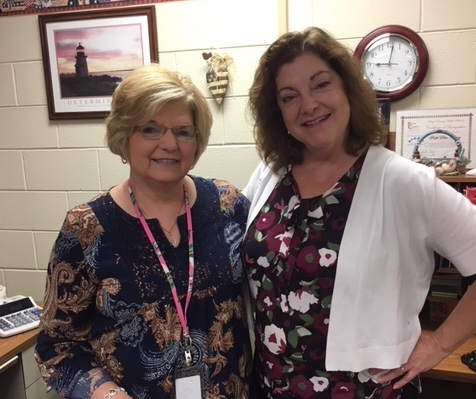
Ruth and Renée in Cannonsburg Elementary School’s Resource Center

Fortunately for children living in Boyd County, Cannonsburg Elementary School provides them with a beautiful and bright learning space and a welcome distraction from the struggles that their families face. But even though children don’t have to think about the hardships in their lives during school hours, the reality is that they often return home to empty refrigerators and cabinets with no food on the weekends.

A lot of children in need

According to our Director of U.S. Programs, Renée Kube, Cannonsburg Elementary School serves 276 children in Pre-K through 5th grade.

Even though children don’t have to think about the hardships in their lives during school hours, the reality is that they often return home to empty refrigerators and cabinets with no food on the weekends.

On a recent visit to the school, our volunteer coordinator, Ruth, told Renée that she has over 80 of those children in attendance on her Weekend Backpack Feeding Program. Ruth is sure that without the program, these children would have little or no food to eat on Saturdays and Sundays when they are not at school where they receive free or reduced-price breakfast and lunch.

This is a harsh reality for many children in our program all over the United States. But thankfully, because of dedicated volunteer coordinators like Ruth, sponsored and unsponsored children in our program can rely on weekly food bags to take home on Friday afternoons that ensure they are being fed when not in school.

A struggling family

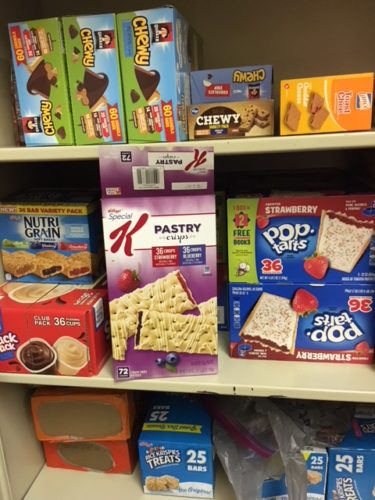
Ruth sends food from the food pantry home with dozens of children every weekend.

During her time at Cannonsburg Elementary School, Renée had a chance to meet two brothers who are benefiting from our sponsorship program and the Resource Center’s Weekend Backpack Feeding Program.

Carter and Josiah* are two of seven children in their family, ranging in ages from three to nineteen years old. Their parents are separated, and Carter and Josiah’s mom — who works full time at McDonald’s — is mainly raising the children alone.

Ruth describes their mother as responsible and loving to her children, but it is tough for her to provide for everything they need. The Weekend Backpack Feeding Program helps them a lot — as do Carter and Josiah’s sponsors.

Ruth also mentioned to Renée she is planning on enrolling more of their siblings in our program so they can have sponsors too that can provide for their basic needs.

*Names changed to protect the children.

***

HOW DO I SPONSOR A CHILD IN KENTUCKY?

You can sponsor a child in Kentucky in one of two ways: call our office at 1-800-538-5381 and speak with one of our staff members, or email us at sponsorship@children-inc.org.
SPONSOR A CHILD


The small town of Grayson is located in Carter County, Kentucky and is home to Heritage Elementary School — Children Incorporated’s only affiliated project in this Appalachian county.

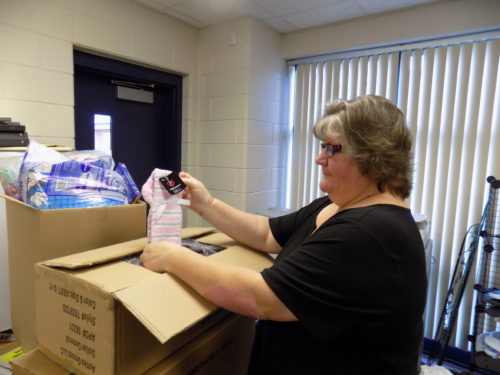
Missie sorts through donations in the Resource Center.

In the 19th century, Carter County was famous for its iron furnaces and thriving clay products industry. Carter Cave — now a tourist attraction — was a significant source of saltpeter during the War of 1812.

Coal from this region once fueled factories, powered locomotives and heated millions of homes. Today, however, manufacturing only accounts for 15% of the county’s employment. Moreover, the coal industry, which once employed the majority of the region’s workforce, has sharply declined due to automation and the increased use of other fuels.

A county in distress

Designated by the Appalachian Regional Commission as a distressed county, Carter County currently has an unemployment rate well above the national average and a low median household income. The lack of employment opportunities has resulted in widespread poverty, along with associated socioeconomic issues such as drug abuse, lack of education and poor health.

In an area menaced continuously by the devastating effects of poverty, Heritage Elementary School — and our volunteer coordinator, Missie — provide children with a safe and supportive place to learn and grow.

In an area menaced continuously by the devastating effects of poverty, Heritage Elementary School — and our volunteer coordinator, Missie — provide children with a safe and supportive place to learn and grow. They do this despite working with only a shoestring budget.

A dedicated coordinator

While visiting Heritage Elementary School, our Director of U.S. Programs, Renée Kube, met with Missie to talk about how her efforts are helping sponsored and unsponsored kids in our program.

“Missie is well-organized when it comes to her work with the Children Incorporated sponsorship program. She hopes to enroll more children in the near future because she knows she can handle the workload,” said Renée.

Missie told Renée that she shops at various stores — sometimes having to travel as far as 30 miles — to find the best deals so she can make the most of sponsor’s donations. Otherwise, she wouldn’t have much to work with at all since she has a minimal budget with which to run the school’s Family Resource Center.

Looking for help on the outside

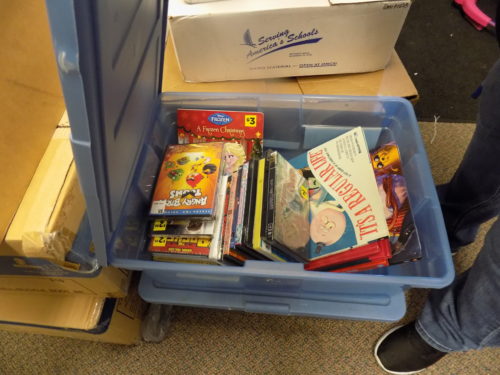
The Resource Center accepts donations from different partnering organizations in Carter County.

In order to help children outside of our sponsorship program, Missie raises funds and seeks in-kind donations from a variety of partners in town such as local businesses. She also makes and sells t-shirts whose proceeds go to the school’s Weekend Backpack Feeding Program. Thankfully, our sponsors alleviate much of her stress. Missie loves the peace of mind that sponsorship funds give her. Thanks to our sponsors, she always knows that kids in our program will receive basic needs regularly.

Before their meeting ended, Missie mentioned to Renée that she would like to put in a request to our Hope in Action Fund. Missie wants to develop and implement a summer camp so children can get additional help with math and reading as well as participate in enrichment activities like arts and crafts. Not surprised by her dedication and willingness to go above and beyond for kids at Heritage Elementary School, Renée looks forward to receiving Missie’s request since our Hope in Action Fund was designed for situations just as this one.

***

HOW DO I SPONSOR A CHILD IN KENTUCKY?

You can sponsor a child in Kentucky in one of two ways: call our office at 1-800-538-5381 and speak with one of our staff members, or email us at sponsorship@children-inc.org.
SPONSOR A CHILD

In our work at Children Incorporated, we often talk about the importance of getting an education. For children in our program, we believe education is the key to finding jobs upon graduation that will enable them to work toward breaking the cycle of poverty from which they come.

Unfortunately, statistics show that children growing up in impoverished households often perform less well academically than their peers.

The challenges of living below the poverty line

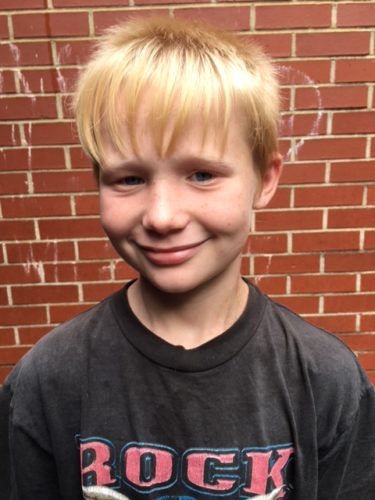
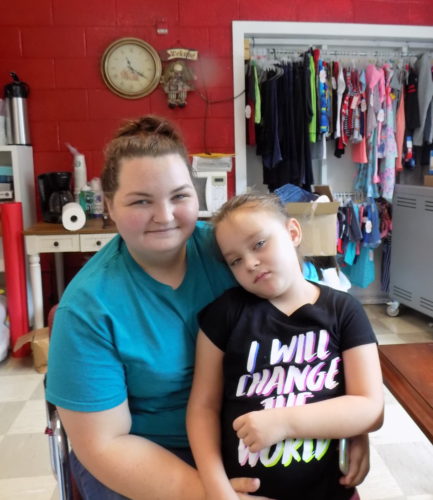
Jackie is pictured here with one of our sponsored children at Beaver Creek Elementary School.

As reported by the non-profit Operation Warm’s website, “Children living above the poverty line are entering kindergarten more prepared than those below it. High-income families are able to put more money towards their children’s cognitive development than those living in poverty.”

“Parents with low incomes, on average, have less time to read to their children, no funds for pre-school and less stable home environments. The difference in preparation tends to persist through elementary and high school.”

Beavers Are Achievers

According to our Director of U.S. Programs, Renée Kube, this achievement gap is prevalent in some of our affiliated schools in Eastern Kentucky, and specifically at Beaver Creek Elementary School in Knott County. Located in the small community of Topmost, families of children enrolled at Beaver Creek Elementary face rampant poverty. They struggle to overcome the common socioeconomic problems that plague Knott County such as adult illiteracy, school absenteeism, child obesity and substance abuse.

“There is no question that poverty can impact academic achievement in ways ranging from lack of books in the home to transportation barriers that make it difficult to travel to cultural and historic sites,” stated Renée. 

While visiting Beaver Creek Elementary School, Renée met with our volunteer coordinator Jackie, who Renée describes as incredibly devoted to helping her students.

During their meeting, Jackie explained that although the school motto is “Beavers Are Achievers” the children are struggling academically as they aim to reach their goals. The school’s test scores lag behind state averages, reaching only the 51st percentile in reading and just the 38th percentile in math in state ranking.

“There is no question that poverty can impact academic achievement in ways ranging from lack of books in the home to transportation barriers that make it difficult to travel to cultural and historic sites,” stated Renée. 

Making kids feel loved

Often times while visiting our affiliated projects, Renée visits with parents of children enrolled in our program.

Jackie told Renée that one of the biggest challenges in the community — and the county as a whole — is coping with drug addiction and the lack of treatment options for it. The fallout affects many children, resulting in them being raised by grandparents or other family members. For other children who still live at home with their parents, they are often being neglected and raising themselves.

Jackie feels fortunate that a local church brings food to the school’s Resource Center for her weekend Backpack Feeding Program. She says that the Children Incorporated sponsorship program is vital in helping with clothing, shoes and school supplies throughout the year. Jackie also values how sponsors make her students feel special and let them know that someone cares for them.

Meeting two special parents

After taking a tour of the building and grounds, Jackie was happy to show Renée the Family Resource Center where she had asked two of her parents — Raven and Scottie — to thank our organization on behalf of all the parents of sponsored children.

While meeting with Raven and Scottie, Renée could tell they were both very dedicated to and concerned for their daughters.

“Raven is a homemaker. Scottie was unemployed for a long time but has recently gotten a job at a small, local non-profit community center. The pay is meager. They told me that our sponsorship program has meant so much to their little girls, and that it warms their hearts to see the excitement their sponsors bring to their children,” said Renée.

***

HOW DO I SPONSOR A CHILD IN KENTUCKY?

You can sponsor a child in Kentucky in one of two ways: call our office at 1-800-538-5381 and speak with one of our staff members, or email us at sponsorship@children-inc.org.
SPONSOR A CHILD


The second-largest nation in Latin America, Argentina is truly a nation of contrasts. In geography alone, its borders envelop a full spectrum of topography including rugged, towering mountains, tropical lowlands, arid steppes and plateaus, and frigid tundra.

Despite being a rather wealthy country, Argentina faces a poverty crisis caused in large part by inflation rates.

Argentina is located mostly in the southern half of South America. The country is bordered by Chile to the West, Bolivia and Paraguay to the north, Brazil to the northeast, Uruguay and the South Atlantic Ocean to the east and the Drake Passage to the south. It is located between the Andes Mountains on one side and the Atlantic Ocean on the other. Despite being a rather wealthy country, Argentina faces a poverty crisis caused in large part by inflation rates.

Facts about Argentina

–    The capital is Buenos Aires

–    Argentina is the second-largest country in South America

–    The population is 44.27 million

–    The official language is Spanish

–  92% of Argentinians are Roman Catholic religion

–  Argentina is the 8th largest country in the world

– The currency is the Argentinian peso

–  The name “Argentina” comes from the Latin word for silver

Facts about poverty in Argentina

  • The government of Argentina estimates that a third of the population lives below the poverty line
  • About 20% of the population lives on less than $2 a day
  • Women make up a larger share of the poor. They comprise a large percentage (60 percent) of those employed in part-time or low-skill (and therefore low-paying) jobs
  • About 50% of children under the age of 14 live in poverty
  • There are currently an estimated 500,000 young people in Argentina outside of the country’s education system

Where we work in Argentina

In Argentina, we are affiliated with two projects, Casa del Nino-Maria de Nazaret and Casa del Nino-Padre Jose Kentenich, both of which are located in Buenos Aires.

Read more about these projects

A Shining Light in the Culture Capital of Argentina

Creative Learning in Buenos Aires

How you can help children in Argentina

You can help a child living in poverty in Argentina in a few different ways. One way is through our child sponsorship program. Sponsorship provides an underprivileged child with basic and education-related necessities such as food, clothing, healthcare, school supplies and school tuition payments.

SPONSOR A CHILD IN ARGENTINA

This vital support allows impoverished, vulnerable children to develop to their full potential — physically, emotionally and socially. Sponsors positively impact the lives of the children they sponsor through the knowledge that someone cares about their wellbeing. This gives children in need hope, which is powerful.

Our on-site volunteer coordinators use those funds to purchase items for children in our program, to ensure that they have what they need to do their very best and succeed in school.

Our policy has always been to consider the needs of each sponsored child on an individual basis. We work closely with our volunteer coordinators at our project sites in Argentina, who are familiar with each individual circumstance and the needs of every child in their care. Sponsorship donations are sent to our projects — orphanages, homes, community centers and schools — at the beginning of each month in the form of subsidy stipends. Our on-site volunteer coordinators use those funds to purchase items for children in our program, to ensure that they have what they need to do their very best and succeed in school.

You can also help children in Argentina by donating to one of our special funds. Our special funds offer a variety of giving options for sponsors who wish to further their support, as well as for donors who wish to make a difference without making a commitment. In the past, thanks to donations to our Hope In Action Fund and our International Feeding Program, we have been able to further support our projects in Argentina beyond sponsorship.

***

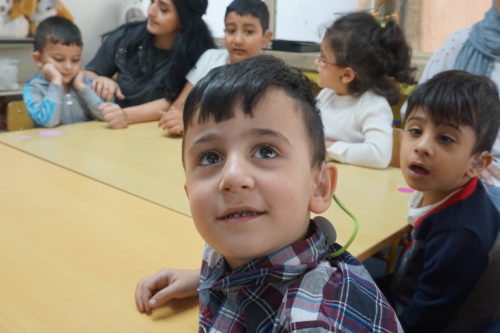
The Father Andeweg Institute for the Deaf, or FAID, is one of the few schools in Lebanon that provide an education to hearing-impaired children. A long-time Children Incorporated affiliated project, FAID supports about 100 students every day, many of them refugee children from neighboring countries – primarily Syria.

FAID’s mission:

 To act as a caring institute for the deaf and hard of hearing, which reflects a healthy balance of academic goals and building self-esteem, self-awareness, and life skills.

During a trip to Beirut, Lebanon, our Director of International Programs, Luis Bourdet, visited FAID and met with our Volunteer Coordinator Ms. Shawish. She explained to Luis that the most challenging aspect of her job is that the school receives less and less support from the Lebanese government each year. Yet every year, the need to help more and more children continues to increase. Currently, the school’s funding comes from various local and foreign partners, including Children Incorporated. Our sponsors help to support over sixty students at FAID alone.

A history of FAID 

FAID was founded in 1957 by Anglican clergyman Reverend Dr. Arie J. Andeweg. Reverend Dr. Andeweg, known as “the father of deaf people in Lebanon,” first started his work in 1956 by meeting with deaf adults at local coffee houses in Beirut. He was soon able to communicate with them and decided to establish a club for the deaf so that they could meet on a regular basis. In 1957, with younger deaf children in mind, he founded FAID. Today, FAID is one of the most prominent education centers for the deaf in the Middle East. 

 A leading comprehensive center

Sponsor a child in Lebanon to change their life for the better

Many deaf and hearing-impaired students at FAID could still use the help of a caring sponsor.

FAID provides an education to children from preschool to high school, ages three through eighteen. There, they learn to develop language to support memory and learning, achieve their academic and vocational potential, develop tools for safety and confidence in the modern world, create happy memories of their childhood and lasting friendships, and have a place to be healthy and resilient both physically and emotionally.

While in attendance at the school, students learn the Lebanese national curriculum and sign language. They are provided with much-needed audiology services, including supplies of hearing aids, hearing aid batteries, and ear molds; hearing tests; and hearing aid maintenance. The children also attend speech therapy sessions twice a week; auditory training with methodologies for listening and learning to hear; and they receive psychological and emotional support.

Enabling kids to reach their full potential

While they were meeting, Ms. Shawish explained to Luis that the aim of FAID is for every child and young person that attends to develop into the best possible version of themselves. She stated that the earlier hearing loss occurs in a child’s life, the more serious the effects can be on the child’s development. Similarly, the earlier a problem is identified and intervention begins, the less serious the ultimate impact is likely to be. 

While in attendance at the school, students learn the Lebanese national curriculum and sign language. They are provided with much-needed audiology services, including supplies of hearing aids, hearing aid batteries, and ear molds; hearing tests; and hearing aid maintenance.

As they toured the school and met with some of our sponsored children, Ms. Shawish told Luis that because of the special circumstances that the children are in — especially the older refugee children who attend the school — FAID has created group classes to meet the needs of the students who had never been to a specialized school.

The school also offers a theater class. Ms. Shawish feels that drama is an important tool for preparing students to live and work in a world that is increasingly team-oriented rather than hierarchical. Drama classes also help students develop tolerance and empathy.

Looking towards the future

Although having enough funding to provide for all the needs of the children is an issue, Ms. Shawish is confident that the school will continue to grow and add new programs. She talked with Luis about how FAID is piloting an outreach program among the Syrian refugee camps in Lebanon and the Lebanese community in order to raise awareness regarding deafness and the importance of education for those affected. Ms. Shawish is also hopeful that she will find a means to offer assistance to students who want to continue on to universities or technical schools once they graduate.

Before Luis left, Ms. Shawish assured him that without Children Incorporated’s support, the school, which is incredibly valuable to so many children, would not survive. She also mentioned that there are many deaf and hearing-impaired students at the school who could still use the help of a caring sponsor to ensure that they are equipped to fully participate in the world around them.

***

HOW DO I SPONSOR A CHILD IN LEBANON?

You can sponsor a child in Lebanon in one of three ways: call our office at 1-800-538-5381 and speak with one of our staff members; email us at sponsorship@children-inc.org; or go online to our sponsorship portal, create an account, and search for a child in Lebanon who is available for sponsorship.

SPONSOR A CHILD