Tag Archives: coal mine

Recently, our Director of U.S. Programs, Renée Kube, and our U.S. Projects Specialist, Shelley Oxenham, visited one of our longest-standing and most stable partnerships – the Family Resource and Youth Services Center (FRYSC) of Pike County in Kentucky. Children Incorporated began our outreach in Kentucky not long after the founding of our organization in 1964. At that time, our program was in only one county in the state: Menifee. Unfortunately, when our volunteer coordinator in Menifee County retired a few years later, no one was able to step in and take her place; so that project site was reluctantly closed.

In order to continue helping children in need in the Appalachian Region of the United States, one of our staff members at the time, Dorothy Carver, went to our founder, Mrs. Jeanne Clarke Wood, with an interesting proposal: her husband was relocating for work from Richmond, Virginia, where our headquarters was located at the time, to North Carolina. Mrs. Carver offered to reinstate our Appalachian Division with a focus in western North Carolina, where extreme poverty was rampant. Mrs. Wood agreed; once Mrs. Carver relocated to North Carolina, she began traveling regularly, steadily expanding our sponsorship program in the state.

Today, Children Incorporated is affiliated with all seventeen public schools in Pike County, which is the easternmost and largest county in North Carolina.

A Breakfast for Champions

In 1990, when Mrs. Carver retired, our Appalachian Division consisted of 32 projects in western North Carolina. Her assistant, Irene LeCroy, took her place as the new Appalachian Division Director. Mrs. LeCroy worked hard to continue to expand our work with impoverished children and their families. She wanted Children Incorporated to acquire affiliations in Kentucky, as well as move into West Virginia. It was she who first learned of Kentucky’s newly-developed Family Resource and Youth Services Center. Thanks to Mrs. LeCroy, our first re-affiliations since the early 1970s were in Pike County, Kentucky. The first was Kimper Elementary School in March of 1993 – and more and more were added over the years.

Today, Children Incorporated is affiliated with all seventeen public schools in Pike County, which is the easternmost and largest county in Kentucky, encompassing 788 square miles. It has a rugged mountainous terrain, with narrow river valleys and great scenic beauty. However, the continuing decline of the coal industry has yielded high rates of unemployment; underemployment; and rural out-migration, in which families are forced to leave their homes in search of steady work elsewhere. The county’s child poverty rate is 29 percent – and twelve percent of those kids live in deep poverty, in which their families’ incomes are less than half the poverty threshold.

We are incredibly grateful for our coordinators in Pike County, who work hard every day to ensure children’s needs are met.

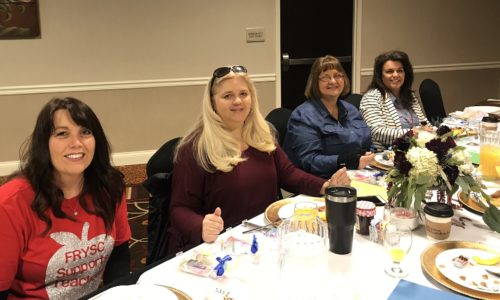
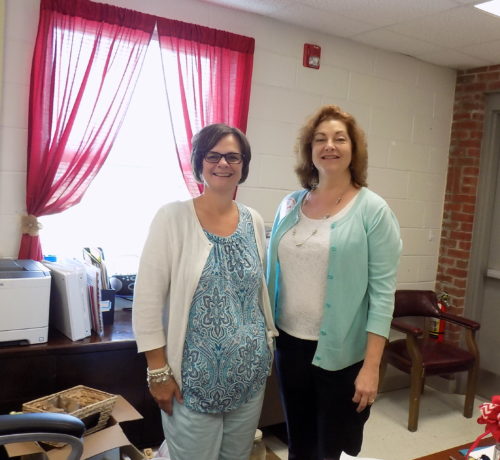
Since this year marks Children Incorporated’s 25th anniversary of our work in Pike County, Renée and Shelley decided to start their week-long trip of visits to our affiliated schools in the area with a breakfast meeting to acknowledge the FRYSC coordinators, who also serve as our volunteer coordinators. Renée and Shelley invited all seventeen coordinators, as well as Mr. Robert Osborne, who is the Director of Federal Programs for the Pike County Board of Education, and who supervises our coordinators there.

Renée and Shelley hosted a fun breakfast, getting all the coordinators together to reminisce about how Children Incorporated sponsors and donors have facilitated their work helping kids in Eastern Kentucky over the years. Renée and Shelley also made it a point to express their gratitude to the coordinators for dedicating so much time and effort to ensuring that their students benefit fully from their sponsors’ crucial support.

***

HOW DO I SPONSOR A CHILD IN KENTUCKY?

You can sponsor a child in Kentucky in one of two ways: call our office at 1-800-538-5381 and speak with one of our staff members, or email us at sponsorship@children-inc.org.

SPONSOR A CHILD

written by Shelley Callahan

Shelley is the Director of Development for Children Incorporated. She is also the lead social correspondent, regularly contributing insights through the Stories of Hope blog series. Sign up for Stories of Hope to receive weekly email updates about how your donations are changing the lives of children in need.

» more of Shelley's stories

Bath County, Kentucky is known historically for the mineral and medicinal springs from which its name was derived. Unlike many other counties in Eastern Kentucky, Bath County is not a coal-producing area, and the main cash crop there used to be tobacco. This crop provided small farmers with a decent living with the help of the federal Tobacco Price Support Program, in which the government purchased surplus tobacco from farmers to ensure a yearly income for them.

“Sponsors give these teens hope and a window into a bigger world,” said Cindy. “The clothing and shoes received through sponsorship funds give these kids a sense of dignity and pride.”

When the Tobacco Price Support Program ended in 2004, small farmers were no longer secure supporting their families by farming tobacco, so they began to seek out other work opportunities. As a result, most tobacco farmers in the county switched to raising cattle, which does not require nearly as many laborers as tobacco farming does, so many jobs were still lost.

Unfortunately, the loss of farming jobs in Bath County isn’t the only thing that negatively affected the local economy there. Most of Cave Run Lake, built by the Army Corps of Engineers in 1973, is located in Bath County – another potential source of income for families could come from tourist dollars generated by use of the lake; but all of the boat ramps, marinas, small restaurants, and gas stations around it are nestled on either the Rowan County side or on the Menifee County side. A path that was bulldozed on the Bath County side of the lake shows the start of construction; but many years after it was first blazed, subsequent work has yet to be done – and even Bath County residents have to leave the county to access the lake.

When parents aren’t being parents

On a recent trip to Bath County, our Director of U.S. Programs, Renée Kube, visited the only high school in the county, Bath County High School. Sitting on a large complex, the school has 589 students in grades nine through twelve. Seventy-four percent of those students qualify for free breakfast and lunch every day, which is a reflection of great poverty in the county. One in five Bath County citizens are living in poverty; and 29 percent of the children there are living below the poverty line.

When Renée arrived at the school, she met Cindy, our Volunteer Coordinator, in the school’s Resource Center, along with Cindy’s assistant, Sandy. Both Cindy and Sandy work very hard to help the children in their care to get basic needs, as many of them come from neglectful households. Cindy told Renée that she thinks the children are having to grow up too fast – some of them have to fend for themselves completely.

Their parents or guardians are absent from their lives in different ways – sometimes physically, sometimes mentally or emotionally. In some cases, they are away from the home a lot, working minimal-income jobs; in some instances, they are disabled and unable to do much to support their children. Some caretakers, tragically, due to a serious drug problem in Bath County, aren’t looking after their kids as a result of their addictions. Last year alone, there were fourteen overdoses of parents of Bath County High School students.

According to Cindy, many of these families can’t even begin to imagine another way of life for themselves, and they teach their children to think no other life is possible for them, either. This fostering of this negative mentality is one of the many reasons why Cindy and Sandy value the Children Incorporated program as much as they do. “Sponsors give these teens hope and a window into a bigger world,” said Cindy. “The clothing and shoes received through sponsorship funds give these kids a sense of dignity and pride. Being sponsored is encouraging for the students to stay in school and achieve their diplomas.”

It is important for these impoverished kids that Cindy and Sandy see the value in our program, and what sponsorship does for those children. When teens live in poverty, but are expected to get their schoolwork done and take care of themselves with little to no support from family, it is invaluable for them to have sponsors. It helps them to not feel alone, and to receive the positive motivation they need to keep working hard, so that they can have better lives once they graduate.

Going above and beyond for kids

Sponsorship helps children in Kentucky.

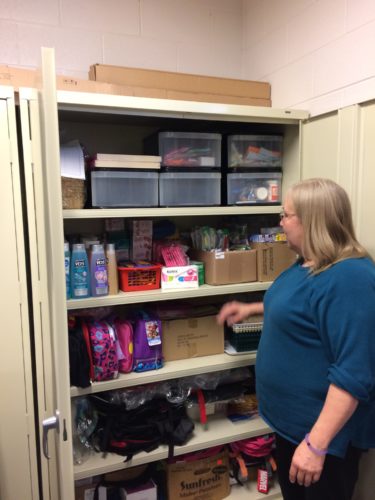
Renée and Cindy in the Resource Center

Cindy and Sandy do more than just help kids in our program receive basic needs – they also do a lot to prepare them for being on their own, as many of them practically already are. There is a washer and dryer in the Resource Center for the students to use to wash their own clothes, because many of their parents don’t do it for them. There is also a shower for the kids to use to clean up when they don’t have a usable shower at home.

Cindy also takes the students that she feels need extra attention on field trips, because she knows that many of them never leave their homes other than to go to school. She takes groups to a ropes course at Morehead State University for team building. She also takes some to a cosmetologist for haircuts and conversations about appearing professional for job interviews. She takes some teens to a restaurant – for some students, for the first time in their lives – where they can practice table manners.

It’s hard to think about what these children have to endure while they are still so young, with little to no guidance at home. Even before they graduate, some Bath County High School students are kicked out of their homes when they turn eighteen years old, because at that age, their parents stop receiving welfare checks with which to support them.

Now homeless, those kids go to school hungry and desperate. Thankfully, however, each school year, Cindy and Sandy help these scared and overwhelmed teens move into tiny public housing apartments, and they teach them to apply for welfare in their own names, so that they may receive that assistance until they graduate from high school; and our sponsors are there to provide additional support for these kids who are forced to grow up too fast when they really need it the most.

***

HOW DO I SPONSOR A CHILD IN KENTUCKY?

You can sponsor a child in Kentucky in one of two ways: call our office at 1-800-538-5381 and speak with one of our staff members, or email us at sponsorship@children-inc.org.
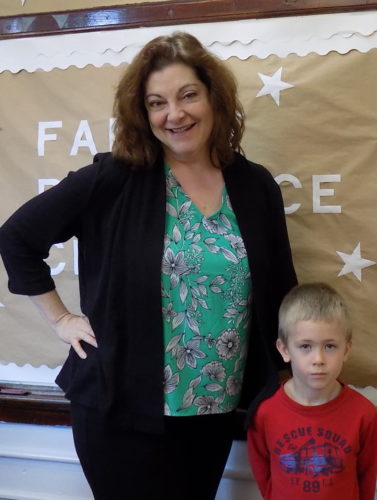
After two days of visiting our affiliated schools in Lawrence County, Kentucky, U.S. Projects Specialist Shelley Oxenham and I traveled about an hour south to Floyd County to meet with a new Volunteer Coordinator, Scott Shannon, as well as to visit with a long-term coordinator, Sharon Collins, who had recently been transferred to a new school.

Although Scott was brand new to the Children Incorporated program and Sharon was not, since they were both new to their respective schools this year, each of them was meeting the children for the first time, many of whom they found would greatly benefit from having a sponsor.

With newly enrolled children, new sponsors are needed.

Scott is the Resource Center Coordinator for both James A. Duff Elementary School and Allen Central Middle School, which share the same building. The elementary school classrooms are on the first floor of the building, and the middle school classrooms are on the second floor.

Scott just started his position at the beginning of July. He has had a busy school year starting his new position – as a former football coach in the school system, not only is he learning the ropes as a coordinator, but he is also meeting the more than 600 children that attend the two schools for the first time.

Scott talked to Shelley and me about how many of the children who attend the schools come from families with financial problems, and how many of them are living with their grandparents, because their parents aren’t able to support them. A long-time resident of the area, Scott has seen a lot of people struggle to find work because many businesses in town have closed over the years.

Sometimes new shoes are not enough

When the school year started just a few weeks prior, Scott told us that he had given a lot of clothes away to children – more than he had ever anticipated. He was surprised by just how many kids came the first week of school in old, dirty clothes, wearing shoes with holes and broken flip-flops. He is just getting to know many of them, and is already sending food home with seventeen children on the weekends, because he worries they won’t eat otherwise. Scott says his greatest need right now is for more clothes for the kids, especially bigger clothes for the middle school-aged kids.

Before we left, Scott introduced us to six siblings who all attend the schools – four of the children are currently sponsored through our program, but two, Mark* and James*, are still waiting to be sponsored. Scott said that this family really needs additional support beyond what the Resource Center can provide; he already gave each of the kids new shoes at the beginning of the school year, thanks to a shoe drive held by community members.

He was surprised by just how many kids came the first week of school in old, dirty clothes, wearing shoes with holes and broken flip-flops.

Scott would love to see all of the kids have sponsors because he knows how much it would help them in getting school supplies year-round, and holiday gifts and coats in the winter.

No money to help kids

After leaving James A. Duff Elementary School and Allen Central Middle School, we visited with one of our long-term coordinators, Sharon, at May Valley Elementary School. Sharon was our coordinator at a high school in Kentucky for many years, until she was transferred to the elementary school in May. Although she is an experienced coordinator, like Scott, she is only getting to know the children at her new school.

Sharon told us that when she arrived at the school, she was given very little money to purchase items for the Resource Center, and what she was given had to last the whole year. Once her funds – which were to supply everything from clothes to food, to shoes, to school supplies – ran out, she would have to rely on donations from the community and support from our sponsorship program to get the children the help they need.

She said that the elementary school serves three housing projects in the county, and that even though she gets help from a great partnering organization in town that has a clothing closet and provides book bags at the beginning of the school year and blankets at Christmas, there are just so many more kids that she knows need assistance.

Our coordinators would love to see more of their students get sponsored.

Siblings with a lot of love

Sharon has enrolled eleven children in our program so far, but she wants to add close to twenty more kids – an ambitious and admirable goal. She first started by enrolling a family of five children – three boys and two girls – who all attend May Valley, and whose parents are struggling to support them. Sharon told us that one of the girls broke her glasses months ago, but her parents don’t have the money to replace them – and the girl is still in need of new ones now.

Like the family we met with Scott, these children are also very close in age to one another. But unlike that same family, all five of the children at Sharon’s school are currently waiting for sponsors.

Sharon took us around the school to pull the kids out of their classrooms so we could meet with all the siblings in the Resource Center. We stopped by the youngest boy’s classroom first, and when we told him we were going to get his brothers and sisters, he became incredibly animated. Even though he had seen them just a few hours before, he was so excited to get to see them in the middle of the school day.

As we continued down the hallways, and each child joined us, I could tell that this is a close-knit group of siblings who really watches out for one another. They held hands as they walked, and the older ones stopped to tie the younger ones’ shoes. It was sweet to see them together, and I was glad to know they had one another. Although they were lacking many things they needed, it was apparent they were not lacking in love for one another.

*Names changed for children’s protection.

***

HOW DO I SPONSOR A CHILD IN KENTUCKY?

You can sponsor a child in Kentucky in one of two ways: call our office at 1-800-538-5381 and speak with one of our staff members, or email us at sponsorship@children-inc.org.
When Shelley Oxenham, U.S. Projects Specialist, and I met with our Volunteer Coordinator, Brenda Curry, at Fallsburg Elementary School in August, the first thing Brenda wanted to talk about was a very special family that she had arranged for us to visit with that afternoon. Stewart and Carolyn Sawyer* live in a small home in Lawrence County, Kentucky, about a twenty-minute drive away from the school, where their son, Michael*, who is sponsored through Children Incorporated, is in the eighth grade.

Stewart and Carolyn’s son Michael benefits greatly from our sponsorship program.

Of the nineteen children that are in our program at Fallsburg Elementary, Brenda has the greatest connection with Michael and his parents. They are more than just a family that Brenda has helped to get support when they have needed it over the years – the Sawyers are like family to her. She has known Michael since he was in preschool, and she talked about what a sweet little boy he was, and how he always gave her a hug when he saw her in the hallways.

In the ten years that Brenda has been a coordinator for Children Incorporated, she has grown close to Stewart and Carolyn, too, who live only a few minutes from Brenda and her own family. Brenda described them as amazingly kind, humble, and grateful for everything they have in life, even though they are very poor, and struggle to get by.

Volunteering to show gratitude

Stewart and Carolyn have been together for fourteen years, and Michael, who is thirteen years old, is their only son. Many years ago, Stewart owned a garage where he was the head mechanic; but hard times fell on him, and he lost his shop, and everything he owned. Now he works odd jobs, mostly doing landscaping for local families – and much of that work comes as a result of referrals from Brenda. But the work is inconsistent, and it pays very little.

Carolyn has struggled with health issues for many years, and is unable to work. With only one income to support them, the Sawyers struggle to get by, as do many poor families in Eastern Kentucky. But Brenda told us that, despite the difficulties they face, both Stewart and Carolyn consider themselves lucky, and do whatever they can to give back to the community. They are grateful for Michael’s sponsor because without that support, there would have been many years without a Christmas, and Michael wouldn’t get new school clothes or supplies when times are tough.

Just like his parents, Michael, who doesn’t have very much, has found a way to go above and beyond to give back to others – to say thank you for all that he feels that he has to be thankful for in life.

Because they want to show their gratitude to others for helping them when they need it, Stewart and Carolyn regularly volunteer at the school in order to give back. Stewart often helps out with special events, like directing traffic during the Fall Festival, and helping to set up and break down tables and chairs when the school hosts holiday parties. And Carolyn works with the pre-school children at the school, mostly reading to them and helping their teacher out as best she can.

Feeling blessed through it all

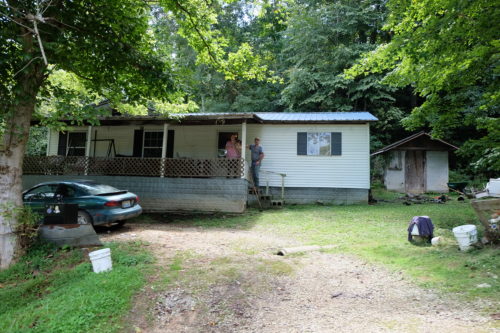
After we visited with Brenda at the resource center, she took us to meet Stewart and Carolyn at their home. Their house sat on a hill along a narrow gravel road, far off of the main highway. When we arrived, they greeted us warmly, and invited us inside. We walked up to their tattered porch, old wooden boards creaking under our feet. It was obvious that the house was in need of repair. Inside, the floors were worn, the wallpaper was peeling away, and the furniture was torn and stained. Stewart and Carolyn had done their best to make this house their home, using what little they had.

As we sat down in the living room to talk, I noticed black plastic trash bags scattered about the floor. Stewart told us they were filled with Michael’s toys, which they had bagged up because earlier in the year, the chimney began to fall, damaging the wall between the living room and the back bedroom. Stewart spent months tearing it down and repairing the wall so they could use the bedroom again.

On top of that, Stewart spent the summer ripping up the floor of their small home to replace rotten boards, because the floor had started to cave in. His next project would be to start replacing boards in the walls between the living room and the kitchen, which were now too short because of the repairs he made to the floorboards.

The Sawyers’ home is in constant need of repair.

It was overwhelming listening to him talk about his endless repair list – but the whole time he spoke, Stewart had a smile on his face, as though he didn’t have a care in the world. Even when he talked about having recently wrecked his truck upon swerving to avoid hitting a dog that ran out in front of him on the road, he and Carolyn giggled at the story of the small, mangy animal not knowing how much damage it had caused to his vehicle.

As we were listening to their stories, Brenda noticed that their air conditioning unit was no longer working, and offered to find a new one for them. She felt confident that she would find someone in the community willing to donate one. Both Stewart and Carolyn thanked Brenda for having the idea, but declined her offer, because they knew there were other people that could use one more than they could – and they instead talked about how blessed they are each and every day.

After we said goodbye to Stewart and Carolyn, Brenda drove us back to the school. On the way, she told us about how Michael always buys her a Christmas gift – something small from the dollar store, like a necklace or earrings – with money he saves helping his grandfather with odd jobs throughout the year. Just like his parents, Michael, who doesn’t have very much, has found a way to go above and beyond to give back to others – to say thank you for all that he feels that he has to be thankful for in life.

*Names changed for family’s protection.

***

HOW DO I SPONSOR A CHILD IN KENTUCKY?

You can sponsor a child in Kentucky in one of two ways: call our office at 1-800-538-5381 and speak with one of our staff members, or email us at sponsorship@children-inc.org.
Since I first started visiting our affiliated projects in Eastern Kentucky in April of 2015, I have been reporting on the burden of poverty that our sponsored children and their families face every day. With a lack of jobs and scarcity of resources for people in need in this region of the United States, I often get asked when I return home: Why don’t people in need just move somewhere else?

It is a question that I had not been able to answer on my own, because quite honestly, I didn’t know how to answer it. When your situation seems bleak, and there are few opportunities for a better future for you and your children, why not leave and start over in a new place?

Feeding kids hundreds of miles away

Boxes of food line the walls of the resource center.

I decided to talk to our Volunteer Coordinator, Barbara Hall, at Blaine Elementary School in Lawrence County about this issue. I knew Barbara would be able to shine some light on the subject; she has been working in the school system for 23 years, and has been a resource coordinator since 2000. Currently, Barbara plays an integral role in ensuring that students are fed every day, in addition to her many other responsibilities.

200 children attend Blaine Elementary School in Blaine, Kentucky, and 85 to 95 percent of those kids are receiving reduced price or free lunches. There are currently 79 children receiving food to take home on the weekends through the school’s backpack feeding program. Barbara explained that without the help of a church in Alabama that supports her school, she wouldn’t be able to help all these children.

The church not only raises money to provide food for the students, but they also do all the shopping – and they even drive eight hours to Blaine Elementary School once a month to distribute the food. Barbara is incredibly grateful for this support; she said that there are very few businesses in Blaine to sponsor food and clothing drives for poor families. Without this church, she doesn’t know how she would ever help so many children who would otherwise not be able to eat on the weekends.

The children most in need of sponsors are the ones that come to school dirty, with worn out clothes and old shoes, and providing them with new items is something they really value.


Through Barbara’s story, it was apparent that she knows very well the hardships that families living in poverty face here – especially the children in our program. She said that the children most in need of sponsors are the ones that come to school dirty, with worn out clothes and old shoes, and that providing them with new items is something they really value.

When I asked her the tough question about why families have stayed in Eastern Kentucky long after the coal mines closed, businesses started to move out, and stores closed down, she said that in actuality, many families have left to look for jobs elsewhere. But a lot of people haven’t moved away, and it was for more reasons than I could have come up with on my own.

The many reasons not to move

For many families, the simple answer is that they have nowhere else to go. They have no relatives outside of Eastern Kentucky, and everyone they know lives near them. Another reason families don’t move is because they are comfortable where they are and with their current surroundings, and the idea of making a big change in life is overwhelming, because it is easier to stay in an already familiar place. And even though they may not have much beyond a small piece of land and an old trailer in which to live, these families, despite being poor, have a great deal of pride in what little they have. It was something with which I could empathize greatly, as I, too, am proud of my home.

Our Volunteer Coordinator, Barbara, and U.S. Projects Specialist, Shelley Oxenham at Blaine Elementary School

Another reason many families don’t move is because moving is too expensive. Jobs aren’t guaranteed anywhere, and neither is housing. I had heard the day before from our coordinators LuAnn Kelly and Anne Preece, who also work in Lawrence County, that many parents travel as far as South Carolina and North Carolina to work, and return home only on the weekends. Others drive a few hours each day to commute to jobs within the state. Those who don’t drive out of the county for work have settled for jobs that would typically be for high school students, like at fast food restaurants, to support their families.

It all started to make more sense. Why would you move your kids away from grandparents, aunts and uncles, and cousins, and have them change schools, when you can’t be sure the next place would even offer anything better?

Come to find out, the answer to my question was complex; not only did it have many practical implications, but it had a lot of heart to it, too. Whether living in poverty or not, moving isn’t easy, and it’s not something that just anyone can do. Even if resources are scarce, some families in Lawrence County can count on the support of coordinators like Barbara, and programs like our sponsorship program and the backpack feeding program.

Beyond that, Kentucky is home for these families, no matter what changes around them. Whether businesses move in or out of the county, and as industry comes and goes – it doesn’t make Kentucky any less of a home and a place to be proud of for its residents.

***

HOW DO I SPONSOR A CHILD IN KENTUCKY?

You can sponsor a child in Kentucky in one of two ways: call our office at 1-800-538-5381, or email us at sponsorship@children-inc.org.
written by Shelley Callahan

Shelley is the Director of Development for Children Incorporated. She is also the lead social correspondent, regularly contributing insights through the Stories of Hope blog series. Sign up for Stories of Hope to receive weekly email updates about how your donations are changing the lives of children in need.

» more of Shelley's stories

After hearing story after story from her friend Hilary about child sponsorship through Children Incorporated, Kathy Niles decided she wanted to sponsor a child of her own. Little did she know that sponsorship would lead to unforgettable travels with her friend, getting to know several children – and an even deeper understanding of and appreciation for Native American culture.

We caught up with Kathy to find out about her experiences as a child sponsor, and about the impact those moments have had on her life.

SC: Tell us a little about yourself.

Kathy’s sponsored child in Arizona

KN: My home is in Ashaway, Rhode Island, and I am 64 years old. I have two children of my own, and was a single mom for most of their childhoods. I held several manufacturing jobs off and on, but finally started my own cleaning business fifteen years ago, of which I am the only employee.

It hasn’t been an easy road for me – especially career-wise. My grandmother used to say, “You have to have the bitter to appreciate the sweet!” The bitter can be very hard; but in many cases, it forms the mold in which one becomes stronger, more caring, and driven to work harder to succeed.

 SC: How did you get involved with Children Incorporated?

KN: I learned about Children Incorporated through a friend of mine, Hilary, who was sponsoring a child in Appalachia. So in 2007, I sponsored my first child, Joel*, who attended the same school as Hilary’s sponsored child – and Hilary and I traveled to the school together to spend the day there and visit our sponsored children. It’s something any sponsor should do if they have the opportunity, because it was so rewarding, and I felt very blessed to have been able to visit the project.

In 2011, Joel moved to a different area, and that’s when I started sponsoring Chelsea* – and I have been sponsoring her ever since!

Hilary’s stories of Children Incorporated made me want to do something for a child in need; I didn’t have grandchildren, so I figured I would spend my money on sponsorship. And I decided that I would like to have the chance to help a child get ahead, and to have the chance to fight through their struggles to go on to college and better themselves.

SC: How many children have you sponsored through Children Incorporated?

I decided that I would like to have the chance to help a child get ahead, and to have the chance to fight through their struggles to go on to college and better themselves.

KN: I followed Hilary’s lead and started sponsoring children on the Navajo Reservation, too. Some of them have moved away, so I have had a few different ones there; but I don’t want stop sponsoring there, because I feel bad for these kids that need help.

SC: When you signed up, did you specify preferences for your sponsored child?

KN: Yes – originally, I wanted a sponsored child in Appalachia; I started sponsoring in the Navajo Reservation when I decided to add an additional sponsorship.

I visited the Shonto Preparatory School in Arizona with Hilary, who was traveling there to see her sponsored child graduate high school. It was a very inspirational, rewarding experience for me. In this world stricken with poverty and strife, there is a strong family bond that I noticed, and we were welcomed and accepted – even as minorities.

That’s when I decided to sponsor a Native American child, too. I just recently received information on a new child there, and I am hoping that this will be a lasting relationship, for as long as she is in the school.

Kathy also sponsors a young girl in Kentucky.

SC: Is there anything more you can tell us about the projects you have visited?

KN: The volunteers at the schools are people that give of their time, hearts, and souls to help.

SC: Please tell us about the children you currently sponsor.

KN: Chelsea in Appalachia is fifteen and in the tenth grade; she lives with her mom and four sisters, two brothers, and some cats. She likes playing games, and is good at building things – and not surprisingly, she wants to be a mechanical engineer when she grows up!

I would love to be able to go to her high school graduation; that is my goal. And I would love for my kids to join me when I do. I pray that Chelsea continues to do well, and that she finds a special interest that she can pursue for her future. She is a beautiful young woman; I always get a new picture of her every year.

And Cari* in the Navajo Reservation is also in the tenth grade, and enjoys studying global issues in school. She likes to listen to music, and she’s good at singing; she especially likes the music of singer-songwriter Ed Sheeran. She lives with her mom, and has two brothers and one sister – and she wants to be a veterinarian when she grows up!

SC: Do you communicate with them regularly?

KN: Yes – I send them packages and letters. I send Chelsea money for her birthday, back to school, Christmas, and sometimes in the spring. I also buy her school supplies and hygiene articles; and I know she likes to read, so I have gotten her a gift card to Barnes and Noble. And every once in a while, I get a thank-you note from her, and it always touches my heart!

SC: What do you know about Arizona?

For those who can afford to help, I strongly suggest that you give to a child in need. It can and will make a huge difference in their lives and in their future; it will help mold them into strong individuals.

It was an eye-opener to go to Arizona and see children in their native regalia, and to hear children speaking their native language; it was beautiful!

SC: Is there any advice you might have for someone considering sponsoring a child?

KN: Children Incorporated is a great program, and it has helped many. For those who can afford to help, I strongly suggest that you give to a child in need. It can and will make a huge difference in their lives and in their future; it will help mold them into strong individuals.

I pray that my help has touched each one of these children that I have at some point given to.

*Names changed for children’s protection.

***

HOW DO I SPONSOR A CHILD IN APPALACHIA?

You can sponsor a child in Appalachia in one of two ways: call our office at 1-800-538-5381 and speak with one of our Sponsorship Specialists, or email us at sponsorship@children-inc.org.
 HOW DO I HELP CHILDREN IN ARIZONA?

You can help children in Arizona in one of two ways – our Hope In Action Fund provides for children in special cases, such as in emergencies, and when special items, like eyeglasses, mattresses, and bedding are needed. Our Warm Clothing Fund and our Back to School Fund support children in the Navajo Nation as well.